Notice: تابع WP_Block_Type_Registry::register به طورنادرست فراخوانی شد. نامهای نوع بلوک نباید حروف بزرگ داشته باشند. لطفاً برای اطلاعات بیشتر، اشکال زدایی در وردپرس را مشاهده کنید. (این پیام در نگارش 5.0.0 افزوده شده است.) in /home/ethicsho/public_html/wp-includes/functions.php on line 5313
Warning: Use of undefined constant TDC_PATH_LEGACY - assumed 'TDC_PATH_LEGACY' (this will throw an Error in a future version of PHP) in /home/ethicsho/public_html/wp-content/plugins/td-composer/td-composer.php on line 109
Warning: Use of undefined constant TDSP_THEME_PATH - assumed 'TDSP_THEME_PATH' (this will throw an Error in a future version of PHP) in /home/ethicsho/public_html/wp-content/plugins/td-composer/td-composer.php on line 113 بایگانیهای Friendship History - خانه اخلاق پژوهان جوان Notice: Trying to access array offset on value of type bool in /home/ethicsho/public_html/wp-content/plugins/wp-ulike/inc/general-functions.php on line 807
Bringing together new essays by philosophers and activists, In Defense of Animals: The Second Wave highlights the new challenges facing the animal rights movement. Exciting new collection edited by controversial philosopher Peter Singer, who made animal rights into an international concern when he first published In Defence of Animals and Animal Liberation over thirty years ago Essays explore new ways of measuring animal suffering, reassess the question of personhood, and draw highlight tales of effective advocacy Lays out “Ten Tips for Activists”, taking the reader beyond ethical theory and into the day-to-day campaigns for animal rights
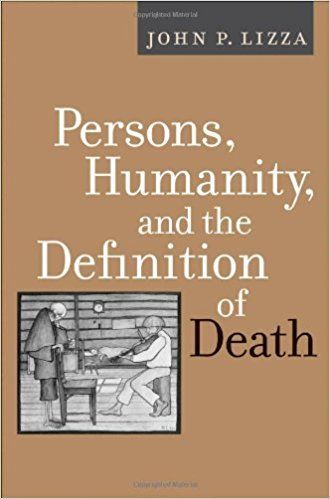
In this riveting and timely work, John P. Lizza presents the first comprehensive analysis of personhood and humanity in the context of defining death. Rejecting the common assumption that human or personal death is simply a biological phenomenon for biologists or physicians to define, Lizza argues that the definition of death is also a matter for metaphysical reflection, moral choice, and cultural acceptance. Lizza maintains that defining death remains problematic because basic ontological, ethical, and cultural issues have never been adequately addressed. Advances in life-sustaining technology and organ transplantation have led to revision of the legal definition of death. It is generally accepted that death occurs when all functions of the brain have ceased. However, legal and clinical cases involving postmortem pregnancy, individuals in permanent vegetative state, those with anencephaly, and those with severe dementia challenge the neurological criteria. Is “brain death” really death? Should the neurological criteria be expanded to include individuals in permanent vegetative state, with anencephaly, and those with severe dementia? What metaphysical, ethical, and cultural considerations are relevant to answering such questions? Although Lizza accepts a pluralistic approach to the legal definition of death, he proposes a nonreductive, substantive view in which persons are understood as “constituted by” human organisms. This view, he argues, provides the best account of human nature as biological, moral, and cultural and supports a consciousness-related formulation of death. Through an analysis of legal and clinical cases and a discussion of alternative concepts of personhood, Lizza casts greater light on the underlying themes of a complex debate.
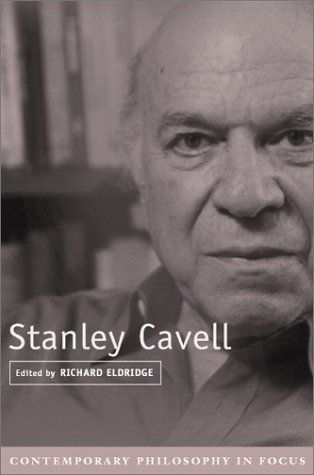
Stanley Cavell has been one of the most creative and independent of contemporary philosophical voices. At the core of his thought is the view that skepticism is not a theoretical position to be refuted by philosophical theory but is a reflection of the fundamental limits of human knowledge of the self, of others and of the external world that must be accepted. This volume is the first attempt systematically and accessibly to describe and assess the full range of Cavell’s work. There are new accounts of Cavell’s contribution to the philosophy of mind and language, the theory of action, ethics, aesthetics, Romanticism, American philosophy. Richard Eldridge is Professor of Philosophy and Chair of the Philsophy Department at Swarthmore College. He is author of The Persistence of Romanticism (Cambridge, 2001), On Moral Personhood: Philosophy, Literature, Criticism, and Self-Understanding (Chicago, 1989) and Leading a Human Life: Wittengenstein, Intentionality, and Romanticism (Chicago, 1997), which won the 1998 Jean-Pierre Barricelli Book Prize awarded by the American Conference on Romanticism. He is the editor of Beyond Representation: Philosophy and Poetic Imagination (Cambridge, 1996).
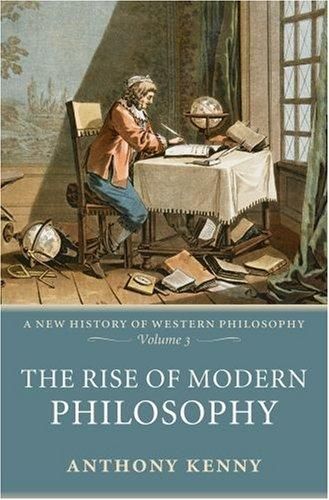
Sir Anthony Kenny’s engaging new multi-volume history of Western philosophy now advances into the modern era. The Rise of Modern Philosophy captures the fascinating story of the emergence, from the early sixteenth to the early nineteenth century, of the great ideas and intellectual systems that shaped modern thought. Kenny introduces us to some of the world’s most original and influential thinkers and helps us gain an understanding of their famous works. The great minds we meet include Rene Descartes, traditionally seen as the founder of modern philosophy; the great British philosophers Hobbes, Locke, and Hume; continental thinkers such as Spinoza, Liebniz, and Hegel; and the towering figure of Immanuel Kant, who perhaps more than any other made philosophy what it is today. Kenny first tells the story of modern philosophy chronologically: his lively, accessible narrative brings the philosophers to life and fills in the historical and intellectual background to their work. It is ideal as the first thing to read for someone new to this wonderfully creative period. Kenny then backtracks to look closely at each of the main areas of philosophical exploration in this period: knowledge and understanding; the nature of the physical universe; metaphysics (the most fundamental questions there are about existence); mind and soul; the nature and content of morality; political philosophy; and God. The book also features many intriguing and beautiful illustrations which evoke the human and social side of philosophy. Anyone who is interested in the evolution of modern thought will find this a book a treasure.
ما از اخلاق چه انتظاری داریم؟ این سوال شاید تاحدودی برای عموم مردم و یا متخصصان این رشته قابل پاسخ باشد؛ اینکه خوب بودن را به ما بیاموزد و در تنظیم روابط فردی م...

جشن کتاب تهران به ایستگاه سی و یکم رسیده است. حال و احوال نشر کتاب خوب نیست و باید فرهنگدوستان را به خرید و هدیه دادن کتاب ترغیب نمود. خانه اخلاقپژوهان جوان ب...

بنیاد کتابهای اخلاق اسلامی عمدتا پالایش جان از آلودگیها و آراستن آن به زیباییها است. اندیشه محوری این قبیل کتابها آن است که انسان فعلی آنی نیست که باید باشد...

-
0 Comments