Notice: تابع WP_Block_Type_Registry::register به طورنادرست فراخوانی شد. نامهای نوع بلوک نباید حروف بزرگ داشته باشند. لطفاً برای اطلاعات بیشتر، اشکال زدایی در وردپرس را مشاهده کنید. (این پیام در نگارش 5.0.0 افزوده شده است.) in /home/ethicsho/public_html/wp-includes/functions.php on line 5313
Warning: Use of undefined constant TDC_PATH_LEGACY - assumed 'TDC_PATH_LEGACY' (this will throw an Error in a future version of PHP) in /home/ethicsho/public_html/wp-content/plugins/td-composer/td-composer.php on line 109
Warning: Use of undefined constant TDSP_THEME_PATH - assumed 'TDSP_THEME_PATH' (this will throw an Error in a future version of PHP) in /home/ethicsho/public_html/wp-content/plugins/td-composer/td-composer.php on line 113 بایگانیهای Foreign Trade Regulation - خانه اخلاق پژوهان جوان Notice: Trying to access array offset on value of type bool in /home/ethicsho/public_html/wp-content/plugins/wp-ulike/inc/general-functions.php on line 807
Written across the disciplines of art history, literature, philosophy, sociology, and theology, the ten essays comprising the collection all insist on multidimensional definitions of evil.Taking its title from a moment in Shakespeare’s Tempest when Prospero acknowledges his responsibility for Caliban, this collection explores the necessarily ambivalent relationship between humanity and evil. To what extent are a given society’s definitions of evil self-serving? Which figures are marginalized in the process of identifying evil? How is humanity itself implicated in the production of evil? Is evil itself something fundamentally human? These questions, indicative of the kinds of issues raised in this collection, seem all the more pressing in light of recent world events.The ten essays were originally presented at the First Global Conference on Perspectives on Evil and Human Wickedness, held in March 2000, in Lady Margaret Hall, Oxford University.At the Interface/Probing the Boundaries seeks to encourage and promote cutting edge inter-disciplinary and multi-disciplinary projects and inquiry. By bringing people together from differing contexts, disciplines, professions, and vocations, the aim is to engage in conversations that are innovative, imaginative, and creatively interactive.Inter-Disciplinary dialogue enables people to go beyond the boundaries of what they usually encounter and share in perspectives that are new, challenging, and richly rewarding. This kind of dialogue often illuminates one’s own area of work, is suggestive of new possibilities for development, and creates exciting horizons for future conversations with persons from a wide variety of national and international settings.By sharing cross-disciplinary insights and perspectives, ATI/PTB publications are designed to be both exploratory examinations of particular areas and issues, and rigorous inquiries into specific subjects. Books in the series are enabling resources which will encourage sustained and creative dialogue, and become the future resource for further inquiries and research.
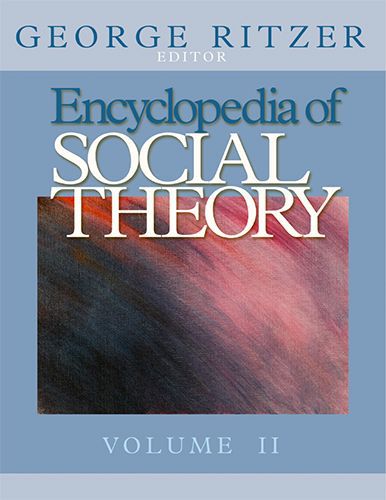
The Encyclopedia of Social Theory is an indispensable reference source for anyone interested in the roots of contemporary social theory. It examines the global landscape of all the key theories and the theorists behind them, presenting them in the context needed to understand their strengths and weaknesses. Led by internationally renowned scholar George Ritzer, the Encyclopedia of Social Theory draws together a team of more than 200 international scholars covering the developments, achievements, and prospects of social theory from its inception in the 18th century to the present. Understanding that social theory can both explain and alter the social world, this two-volume set serves as not only a foundation for learning, but also an inspiration for creative and reflexive engagement with the rich range of ideas it contains.
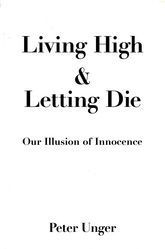
By contributing a few hundred dollars to a charity like UNICEF, a prosperous person can ensure that fewer poor children die, and that more will live reasonably long, worthwhile lives. Even when knowing this, however, most people send nothing, and almost all of the rest send little. What is the moral status of this behavior? To such common cases of letting die, our untutored response is that, while it is not very good, neither is the conduct wrong. What is the source of this lenient assessment? In this contentious new book, one of our leading philosophers argues that our intuitions about ethical cases are generated not by basic moral values, but by certain distracting psychological dispositions that all too often prevent us from reacting in accord with our commitments. Through a detailed look at how these tendencies operate, Unger shows that, on the good morality that we already accept, the fatally unhelpful behavior is monstrously wrong. By uncovering the eminently sensible ethics that we’ve already embraced fully, and by confronting us with empirical facts and with easily followed instructions for lessening serious suffering appropriately and effectively, Unger’s book points the way to a compassionate new moral philosophy.
ما از اخلاق چه انتظاری داریم؟ این سوال شاید تاحدودی برای عموم مردم و یا متخصصان این رشته قابل پاسخ باشد؛ اینکه خوب بودن را به ما بیاموزد و در تنظیم روابط فردی م...

جشن کتاب تهران به ایستگاه سی و یکم رسیده است. حال و احوال نشر کتاب خوب نیست و باید فرهنگدوستان را به خرید و هدیه دادن کتاب ترغیب نمود. خانه اخلاقپژوهان جوان ب...

بنیاد کتابهای اخلاق اسلامی عمدتا پالایش جان از آلودگیها و آراستن آن به زیباییها است. اندیشه محوری این قبیل کتابها آن است که انسان فعلی آنی نیست که باید باشد...

-
0 Comments