Notice: تابع WP_Block_Type_Registry::register به طورنادرست فراخوانی شد. نامهای نوع بلوک نباید حروف بزرگ داشته باشند. لطفاً برای اطلاعات بیشتر، اشکال زدایی در وردپرس را مشاهده کنید. (این پیام در نگارش 5.0.0 افزوده شده است.) in /home/ethicsho/public_html/wp-includes/functions.php on line 5313
Warning: Use of undefined constant TDC_PATH_LEGACY - assumed 'TDC_PATH_LEGACY' (this will throw an Error in a future version of PHP) in /home/ethicsho/public_html/wp-content/plugins/td-composer/td-composer.php on line 109
Warning: Use of undefined constant TDSP_THEME_PATH - assumed 'TDSP_THEME_PATH' (this will throw an Error in a future version of PHP) in /home/ethicsho/public_html/wp-content/plugins/td-composer/td-composer.php on line 113 بایگانیهای Evolution (Biology)/ Religious Aspects/ Christianity - خانه اخلاق پژوهان جوان Notice: Trying to access array offset on value of type bool in /home/ethicsho/public_html/wp-content/plugins/wp-ulike/inc/general-functions.php on line 807
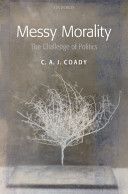
Tony Coady explores the challenges that morality poses to politics. He confronts the complex intellectual tradition known as realism, which seems to deny any relevance of morality to politics, especially international politics. He argues that, although realism has many serious faults, it has lessons to teach us: in particular, it cautions us against the dangers of moralism in thinking about politics and particularly foreign affairs. Morality must not be confused with moralism: Coady characterizes various forms of moralism and sketches their distorting influence on a realistic political morality. He seeks to restore the concept of ideals to an important place in philosophical discussion, and to give it a particular pertinence in the discussion of politics. He deals with the fashionable idea of “dirty hands,” according to which good politics will necessarily involve some degree of moral taint or corruption. Finally, he examines the controversial issue of the role of lying and deception in politics. Along the way Coady offers illuminating discussion of historical and current political controversies. This lucid book will provoke and stimulate anyone interested in the interface of morality and politics.
The Ethics of Aesthetics in Japanese Cinema and Literatureis a study of the ethics of modern Japanese aesthetics from the 1930s, through WWII and into the postwar period. What makes this book unique is that Nina Cornyetz opens up the field in new and controversial ways by exploring the tensions and harmonies between psychoanalytic ethics of the drive and socio-political ethics of relation to the other. Rejecting the convention of viewing these as contradictory, Cornyetz insists that the exemplars of psychoanalytic ethics are to the contrary, simultaneously politically ethical. Cornyetz embarks on innovative and unprecedented readings of some of the most significant literary and film texts of the Japanese canon, including works by Kawabata Yasunari, Mishima Yukio, Abe Kôbô and Shinoda Masahiro, all renowned for their texts’ aesthetic and philosophic brilliance. The study looks at how relations between individuals and communities in these texts either reiterate or transcend stereotypes, andhow desire is or is not limited by sociocultural norms. Cornyetz argues that these authors’ and filmmakers’ concepts of beauty and relation to others were, in fact, deeply impacted by political and social factors. Ranging from a discussion of fascist aesthetics to heterosexism in modern Japan,The Ethics of Aesthetics in Japanese Cinema and Literatureshows how certain changing political, intellectual and artistic issues, as well as sociocultural norms, variously nuanced these texts’ depictions of desire and the ‘other’. Through her analysis of cultural texts such as the filmsWoman in the DunesandDouble Suicide, Cornyetz challenges the convention that praises the universality of their artistic, existential or intellectual achievements. Rather she seeks to reorient these within a specifically Japanese historical context to give a new and insightful interpretation to the work. This ground breaking study is truly interdisciplinary and will appeal to students and scholars of Japaneseliterature, film, gender, culture, history and even psychoanalytic theory.
Biotechnology and the Challenge of Property addresses the question of how the advancement of property law is capable of controlling the interests generated by the engineering of human tissues. Through a comparative consideration of non-Western societies and industrialized cultures, this book addresses the impact of modern biotechnology, and its legal accommodation on the customary conduct and traditional beliefs which shape the lives of different communities. As such, it provides an introduction to the legal regulation of the evolving uses of human tissues, and its implications for traditional knowledge, beliefs and cultures.
ما از اخلاق چه انتظاری داریم؟ این سوال شاید تاحدودی برای عموم مردم و یا متخصصان این رشته قابل پاسخ باشد؛ اینکه خوب بودن را به ما بیاموزد و در تنظیم روابط فردی م...

جشن کتاب تهران به ایستگاه سی و یکم رسیده است. حال و احوال نشر کتاب خوب نیست و باید فرهنگدوستان را به خرید و هدیه دادن کتاب ترغیب نمود. خانه اخلاقپژوهان جوان ب...

بنیاد کتابهای اخلاق اسلامی عمدتا پالایش جان از آلودگیها و آراستن آن به زیباییها است. اندیشه محوری این قبیل کتابها آن است که انسان فعلی آنی نیست که باید باشد...

-
0 Comments