Notice: تابع WP_Block_Type_Registry::register به طورنادرست فراخوانی شد. نامهای نوع بلوک نباید حروف بزرگ داشته باشند. لطفاً برای اطلاعات بیشتر، اشکال زدایی در وردپرس را مشاهده کنید. (این پیام در نگارش 5.0.0 افزوده شده است.) in /home/ethicsho/public_html/wp-includes/functions.php on line 5313
Warning: Use of undefined constant TDC_PATH_LEGACY - assumed 'TDC_PATH_LEGACY' (this will throw an Error in a future version of PHP) in /home/ethicsho/public_html/wp-content/plugins/td-composer/td-composer.php on line 109
Warning: Use of undefined constant TDSP_THEME_PATH - assumed 'TDSP_THEME_PATH' (this will throw an Error in a future version of PHP) in /home/ethicsho/public_html/wp-content/plugins/td-composer/td-composer.php on line 113 بایگانیهای Evidence-based Medicine - خانه اخلاق پژوهان جوان Notice: Trying to access array offset on value of type bool in /home/ethicsho/public_html/wp-content/plugins/wp-ulike/inc/general-functions.php on line 807
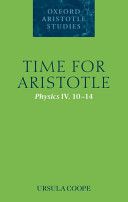
What is the relation between time and change? Does time depend on the mind? Is the present always the same or is it always different? Aristotle tackles these questions in the Physics, and Time for Aristotle is the first book in English devoted to this discussion. Aristotle claims that time is not a kind of change, but that it is something dependent on change; he defines it as a kind of “number of change.” Ursula Coope argues that what this means is that time is a kind of order (not, as is commonly supposed, a kind of measure). It is universal order within which all changes are related to each other. This interpretation enables Coope to explain two puzzling claims that Aristotle makes: that the now is like a moving thing, and that time depends for its existence on the mind. Brilliantly lucid in its explanation of this challenging section of the Physics, Time for Aristotle shows his discussion to be of enduring philosophical interest.
Why should we avoid doing moral wrong? The inability of philosophy to answer this question in a compelling manner–along with the moral skepticism and ethical confusion that ensue–result, Stephen Darwall argues, from our failure to appreciate the essentially interpersonal character of moral obligation. After showing how attempts to vindicate morality have tended to change the subject–falling back on nonmoral values or practical, first-person considerations–Darwall elaborates the interpersonal nature of moral obligations: their inherent link to our responsibilities to one another as members of the moral community.As Darwall defines it, the concept of moral obligation has an irreducibly second-person aspect; it presupposes our authority to make claims and demands on one another. And so too do many other central notions, including those of rights, the dignity of and respect for persons, and the very concept of person itself. The result is nothing less than a fundamental reorientation of moral theory that enables it at last to account for morality’s supreme authority–an account that Darwall carries from the realm of theory to the practical world of second-person attitudes, emotions, and actions.
At first sight, Karl Marx and Ludwig Wittgenstein may well seem to be as different from each other as it is possible for the ideas of two major intellectuals to be. Despite this standard conception, however, a small number of scholars have long suggested that there are deeper philosophical commonalities between Marx and Wittgenstein. They have argued that, once grasped, these commonalities can radically change and enrich understanding both of Marxism and of Wittgensteinian philosophy. This book develops and extends this unorthodox view, emphasizing the mutual enrichment that comes from bringing Marx’s and Wittgenstein’s ideas into dialogue with one another.
Mark Platts’ influential first book “Ways of Meaning” argued within the context of the philosophy of language that a realist’ account of moral thought was possible. “Moral Realities” defends the same possibility from the perspective of the philosophy of psychology. “Moral Realities” engages the classical moral philosophies of Hume, Mandeville and Nietzsche, and tackles the powerful arguments of the contemporary moral relativists. Platts uses an existing critique of philosophical notions of desire and value to present a descriptive metaphysics of morals–clarifying both what morality is and what it is not. He also employs a classification of desire that articulates a general theory of value and valuing which is distinguished by a cognitive approach given to certain kinds of moral valuing. The possibility of applying this approach to moral valuings is defended against the persuasive criticisms of both the Humean subjectivist and the contemporary moral relativist. This is a challenging book which illuminates many of the major issues of contemporary moral philosophy including: the practical nature of moral thought, free will and choice, morality and religious belief, and the pragmatics of moral discourse.
ما از اخلاق چه انتظاری داریم؟ این سوال شاید تاحدودی برای عموم مردم و یا متخصصان این رشته قابل پاسخ باشد؛ اینکه خوب بودن را به ما بیاموزد و در تنظیم روابط فردی م...

جشن کتاب تهران به ایستگاه سی و یکم رسیده است. حال و احوال نشر کتاب خوب نیست و باید فرهنگدوستان را به خرید و هدیه دادن کتاب ترغیب نمود. خانه اخلاقپژوهان جوان ب...

بنیاد کتابهای اخلاق اسلامی عمدتا پالایش جان از آلودگیها و آراستن آن به زیباییها است. اندیشه محوری این قبیل کتابها آن است که انسان فعلی آنی نیست که باید باشد...

-
0 Comments