Notice: تابع WP_Block_Type_Registry::register به طورنادرست فراخوانی شد. نامهای نوع بلوک نباید حروف بزرگ داشته باشند. لطفاً برای اطلاعات بیشتر، اشکال زدایی در وردپرس را مشاهده کنید. (این پیام در نگارش 5.0.0 افزوده شده است.) in /home/ethicsho/public_html/wp-includes/functions.php on line 5313
Warning: Use of undefined constant TDC_PATH_LEGACY - assumed 'TDC_PATH_LEGACY' (this will throw an Error in a future version of PHP) in /home/ethicsho/public_html/wp-content/plugins/td-composer/td-composer.php on line 109
Warning: Use of undefined constant TDSP_THEME_PATH - assumed 'TDSP_THEME_PATH' (this will throw an Error in a future version of PHP) in /home/ethicsho/public_html/wp-content/plugins/td-composer/td-composer.php on line 113 بایگانیهای Environmental Policy - Moral And Ethical Aspects - خانه اخلاق پژوهان جوان Notice: Trying to access array offset on value of type bool in /home/ethicsho/public_html/wp-content/plugins/wp-ulike/inc/general-functions.php on line 807
Emile Durkheim is best known in this country as a great sociologist and methodologist. Yet it was Durkheim’s reflections on morality and society that spoke most deeply of his vital concerns. In his informative introduction to this work, Robert N. Bellah describes Durkheim as moralist, philosopher, theologian, and prophet, as well as sociologist, and the selections in this volume are representative of these aspects of Durkheim’s many-faceted scholarship. The first two selections of the volume set the context for the development of Durkheim’s sociology of morality. Section I, “The French Tradition of Social Thought,” gives Durkheim’s picture of how his sociology is to be situated relative to the general French tradition. Section II, “Sociology and Social Action,” shows Durkheim grappling with moral and political issues in his society and indicates the immediate social context of his thinking. The remaining selections indicate some of the major substantive areas of Durkheim’s sociology of morality. Section III, taken from The Division of Labor in Society, demonstrates his basically evolutionary approach to the development of moral norms in society. Section IV, “The Learning of Morality,” gives examples of Durkheim’s work on socialization. Section V, “Social Creativity,” deals with the important question of how new moral norms arise in society.
Being a consumer is now integral to the human experience, something none of us can avoid. At the same time, many of the products that we buy come to us with histories steeped in highly unethical practices, such as worker exploitation, animal suffering, and environmental damage. Consuming Choices considers the ethical dimensions of consumer life by exploring several basic questions: Exactly what sorts of unethical practices are implicated in today’s consumer products? Does moral culpability for these practices fall solely on the companies that perform them, or does it also fall upon consumers who purchase the products made with such practices? And most importantly, do consumers ever have moral obligations to avoid particular products? To answer, David T. Schwartz provides the most detailed philosophical exploration to date on consumer ethics. He utilizes historical and fictional examples to illustrate the types of wrongdoing currently implicated by consumer products in this age of globalization, offers a clear description of the relevant moral theories and important ethical concepts, and provides concrete suggestions on how to be a more ethical consumer.
“A Letter Concerning Toleration is an English translation of a Latin work, the Epistola de Tolerantia , that John Locke wrote towards the end of the year 1685, while living – often in hiding – in the Dutch Republic. The Epistola was not however published until 1689, after Locke’s return to England, and the English translation followed very shortly after. It soon met with a critical reply, in a pamphlet written by the Oxford chaplain Jonas Proast, which was to launch a polemical exchange in the course of which Locke wrote three further defences of his argument for toleration. Unlike the Epistola/Letter (hereafter: Letter ), which is intense and compactly expressed, these defences are lengthy and often repetitive. But they comprise Locke’s most fully elaborated statement of his case; they are valuable, too, because the pressure of controversy led him to clarify the priorities among his arguments”–
Will the genetic design of athletes destroy sport ? or will it lead to a new and extraordinary age of athletic achievement? Exploring a new territory in sport and ethics, this edited collection contains some of the best new writing that has emerged from the debates concerning the uses of genetic technologies to improve sport performance. Issues covered include: * gene technology and sports ethics* genetic testing in sports* gene technology and the sporting ethos* gene technology and gender equality in sport. This cutting-edge text is the first on the subject to analyze gender specific questions that arise from genetically modified sport and is likely to provoke further debate in the world of sport and bio-ethics. Contributors include Lincoln Allison, Ruth Chadwick, Arne Ljungqvist, Andy Miah, Christian Munthe, Bengt Saltin, Angela Schnieder and many more.
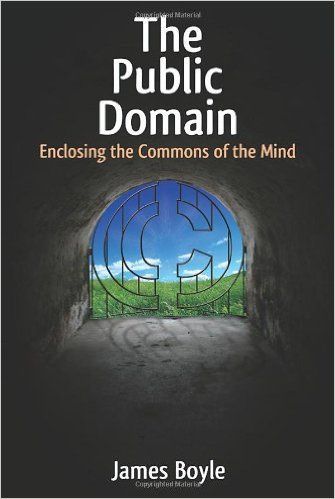
“In this enlightening book, James Boyle describes what he calls the range wars of the information age – today’s heated battles over intellectual property. Boyle argues that just as every informed citizen needs to know at least something about the environment and civil rights, every citizen should also understand intellectual property law. Why? Because intellectual property rights mark out the ground rules of the information society, and today’s policies are unbalanced, unsupported by evidence, and often detrimental to cultural access, free speech, digital creativity, and scientific innovation.” “Boyle identifies as a major problem the widespread failure to understand the importance of the public domain – the realm of material that everyone is free to use and share without permission or fee. The public domain is as vital to innovation and culture as the material protected by intellectual property rights, he asserts, and he calls for a movement akin to the environmental movement to preserve it. With a clear analysis of issues ranging from Jefferson’s philosophy of innovation to musical sampling, synthetic biology, and Internet file sharing, this timely book brings a positive new perspective to important cultural and legal debates. If we continue to enclose the “commons of the mind,” Boyle argues, we will all be the poorer.”–BOOK JACKET.
ما از اخلاق چه انتظاری داریم؟ این سوال شاید تاحدودی برای عموم مردم و یا متخصصان این رشته قابل پاسخ باشد؛ اینکه خوب بودن را به ما بیاموزد و در تنظیم روابط فردی م...

جشن کتاب تهران به ایستگاه سی و یکم رسیده است. حال و احوال نشر کتاب خوب نیست و باید فرهنگدوستان را به خرید و هدیه دادن کتاب ترغیب نمود. خانه اخلاقپژوهان جوان ب...

بنیاد کتابهای اخلاق اسلامی عمدتا پالایش جان از آلودگیها و آراستن آن به زیباییها است. اندیشه محوری این قبیل کتابها آن است که انسان فعلی آنی نیست که باید باشد...

-
0 Comments