Notice: تابع WP_Block_Type_Registry::register به طورنادرست فراخوانی شد. نامهای نوع بلوک نباید حروف بزرگ داشته باشند. لطفاً برای اطلاعات بیشتر، اشکال زدایی در وردپرس را مشاهده کنید. (این پیام در نگارش 5.0.0 افزوده شده است.) in /home/ethicsho/public_html/wp-includes/functions.php on line 5313
Warning: Use of undefined constant TDC_PATH_LEGACY - assumed 'TDC_PATH_LEGACY' (this will throw an Error in a future version of PHP) in /home/ethicsho/public_html/wp-content/plugins/td-composer/td-composer.php on line 109
Warning: Use of undefined constant TDSP_THEME_PATH - assumed 'TDSP_THEME_PATH' (this will throw an Error in a future version of PHP) in /home/ethicsho/public_html/wp-content/plugins/td-composer/td-composer.php on line 113 بایگانیهای Emotions - Political Aspects - خانه اخلاق پژوهان جوان Notice: Trying to access array offset on value of type bool in /home/ethicsho/public_html/wp-content/plugins/wp-ulike/inc/general-functions.php on line 807
An award-winning psychologist skillfully combines two genres-philosophical wisdom and scientific research-delighting the reader with surprising insights
This landmark text is the first introduction to concepts and issues in critical discourse analysis for educational researchers. The central premise is that critical discourse analysis must be conducted “systematically,” which means conducting inquiry into the ways in which language form and function correlate with social practices. Bringing together the work of New Literacy Studies, situated literacy, critical discourse theory and analysis with theories of learning, the text is distinctive in providing not just useful analytic accounts of discourse in classroom and other settings, but going on to identify ways in which these forms of language are connected to theories of learning. Contributions from two pioneers in the field–James Gee and Norman Fairclough–are combined with empirically grounded chapters that illustrate variations of their approaches to critical discourse analysis. Each chapter presents examples of systematical critical discourse analysis and its relevance in education settings, and provides detailed information on analytic procedures. An Introduction to Critical Discourse Analysis in Education: *introduces key concepts in critical discourse analysis and answers some of the frequently asked questions; *situates critical discourse analysis within educational research; and *provides detailed analytic procedures, to demystify the process, allow researchers to have a conversation about issues of trustworthiness of interpretations and value to educational contexts, and enable replication of studies. The new synthesis of theoretical and empirical studies in critical discourse analysis and education the book presents will interest newcomers to critical discourse analysis, as well as researchers and educators interested in discourse, identity, and learning. The descriptive, critical ethnographic and interpretive approaches to critical discourse analysis developed in each chapter make the book accessible yet theoretically rich. Pedagogical features make critical discourse analysis accessible to students. The text is cross-disciplinary, intended for courses in qualitative methodology, discourse analysis, critical discourse studies, and literacy education. It will appeal not only to education researchers but to a wide readership within literacy studies, linguistics, sociology, and other social sciences concerned with contemporary approaches to describing and explaining the role of language in learning and education.
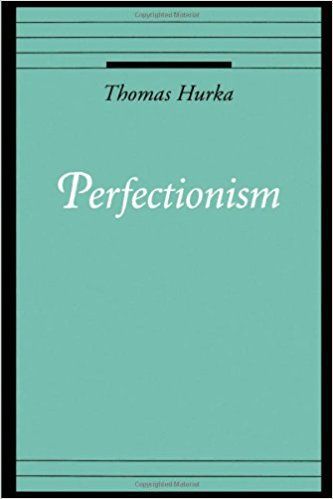
Perfectionism is one of the great moralities of the Western tradition. It holds that certain states of humans, such as knowledge, achievement, and friendship, are good apart from any pleasure they may bring, and that the morally right act is always the one that most promotes these states. Defined more narrowly, perfectionism identifies the human good by reference to human nature: if knowledge and achievement are good, it is because they realize aspects of human nature. This book gives an account of perfectionism, first in the narrower sense, analyzing its central concepts and defending a theory of human nature in which rationality plays a central role. It then uses this theory to construct an elaborate account of the intrinsic value of beliefs and actions that embody rationality, and applies this account to political questions about liberty and equality. The book attempts to formulate the most defensible version of perfectionism, using contemporary analytic techniques. It aims both to regain for perfectionism a central place in contemporary moral debate and to shed light on the writings of classical perfectionists such as Aristotle, Aquinas, Hegel, Marx, Nietzsche, and T.H. Green.
ما از اخلاق چه انتظاری داریم؟ این سوال شاید تاحدودی برای عموم مردم و یا متخصصان این رشته قابل پاسخ باشد؛ اینکه خوب بودن را به ما بیاموزد و در تنظیم روابط فردی م...

جشن کتاب تهران به ایستگاه سی و یکم رسیده است. حال و احوال نشر کتاب خوب نیست و باید فرهنگدوستان را به خرید و هدیه دادن کتاب ترغیب نمود. خانه اخلاقپژوهان جوان ب...

بنیاد کتابهای اخلاق اسلامی عمدتا پالایش جان از آلودگیها و آراستن آن به زیباییها است. اندیشه محوری این قبیل کتابها آن است که انسان فعلی آنی نیست که باید باشد...

-
0 Comments