Notice: تابع WP_Block_Type_Registry::register به طورنادرست فراخوانی شد. نامهای نوع بلوک نباید حروف بزرگ داشته باشند. لطفاً برای اطلاعات بیشتر، اشکال زدایی در وردپرس را مشاهده کنید. (این پیام در نگارش 5.0.0 افزوده شده است.) in /home/ethicsho/public_html/wp-includes/functions.php on line 5313
Warning: Use of undefined constant TDC_PATH_LEGACY - assumed 'TDC_PATH_LEGACY' (this will throw an Error in a future version of PHP) in /home/ethicsho/public_html/wp-content/plugins/td-composer/td-composer.php on line 109
Warning: Use of undefined constant TDSP_THEME_PATH - assumed 'TDSP_THEME_PATH' (this will throw an Error in a future version of PHP) in /home/ethicsho/public_html/wp-content/plugins/td-composer/td-composer.php on line 113 بایگانیهای Education, Higher/ Moral And Ethical Aspects - خانه اخلاق پژوهان جوان Notice: Trying to access array offset on value of type bool in /home/ethicsho/public_html/wp-content/plugins/wp-ulike/inc/general-functions.php on line 807
Virtue ethics has attracted a lot of attention over the past few decades, and more recently there has been considerable interest in virtue epistemology as an alternative to traditional approaches in that field. Ironically, although virtue epistemology got its inspiration from virtue ethics, this is the first book that brings virtue epistemologists and virtue ethicists together to contribute their particular expertise, and the first that is devoted to the topic of intellectual virtue. All new and right up to date, the papers collected here by Zagzebski and DePaul demonstrate the benefit of each branch of philosophy to the other. Intellectual Virtue will be required reading for anyone working in either field.
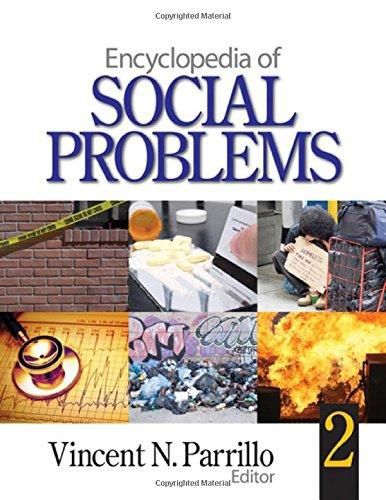
Social problems affect everyone. Because so many actual and potential problems confront us, it is often difficult to decide which ones affect us most severely. Is it the threat of death or injury during a terrorist attack? Is it the threat caused by industrial pollution that may poison us or destroy our physical environment? Or does quiet but viciously damaging gender, age, class, racial, or ethnic discrimination have the most far-reaching effect? Do the problems of cities affect us if we live in the suburbs? Do poorer nations’ problems with overpopulation affect our quality of life? The Encyclopedia of Social Problems offers an interdisciplinary perspective into many social issues that are a continuing concern in our lives, whether we confront them on a personal, local, regional, national, or global level. With more than 600 entries, these two volumes cover all of the major theories, approaches, and contemporary issues in social problems and also provide insight into how social conditions get defined as social problems, and the ways different people and organizations view and try to solve them.Key Features· Provides as comprehensive an approach as possible to this multifaceted field by using experts and scholars from 19 disciplines: anthropology, biology, business, chemistry, communications, criminal justice, demography, economics, education, environmental studies, geography, health, history, languages, political science, psychology, social work, sociology, and women’s studies· Presents a truly international effort with contributors from 17 countries: Argentina, Australia, Canada, England, France, Germany, Greece, Hong Kong, India, Ireland, Italy, Kenya, New Zealand, Romania, Scotland, Turkey, and the United States· Addresses social problems that are fairly new, such as computer crimes and identity theft, and others that are centuries old, such as poverty and prostitution· Examines social problems differently from place to place and from one era to another· Explains the perspectives and foundations of various social theories and offers different lenses to view the same realityKey Themes· Aging and the Life Course· Community, Culture, and Change · Crime and Deviance · Economics and Work · Education· Family · Gender Inequality and Sexual Orientation · Health · Housing and Urbanization · Politics, Power, and War · Population and Environment · Poverty and Social Class · Race and Ethnic Relations · Social Movements · Social Theory · Substance Abuse Readers investigating virtually any social problem will find a rich treasure of information and insights in this reference work, making it a must-have resource for any academic library.
The capability approach to social justice construes a person’s well-being in terms of the substantive freedoms people have reason to value beyond mere utility or access to resources. In this book John Alexander engages with the rapidly growing body of literature on the capability approach in economics, inequality and poverty measurement, and development studies, paying particular attention to Amartya Sen and Martha Nussbaum’s collaborative work on the capability approach in normative economics, social ethics and political philosophy. Through a critical discussion of Sen and Nussbaum’s literature, the book develops a unified vision of the capability approach embodied in the ideal of creating the greatest possible condition for the realization of basic capabilities for all and assesses it as a political theory arguing that capabilities are necessary but not sufficient for overcoming conditions of domination and concluding that the freedom as non-domination calls for a reinforcement of certain basic capabilities under ‘constitutional provisions’ and for envisioning a more intimate relationship between individual liberty and the freedom of the political community as a whole.
This widely anticipated volume offers a systematic introduction to and striking analysis of the central issues animating current debate in moral philosophy. It will be of interest to anyone with a serious interest in the philosophical foundations of ethics. Topics discussed include: realist vs. anti-realist accounts of moral truth, cognitivist vs expressivist accounts of moral judgement; internalist vs externalist accounts of the relation between moral judgment and the will; Humean vs anti-Humean theories of motivation; and the debate between those who think that morality is a system of hypothetical imperatives and those who think that moral requirements are categorical. In 2000, The Moral Problem received The American Philosophical Association’s first APA Book Prize for excellence in scholarship.
ما از اخلاق چه انتظاری داریم؟ این سوال شاید تاحدودی برای عموم مردم و یا متخصصان این رشته قابل پاسخ باشد؛ اینکه خوب بودن را به ما بیاموزد و در تنظیم روابط فردی م...

جشن کتاب تهران به ایستگاه سی و یکم رسیده است. حال و احوال نشر کتاب خوب نیست و باید فرهنگدوستان را به خرید و هدیه دادن کتاب ترغیب نمود. خانه اخلاقپژوهان جوان ب...

بنیاد کتابهای اخلاق اسلامی عمدتا پالایش جان از آلودگیها و آراستن آن به زیباییها است. اندیشه محوری این قبیل کتابها آن است که انسان فعلی آنی نیست که باید باشد...

-
0 Comments