Notice: تابع WP_Block_Type_Registry::register به طورنادرست فراخوانی شد. نامهای نوع بلوک نباید حروف بزرگ داشته باشند. لطفاً برای اطلاعات بیشتر، اشکال زدایی در وردپرس را مشاهده کنید. (این پیام در نگارش 5.0.0 افزوده شده است.) in /home/ethicsho/public_html/wp-includes/functions.php on line 5313
Warning: Use of undefined constant TDC_PATH_LEGACY - assumed 'TDC_PATH_LEGACY' (this will throw an Error in a future version of PHP) in /home/ethicsho/public_html/wp-content/plugins/td-composer/td-composer.php on line 109
Warning: Use of undefined constant TDSP_THEME_PATH - assumed 'TDSP_THEME_PATH' (this will throw an Error in a future version of PHP) in /home/ethicsho/public_html/wp-content/plugins/td-composer/td-composer.php on line 113 بایگانیهای Economics - Philosophy - خانه اخلاق پژوهان جوان Notice: Trying to access array offset on value of type bool in /home/ethicsho/public_html/wp-content/plugins/wp-ulike/inc/general-functions.php on line 807
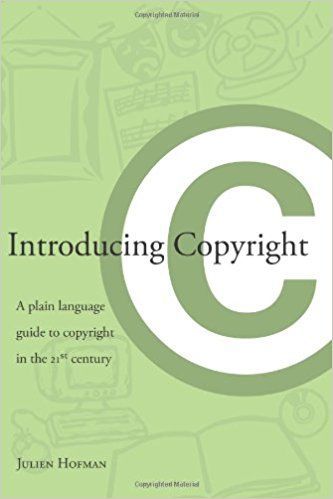
Works that copyright protects ā such as books, magazines, websites, computer programs, music and videos ā are an important part of modern life. Yet many who use these works, and even some who produce them, do not understand copyright. I wrote this introduction to copyright for those in business, the entertainment industry and education, and for those who use and create copyright works in all their different forms. The book explains what copyright protection means for copyright holders and for copyright users. It also introduces readers to contemporary copyright topics: digital rights management, open licences, software patents and protection for works of traditional knowledge. A final chapter tries to predict how technology will change the publishing and entertainment industries that depend on copyright. The book assumes no special knowledge and avoids technical language as much as possible.
“Political institutions are or ought to be the main subject of political theory. The essays in this collection are works of political theory devoted specifically to the institutions and institutional principles of modern democracy. They illustrate the author’s contention in the opening chapter that the theory of politics needs to reorient itself so that it is not just the study of social justice. Institutions need to be taken seriously, by normative political theorists as much as by empirical political scientists. The collection includes studies of constitutionalism, the separation of powers, bicameralism, loyal opposition, representation, legislative due process, democratic accountability, and judicial review. It also includes critical essays on the political philosophies of Hannah Arendt and Isaiah Berlin”–Publisher’s information.
Abortion in Judaism presents a complete Jewish legal history of abortion from the earliest relevant biblical references through the end of the twentieth century. For the first time, almost every Jewish text relevant to the abortion issue is explored in detail. These texts are investigated in historical sequence, thereby elucidating the development inherent within the Jewish approach to abortion. Following the examination of the foundational sources, a range of contemporary responses from across the Jewish spectrum is also introduced in order to probe their place in this history, as well as to discern the directions in which they would have the law proceed. The impact of Jewish abortion law upon Israeli legislative enactments is evaluated, along with the social outcomes of such legislation. Finally, the work considers the insights that this thematic history provides into Jewish ethical principles, as well as into the role of halakhah within Judaism.
“In The Myth of Morality, Richard Joyce argues that moral discourse is hopelessly flawed. At the heart of ordinary moral judgments is a notion of moral inescapability, or practical authority, which, upon investigation, cannot be reasonably defended. Joyce argues that natural selection is to blame, in that it has provided us with a tendency to invest the world with values that it does not contain, and demands that it does not make. Should we therefore do away with morality, as we did away with other faulty notions such as witches? Possibly not. We may be able to carry on with morality as a useful fiction – allowing it to have a regulative influence on our lives and decisions, perhaps even playing a central role – while not committing ourselves to believing or asserting falsehoods, and thus not being subject to accusations of error.”–BOOK JACKET.
ما از اخلاق چه انتظاری داریم؟ این سوال شاید تاحدودی برای عموم مردم و یا متخصصان این رشته قابل پاسخ باشد؛ اینکه خوب بودن را به ما بیاموزد و در تنظیم روابط فردی م...

جشن کتاب تهران به ایستگاه سی و یکم رسیده است. حال و احوال نشر کتاب خوب نیست و باید فرهنگدوستان را به خرید و هدیه دادن کتاب ترغیب نمود. خانه اخلاقپژوهان جوان ب...

بنیاد کتابهای اخلاق اسلامی عمدتا پالایش جان از آلودگیها و آراستن آن به زیباییها است. اندیشه محوری این قبیل کتابها آن است که انسان فعلی آنی نیست که باید باشد...

-
0 Comments