Notice: تابع WP_Block_Type_Registry::register به طورنادرست فراخوانی شد. نامهای نوع بلوک نباید حروف بزرگ داشته باشند. لطفاً برای اطلاعات بیشتر، اشکال زدایی در وردپرس را مشاهده کنید. (این پیام در نگارش 5.0.0 افزوده شده است.) in /home/ethicsho/public_html/wp-includes/functions.php on line 5313
Warning: Use of undefined constant TDC_PATH_LEGACY - assumed 'TDC_PATH_LEGACY' (this will throw an Error in a future version of PHP) in /home/ethicsho/public_html/wp-content/plugins/td-composer/td-composer.php on line 109
Warning: Use of undefined constant TDSP_THEME_PATH - assumed 'TDSP_THEME_PATH' (this will throw an Error in a future version of PHP) in /home/ethicsho/public_html/wp-content/plugins/td-composer/td-composer.php on line 113 بایگانیهای Derecho - خانه اخلاق پژوهان جوان Notice: Trying to access array offset on value of type bool in /home/ethicsho/public_html/wp-content/plugins/wp-ulike/inc/general-functions.php on line 807
Jeremy Carrette argues that the psychology of religion is no longer sustainable without a social critique, and that as William James predicted, the project of the modernist psychology of religion has failed. Controversially he champions greater social and philosophical analysis within the field to challenge the political naivety and disciplinary illusions of the traditional approaches to psychology of religion. Carrette discusses the relevance of the social and economic factors surrounding the debates of psychology and religion, through three critical examples: psychoanalysis humanistic psychology cognitive neuroscience. A Critical Psychology of Religion provides a new dimension to the debates surrounding religious experience. It will be of interest to students and researchers in the fields of critical psychology, religious experience and the psychology of religion and extends aninterdisciplinary challenge to the separation of psychology, sociology, politics, economics and religion.
From Empedocles to Wittgenstein is a collection of fifteen historical essays in philosophy, written by Sir Anthony Kenny in the early years of the 21st century. In the main they are concerned with four of the great philosophers whom he most esteems, namely Plato, Aristotle, Aquinas, and Wittgenstein. The author is not only one of the most respected historians of philosophy, and possibly the widest-ranging, but also one of the most successful at writing on the subject for a broad readership. In this volume he presents scholarly explorations of some themes which caught his interest as he worked on his acclaimed four-volume New History of Western Philosophy.
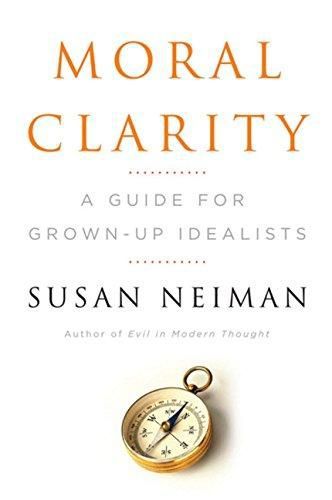
Susan Neiman is a moral philosopher committed to making the tools of her trade relevant to real life. In Moral Clarity, she shows how resurrecting a moral vocabulary good and evil, heroism and nobility can steer us clear of the dogmas of the right and the helpless pragmatism of the left. In search of a framework for forming clear opinions and taking responsible action on today’s urgent political and social questions, Neiman reaches back to the eighteenth century, retrieving a set of virtues happiness, reason, reverence, and hope that were held high by every Enlightenment thinker. She shows that the pursuit of moral clarity is not a matter of religious faith but is open to all who are committed to these ideals, believers and nonbelievers alike. And she draws on literature, evolutionary theory, and other contemporary research to show why, by keeping before us the distinction between the real and the possible, these ideals continue to guide and inspire.
“Liberal Utilitarianism and Applied Ethics” explores the foundations of early utilitarianism as well as the theoretical basis of social ethics and policy in modern Western welfare states. Matti Hayry shows how philosophers have misunderstood the very nature of utilitarianism since the turn of the 19th century and identifies the resulting problems in contemporary utilitarianism. Hayry argues that when the classical utilitarian principles of happiness, hedonism and impartiality are combined, the ensuing ethical theory may demand that we act immorally or unjustly. This is because the scope of the utilitarian theory has been extended too far. Hayry develops a more limited utilitarian theory based on the ethos of early British universal altruism. He argues that a limited version of liberal utilitarianism and the methods of applied ethics should be employed to define our moral duties and rights. This is an important book in current discussions on social ethics and policy. Hayry’s accomplished defense of utilitarian morality is certain to provoke debate.
If there is such a thing as reason, it has to be universal. Reason must reflect objective principles whose validity is independent of our point of view–principles that anyone with enough intelligence ought to be able to recognize as correct. But this generality of reason is what relativists and subjectivists deny in ever-increasing numbers. And such subjectivism is not just an inconsequential intellectual flourish or badge of theoretical chic. It is exploited to deflect argument and to belittle the pretensions of the arguments of others. The continuing spread of this relativistic way of thinking threatens to make public discourse increasingly difficult and to exacerbate the deep divisions of our society. In The Last Word, Thomas Nagel, one of the most influential philosophers writing in English, presents a sustained defense of reason against the attacks of subjectivism, delivering systematic rebuttals of relativistic claims with respect to language, logic, science, and ethics. He shows that the last word in disputes about the objective validity of any form of thought must lie in some unqualified thoughts about how things are–thoughts that we cannot regard from outside as mere psychological dispositions.
ما از اخلاق چه انتظاری داریم؟ این سوال شاید تاحدودی برای عموم مردم و یا متخصصان این رشته قابل پاسخ باشد؛ اینکه خوب بودن را به ما بیاموزد و در تنظیم روابط فردی م...

جشن کتاب تهران به ایستگاه سی و یکم رسیده است. حال و احوال نشر کتاب خوب نیست و باید فرهنگدوستان را به خرید و هدیه دادن کتاب ترغیب نمود. خانه اخلاقپژوهان جوان ب...

بنیاد کتابهای اخلاق اسلامی عمدتا پالایش جان از آلودگیها و آراستن آن به زیباییها است. اندیشه محوری این قبیل کتابها آن است که انسان فعلی آنی نیست که باید باشد...

-
0 Comments