Notice: تابع WP_Block_Type_Registry::register به طورنادرست فراخوانی شد. نامهای نوع بلوک نباید حروف بزرگ داشته باشند. لطفاً برای اطلاعات بیشتر، اشکال زدایی در وردپرس را مشاهده کنید. (این پیام در نگارش 5.0.0 افزوده شده است.) in /home/ethicsho/public_html/wp-includes/functions.php on line 5313
Warning: Use of undefined constant TDC_PATH_LEGACY - assumed 'TDC_PATH_LEGACY' (this will throw an Error in a future version of PHP) in /home/ethicsho/public_html/wp-content/plugins/td-composer/td-composer.php on line 109
Warning: Use of undefined constant TDSP_THEME_PATH - assumed 'TDSP_THEME_PATH' (this will throw an Error in a future version of PHP) in /home/ethicsho/public_html/wp-content/plugins/td-composer/td-composer.php on line 113 بایگانیهای Courage - خانه اخلاق پژوهان جوان Notice: Trying to access array offset on value of type bool in /home/ethicsho/public_html/wp-content/plugins/wp-ulike/inc/general-functions.php on line 807
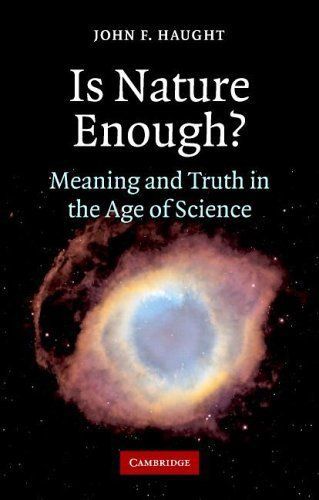
Is nature all there is? John Haught examines this question and in doing so addresses a fundamental issue in the dialogue of science with religion. The belief that nature is all there is and that no overall purpose exists in the universe is known broadly as ‘naturalism’. Naturalism, in this context, denies the existence of any realities distinct from the natural world and human culture. Since the rise of science in the modern world has had so much influence on naturalism’s intellectual acceptance, the author focuses on ‘scientific’ naturalism and the way in which its defenders are now attempting to put a distance between contemporary thought and humanity’s religious traditions. Haught seeks to provide a reasonable, scientifically informed alternative to naturalism. His approach will provide the basis for lively discussion among students, scholars, scientists, theologians and intellectually curious people in general.
What makes us human? Why do people think, feel and act as they do? What is the essence of human nature? What is the basic relationship between the individual and society? These questions have fascinated both great thinkers and ordinary humans for centuries. Now, at last, there is a solid basis for answering them, in the form of accumulated efforts and studies by thousands of psychology researchers. We no longer have to rely on navel-gazing and speculation to understand why people are the way they are – we can instead turn to solid, objective findings. This book, by an eminent social psychologist at the peak of his career, not only summarizes what we know about people – it also offers a coherent, easy-to-understand, though radical, explanation. Turning conventional wisdom on its head, the author argues that culture shaped human evolution. Contrary to theories that depict the individual’s relation to society as one of victimization, endless malleability, or just a square peg in a round hole, he proposes that the individual human being is designed by nature to be part of society. Moreover, he argues that we need to briefly set aside the endless study of cultural differences to look at what most cultures have in common – because that holds the key to human nature. Culture is in our genes, although cultural differences may not be. This core theme is further developed by a powerful tour through the main dimension of human psychology. What do people want? How do people think? How do emotions operate? How do people behave? And how do they interact with each other? The answers are often surprising, and along the way the author explains how human desire, thought, feeling, and action are connected.
Firmly established as the standard text for undergraduate courses in ethics, this concise, lively book takes the reader on an in-depth tour of the major moral theories, always illustrating abstract ideas with concrete examples. Separate, self-contained chapters examine such theories as Egoism, Kantianism, Utilitarianism, Virtue Ethics, and the Social Contract Theory. Through this conceptual framework, the text addresses timely and provocative issues, including abortion, racism, euthanasia, poverty, marijuana, homosexuality, the death penalty, and vegetarianism. The text’s versatility makes it an ideal choice for use not only in ethical theory courses, but also in applied ethics courses of all kinds.
ما از اخلاق چه انتظاری داریم؟ این سوال شاید تاحدودی برای عموم مردم و یا متخصصان این رشته قابل پاسخ باشد؛ اینکه خوب بودن را به ما بیاموزد و در تنظیم روابط فردی م...

جشن کتاب تهران به ایستگاه سی و یکم رسیده است. حال و احوال نشر کتاب خوب نیست و باید فرهنگدوستان را به خرید و هدیه دادن کتاب ترغیب نمود. خانه اخلاقپژوهان جوان ب...

بنیاد کتابهای اخلاق اسلامی عمدتا پالایش جان از آلودگیها و آراستن آن به زیباییها است. اندیشه محوری این قبیل کتابها آن است که انسان فعلی آنی نیست که باید باشد...

-
0 Comments