Notice: تابع WP_Block_Type_Registry::register به طورنادرست فراخوانی شد. نامهای نوع بلوک نباید حروف بزرگ داشته باشند. لطفاً برای اطلاعات بیشتر، اشکال زدایی در وردپرس را مشاهده کنید. (این پیام در نگارش 5.0.0 افزوده شده است.) in /home/ethicsho/public_html/wp-includes/functions.php on line 5313
Warning: Use of undefined constant TDC_PATH_LEGACY - assumed 'TDC_PATH_LEGACY' (this will throw an Error in a future version of PHP) in /home/ethicsho/public_html/wp-content/plugins/td-composer/td-composer.php on line 109
Warning: Use of undefined constant TDSP_THEME_PATH - assumed 'TDSP_THEME_PATH' (this will throw an Error in a future version of PHP) in /home/ethicsho/public_html/wp-content/plugins/td-composer/td-composer.php on line 113 بایگانیهای Corporate Governance - Moral And Ethical Aspects - Congresses - خانه اخلاق پژوهان جوان Notice: Trying to access array offset on value of type bool in /home/ethicsho/public_html/wp-content/plugins/wp-ulike/inc/general-functions.php on line 807
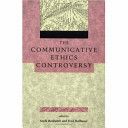
This timely reader in moral philosophy addresses a controversy that strongly affected recent European reflections on the relevance of ethics for theories of democratic institutions and democratic legitimacy. The debate centers around the idea of a communicative ethics as articulated by Jurgen Habermas and Karl-Otto Apel, and it is representative both of recent attempts to bridge the gap between Continental and Anglo-American philosophy and of the turn to language that has characterized much of recent philosophy.The Communicative Ethics Controversy illustrates philosophical dialogue in action, moving from theses to counterarguments to rejoinders. Theoretical statements by Habermas, Apel, and two of their leading students, Dietrich Bohler and Robert Alexy, are followed by a series of five arguments by their leading critics, who represent viewpoints ranging from Kantian idealism to Wittgensteinian ordinary-language theory. Fred Dallmayr’s introduction and Seyla Benhabib’s incisive conclusion place the debate in perspective, bringing it up to date and relating it to the Anglo-American context.Seyla Benhabib is Associate Professor of Philosophy and Women’s Studies at the State University of New York, Stony Brook. Fred Dallmayr is Packey Dee Professor of Government at the University of Notre Dame.Contributors: Robert Alexy. Karl-Otto Apel. Seyla Benhabib. Dietrich Bohler. Jurgen Habermas. Otfried Hoffe. KarlHeinz Ilting. Hermann Lubbe. Herbert Schnadelbach. Albrecht Wellmer.
Do citizens have an obligation to obey the law? This book differs from standard approaches by shifting from the language of obedience (orders) to that of deference (normative judgments). The popular view that law claims authority but does not have it is here reversed on both counts: Law does not claim authority but has it. Though the focus is on political obligation, the author approaches that issue indirectly by first developing a more general account of when deference is due to the view of others. Two standard practices that political theorists often consider in exploring the question of political obligation – fair-play and promise-keeping – can themselves be seen as examples of a duty of deference. In this respect the book defends a more general theory of ethics whose scope extends beyond the question of political obligation to questions of duty in the case of law, promises, fair play and friendship.
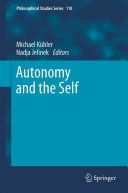
This volume addresses the complex interplay between the conditions of an agent’s personal autonomy and the constitution of her self in light of two influential background assumptions: a libertarian thesis according to which it is essential for personal autonomy to be able to choose freely how one’s self is shaped, on the one hand, and a line of thought following especially the seminal work of Harry Frankfurt according to which personal autonomy necessarily rests on an already sufficiently shaped self, on the other hand. Given this conceptual framework, a number of influential aspects within current debate can be addressed in a new and illuminating light: accordingly, the volume’s contributions range from 1) discussing fundamental conceptual interconnections between personal autonomy and freedom of the will, 2) addressing the exact role and understanding of different personal traits, e.g. Frankfurt’s notion of volitional necessities, commitments to norms and ideals, emotions, the phenomenon of weakness of will, and psychocorporeal aspects, 3) and finally taking into account social influences, which are discussed in terms of their ability to buttress, to weaken, or even to serve as necessary preconditions of personal autonomy and the forming of one’s self. The volume thus provides readers with an extensive and most up-to-date discussion of various influential strands of current philosophical debate on the topic. It is of equal interest to all those already engaged in the debate as well as to readers trying to get an up-to-date overview or looking for a textbook to use in courses.
ما از اخلاق چه انتظاری داریم؟ این سوال شاید تاحدودی برای عموم مردم و یا متخصصان این رشته قابل پاسخ باشد؛ اینکه خوب بودن را به ما بیاموزد و در تنظیم روابط فردی م...

جشن کتاب تهران به ایستگاه سی و یکم رسیده است. حال و احوال نشر کتاب خوب نیست و باید فرهنگدوستان را به خرید و هدیه دادن کتاب ترغیب نمود. خانه اخلاقپژوهان جوان ب...

بنیاد کتابهای اخلاق اسلامی عمدتا پالایش جان از آلودگیها و آراستن آن به زیباییها است. اندیشه محوری این قبیل کتابها آن است که انسان فعلی آنی نیست که باید باشد...

-
0 Comments