Notice: تابع WP_Block_Type_Registry::register به طورنادرست فراخوانی شد. نامهای نوع بلوک نباید حروف بزرگ داشته باشند. لطفاً برای اطلاعات بیشتر، اشکال زدایی در وردپرس را مشاهده کنید. (این پیام در نگارش 5.0.0 افزوده شده است.) in /home/ethicsho/public_html/wp-includes/functions.php on line 5313
Warning: Use of undefined constant TDC_PATH_LEGACY - assumed 'TDC_PATH_LEGACY' (this will throw an Error in a future version of PHP) in /home/ethicsho/public_html/wp-content/plugins/td-composer/td-composer.php on line 109
Warning: Use of undefined constant TDSP_THEME_PATH - assumed 'TDSP_THEME_PATH' (this will throw an Error in a future version of PHP) in /home/ethicsho/public_html/wp-content/plugins/td-composer/td-composer.php on line 113 بایگانیهای Corporate Culture - Case Studies. - United States - خانه اخلاق پژوهان جوان Notice: Trying to access array offset on value of type bool in /home/ethicsho/public_html/wp-content/plugins/wp-ulike/inc/general-functions.php on line 807
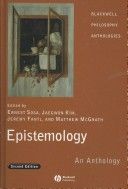
New and thoroughly updated, Epistemology: An Anthology continues to represent the most comprehensive and authoritative collection of canonical readings in the theory of knowledge. Concentrates on the central topics of the field, such as skepticism and the Pyrrhonian problematic, the definition of knowledge, and the structure of epistemic justification Offers coverage of more specific topics, such as foundationalism vs coherentism, and virtue epistemology Presents wholly new sections on ‘Testimony, Memory, and Perception’ and ‘The Value of Knowledge’ Features modified sections on ‘The Structure of Knowledge and Justification’, ‘The Non-Epistemic in Epistemology’, and ‘The Nature of the Epistemic’ Includes many of the most important contributions made in recent decades by several outstanding authors
Understanding human beings and their distinctive rational and volitional capacities is one of the central tasks of philosophy. The task requires a clear account of such things as reasons, desires, emotions and motives, and of how they combine to produce and explain human behaviour. In Kinds of Reasons, Maria Alvarez offers a fresh and incisive treatment of these issues, focusing in particular on reasons as they feature in contexts of agency. Her account builds on some important recent work in the area; but she takes her main inspiration from the tradition that receives its seminal contemporary expression in the writings of G.E.M. Anscombe, a tradition that runs counter to the broadly Humean orthodoxy that has dominated the theory of action for the past forty years. Alvarez’s conclusions are therefore likely to be controversial; and her bold and painstaking arguments will be found provocative by participants on every side of the debates with which she engages. Clear and directly written, Kinds of Reasons aims to stake out a distinctive position within one of the most hotly contested areas of contemporary philosophy.
Hamlet tells Horatio that there are more things in heaven and earth than are dreamt of in his philosophy. InDouble Vision, philosopher and literary critic Tzachi Zamir argues that there are more things in Hamlet than are dreamt of–or at least conceded–by most philosophers. Making an original and persuasive case for the philosophical value of literature, Zamir suggests that certain important philosophical insights can be gained only through literature. But such insights cannot be reached if literature is deployed merely as an aesthetic sugaring of a conceptual pill. Philosophical knowledge is not opposed to, but is consonant with, the literariness of literature. By focusing on the experience of reading literature as literature and not philosophy, Zamir sets a theoretical framework for a philosophically oriented literary criticism that will appeal both to philosophers and literary critics. Double Visionis concerned with the philosophical understanding induced by the aesthetic experience of literature. Literary works can function as credible philosophical arguments–not ones in which claims are conclusively demonstrated, but in which claims are made plausible. Such claims, Zamir argues, are embedded within an experiential structure that is itself a crucial dimension of knowing. Developing an account of literature’s relation to knowledge, morality, and rhetoric, and advancing philosophical-literary readings ofRichard III, Macbeth, Romeo and Juliet, Othello, Antony and Cleopatra, Hamlet, andKing Lear, Zamir shows how his approach can open up familiar texts in surprising and rewarding ways.
Also contains Ethics, Correspondence, all in excellent R. Elwes translation. Basic works on entry to philosophy, pantheism, exchange of ideas with great contemporaries.
ما از اخلاق چه انتظاری داریم؟ این سوال شاید تاحدودی برای عموم مردم و یا متخصصان این رشته قابل پاسخ باشد؛ اینکه خوب بودن را به ما بیاموزد و در تنظیم روابط فردی م...

جشن کتاب تهران به ایستگاه سی و یکم رسیده است. حال و احوال نشر کتاب خوب نیست و باید فرهنگدوستان را به خرید و هدیه دادن کتاب ترغیب نمود. خانه اخلاقپژوهان جوان ب...

بنیاد کتابهای اخلاق اسلامی عمدتا پالایش جان از آلودگیها و آراستن آن به زیباییها است. اندیشه محوری این قبیل کتابها آن است که انسان فعلی آنی نیست که باید باشد...

-
0 Comments