Notice: تابع WP_Block_Type_Registry::register به طورنادرست فراخوانی شد. نامهای نوع بلوک نباید حروف بزرگ داشته باشند. لطفاً برای اطلاعات بیشتر، اشکال زدایی در وردپرس را مشاهده کنید. (این پیام در نگارش 5.0.0 افزوده شده است.) in /home/ethicsho/public_html/wp-includes/functions.php on line 5313
Warning: Use of undefined constant TDC_PATH_LEGACY - assumed 'TDC_PATH_LEGACY' (this will throw an Error in a future version of PHP) in /home/ethicsho/public_html/wp-content/plugins/td-composer/td-composer.php on line 109
Warning: Use of undefined constant TDSP_THEME_PATH - assumed 'TDSP_THEME_PATH' (this will throw an Error in a future version of PHP) in /home/ethicsho/public_html/wp-content/plugins/td-composer/td-composer.php on line 113 بایگانیهای Copyright/ Motion Pictures/ European Union Countries - خانه اخلاق پژوهان جوان Notice: Trying to access array offset on value of type bool in /home/ethicsho/public_html/wp-content/plugins/wp-ulike/inc/general-functions.php on line 807
When the noted political philosopher Iris Marion Young died in 2006, her death was mourned as the passing of “one of the most important political philosophers of the past quarter-century” (Cass Sunstein) and as an important and innovative thinker working at the conjunction of a number of important topics: global justice; democracy and difference; continental political theory; ethics and international affairs; and gender, race and public policy. In her long-awaited RESPONSIBILITY FOR JUSTICE, Young discusses our responsibilities to address “structural” injustices in which we among many are implicated (but for which we not to blame), often by virtue of participating in a market, such as buying goods produced in sweatshops, or participating in booming housing markets that leave many homeless. Young argues that addressing these structural injustices requires a new model of responsibility, which she calls the “social connection” model. She develops this idea by clarifying the nature of structural injustice; developing the notion of political responsibility for injustice and how it differs from older ideas of blame and guiWith a foreword by Martha C. Nussbaum, this last statement by a revered and highly influential thinker will be of great interest to political theorists and philosophers, ethicists, and feminist and political philosophers. ‘Iris Marion Young’s death in 2006 was a tragic loss for the field of political theory, and this manuscript is evidence of how much she had yet to contribute. Like all her work, it addresses issues of enormous philosophical and political importance, and does so in a way that is original and insightful. It integrates a rich array of examples, concepts, theories and resources, from empirical social science to continental philosophy, and does so in a way that is seamless and effortless… it’s an important manuscript and a fitting testament to Young’s career.”- Will Kymlicka, Philosophy, Queens University ‘[The book] is both very distinctively the work of Iris Marion Young in its topic, style of argument and presentation, but it also makes a number of important contributions to contemporary political philosophy, through trying to work out a ‘social connection’ theory of responsibility. It is particularly impressive in the open way it draws on sources – equally at home discussing Derrida, Sartre and Levinas, as contemporary analytic philosophers such as G.A. Cohen, Alan Buchanan and Robert Goodin.’ Jonathan Wolff, Philosophy, University College London
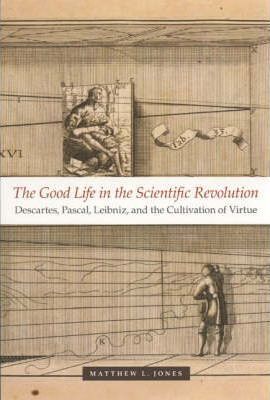
Amid the unrest, dislocation, and uncertainty of seventeenth-century Europe, readers seeking consolation and assurance turned to philosophical and scientific books that offered ways of conquering fears and training the mind—guidance for living a good life. The Good Life in the Scientific Revolution presents a triptych showing how three key early modern scientists, René Descartes, Blaise Pascal, and Gottfried Leibniz, envisioned their new work as useful for cultivating virtue and for pursuing a good life. Their scientific and philosophical innovations stemmed in part from their understanding of mathematics and science as cognitive and spiritual exercises that could create a truer mental and spiritual nobility. In portraying the rich contexts surrounding Descartes’ geometry, Pascal’s arithmetical triangle, and Leibniz’s calculus, Matthew L. Jones argues that this drive for moral therapeutics guided important developments of early modern philosophy and the Scientific Revolution.
ما از اخلاق چه انتظاری داریم؟ این سوال شاید تاحدودی برای عموم مردم و یا متخصصان این رشته قابل پاسخ باشد؛ اینکه خوب بودن را به ما بیاموزد و در تنظیم روابط فردی م...

جشن کتاب تهران به ایستگاه سی و یکم رسیده است. حال و احوال نشر کتاب خوب نیست و باید فرهنگدوستان را به خرید و هدیه دادن کتاب ترغیب نمود. خانه اخلاقپژوهان جوان ب...

بنیاد کتابهای اخلاق اسلامی عمدتا پالایش جان از آلودگیها و آراستن آن به زیباییها است. اندیشه محوری این قبیل کتابها آن است که انسان فعلی آنی نیست که باید باشد...

-
0 Comments