Notice: تابع WP_Block_Type_Registry::register به طورنادرست فراخوانی شد. نامهای نوع بلوک نباید حروف بزرگ داشته باشند. لطفاً برای اطلاعات بیشتر، اشکال زدایی در وردپرس را مشاهده کنید. (این پیام در نگارش 5.0.0 افزوده شده است.) in /home/ethicsho/public_html/wp-includes/functions.php on line 5313
Warning: Use of undefined constant TDC_PATH_LEGACY - assumed 'TDC_PATH_LEGACY' (this will throw an Error in a future version of PHP) in /home/ethicsho/public_html/wp-content/plugins/td-composer/td-composer.php on line 109
Warning: Use of undefined constant TDSP_THEME_PATH - assumed 'TDSP_THEME_PATH' (this will throw an Error in a future version of PHP) in /home/ethicsho/public_html/wp-content/plugins/td-composer/td-composer.php on line 113 بایگانیهای Constitutional Law/ Moral And Ethical Aspects/ United States - خانه اخلاق پژوهان جوان Notice: Trying to access array offset on value of type bool in /home/ethicsho/public_html/wp-content/plugins/wp-ulike/inc/general-functions.php on line 807
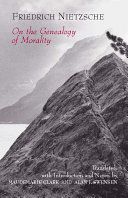
Major work on ethics, by one of the most influential thinkers of the last 2 centuries, deals with master/slave morality and modern man’s current moral practices; the evolution of man’s feelings of guilt and bad conscience; and how ascetic ideals help maintain human life under certain conditions.
This accessible introduction to religious ethics focuses on the major forms of moral reasoning encompassing the three ‘Abrahamic’ religions: Judaism, Christianity, and Islam. Draws on a range of moral issues, such as examples arising from friendship, marriage, homosexuality, lying, forgiveness and its limits, the death penalty, the environment, warfare, and the meaning of work, career, and vocation Looks at both ethical reasoning and importantly, “how” that reasoning reveals insights into a religious tradition Investigates the resources available to address common problems confronting Abrahamic faiths, and how each faith explains and defends its moral viewpoints Offering concrete topics for interfaith discussions, this is a timely and insightful introduction to a fast-growing field of interest
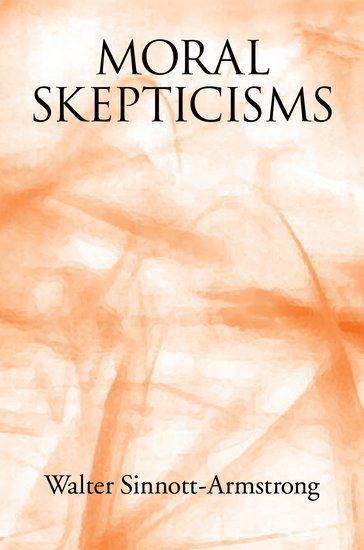
All contentious moral issues–from gay marriage to abortion and affirmative action–raise difficult questions about the justification of moral beliefs. How can we be justified in holding on to our own moral beliefs while recognizing that other intelligent people feel quite differently and that many moral beliefs are distorted by self-interest and by corrupt cultures? Even when almost everyone agrees–e.g. that experimental surgery without consent is immoral–can we know that such beliefs are true? If so, how? These profound questions lead to fundamental issues about the nature of morality, language, metaphysics, justification, and knowledge. They also have tremendous practical importance in handling controversial moral questions in health care ethics, politics, law, and education. Sinnott-Armstrong here provides an extensive overview of these difficult subjects, looking at a wide variety of questions, including: Are any moral beliefs true? Are any justified? What is justified belief? The second half of the book explores various moral theories that have grappled with these issues, such as naturalism, normativism, intuitionism, and coherentism, all of which are attempts to answer moral skepticism. Sinnott-Armstrong argues that all these approaches fail to rule out moral nihilism–the view that nothing is really morally wrong or right, bad or good. Then he develops his own novel theory,–“moderate Pyrrhonian moral skepticism”–which concludes that some moral beliefs can be justified out of a modest contrast class but no moral beliefs can be justified out of an extreme contrast class. While explaining this original position and criticizing alternatives, Sinnott-Armstrong provides a wide-ranging survey of the epistemology of moral beliefs.
ما از اخلاق چه انتظاری داریم؟ این سوال شاید تاحدودی برای عموم مردم و یا متخصصان این رشته قابل پاسخ باشد؛ اینکه خوب بودن را به ما بیاموزد و در تنظیم روابط فردی م...

جشن کتاب تهران به ایستگاه سی و یکم رسیده است. حال و احوال نشر کتاب خوب نیست و باید فرهنگدوستان را به خرید و هدیه دادن کتاب ترغیب نمود. خانه اخلاقپژوهان جوان ب...

بنیاد کتابهای اخلاق اسلامی عمدتا پالایش جان از آلودگیها و آراستن آن به زیباییها است. اندیشه محوری این قبیل کتابها آن است که انسان فعلی آنی نیست که باید باشد...

-
0 Comments