Notice: تابع WP_Block_Type_Registry::register به طورنادرست فراخوانی شد. نامهای نوع بلوک نباید حروف بزرگ داشته باشند. لطفاً برای اطلاعات بیشتر، اشکال زدایی در وردپرس را مشاهده کنید. (این پیام در نگارش 5.0.0 افزوده شده است.) in /home/ethicsho/public_html/wp-includes/functions.php on line 5313
Warning: Use of undefined constant TDC_PATH_LEGACY - assumed 'TDC_PATH_LEGACY' (this will throw an Error in a future version of PHP) in /home/ethicsho/public_html/wp-content/plugins/td-composer/td-composer.php on line 109
Warning: Use of undefined constant TDSP_THEME_PATH - assumed 'TDSP_THEME_PATH' (this will throw an Error in a future version of PHP) in /home/ethicsho/public_html/wp-content/plugins/td-composer/td-composer.php on line 113 بایگانیهای Conduct Of Court Proceedings - Technological Innovations - خانه اخلاق پژوهان جوان Notice: Trying to access array offset on value of type bool in /home/ethicsho/public_html/wp-content/plugins/wp-ulike/inc/general-functions.php on line 807
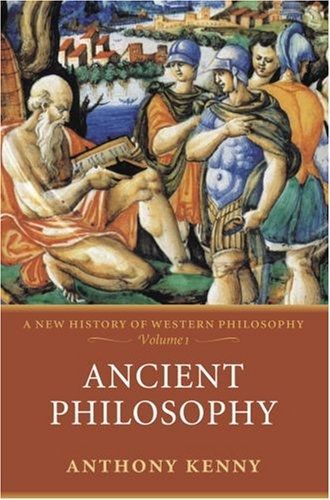
Sir Anthony Kenny here tells the fascinating story of the birth of philosophy and its remarkable flourishing in the ancient Mediterranean world. This is the initial volume of a four-book set in which Kenny will unfold a magisterial new history of Western philosophy, the first major single-author history of philosophy to appear in decades. Ancient Philosophy spans over a thousand years and brings to life the great minds of the past, from Thales, Pythagoras, and Parmenides, to Socrates, Epictetus, Marcus Aurelius, and Augustine. The book’s great virtue is that it is written by one of the world’s leading authorities on the subject. Instead of an uncritical, straightforward recitation of known facts–Plato and his cave of shadows, Aristotle’s ethics, Augustine’s City of God–we see the major philosophers through the eyes of a man who has spent a lifetime contemplating their work. Thus we do not simply get an overview of Aristotle, for example, but a penetrating and insightful critique of his thought. Kenny offers an illuminating account of the various schools of thought, from the Pre-Socratics to the Epicureans. He examines the development of logic and reason, ancient ideas about physics (“how things happen”), metaphysics and ethics, and the earliest thinking about the soul and god. Vividly written, but serious and deep enough to offer a genuine understanding of the great philosophers, Kenny’s lucid and stimulating history will become the definitive work for anyone interested in the people and ideas that shaped the course of Western thought.
East Asian medicine, biomedical research, and health care policy are framed by their own set of moral and cultural commitments. Chief among these is the influence of Confucian ideas. A rich portrayal is offered of the implications of Confucian moral and ontological understandings for medical decision-making, human embryonic stem cell research, and health care financing. What is offered is a multifaceted insight into what distinguishes East Asian bioethical reflections. This volume opens with an exploration of the Confucian recognition of the family as an entity existing in its own right and which is not reducible to its members or their interests. As the essays in this volume show, this recognition of the family supports a notion of family autonomy that contrasts with Western individualistic accounts of proper medical decision-making. There are analyses of basic concepts as well as explorations of their implications for actual medical practice. The conflicts in East Asian countries between traditional Confucian and Western bioethics are explored as well as the tension between the new reproductive technologies and traditional understandings of the family. The studies of East Asian reflections concerning the moral status of human embryos and the morality of human embryo stem cell research disclose a set of concerns quite different from those anchored in Christian and Muslim cultural perspectives. The volume closes with an exploration of how Confucian cultural resources can be drawn upon to meet the contemporary challenges of health care financing.
From world-renowned psychologist and bestselling author of The Soul’s Code, a profound examination of the roots of man’s primal love/hate relationship with war. War is a timeless force in the human imagination-and, indeed, in daily life. If recent events have taught us anything, it is that peacetime is not nearly so constant and attainable as wartime. During the 5,600 years of recorded history, 14,600 wars have been fought-2 to 3 for every year of human history. War is a constant thing. And yet no one really understands why that is. In A Terrible Love of War, James Hillman, one of the central figures in psychology in the twentieth and twenty-first centuries, fills this great void and undertakes a groundbreaking examination of the origins, needs, and rewards of war. Moreover, in this brilliant inquiry, Hillman explores many other essential questions, such as: Is war a necessary part of our human soul and, therefore, a necessary part of our lives? Why do we need enemies? What scars does warfare carve on the psyche of its soldiers? And why does it have such a permanent effect? If war is such a “normal” part of our existence, why do we fear it so much? And alternately, how could we ever embrace a force so destructive, so wanton, and so inhuman? Can the impulse to engage in war be tamed? Hillman asserts that “if we want war’s horror to be abated so that life may go on, it is necessary to understand and imagine.” A Terrible Love of Waris a crucial tool to understanding war-a crucial book for us all.
ما از اخلاق چه انتظاری داریم؟ این سوال شاید تاحدودی برای عموم مردم و یا متخصصان این رشته قابل پاسخ باشد؛ اینکه خوب بودن را به ما بیاموزد و در تنظیم روابط فردی م...

جشن کتاب تهران به ایستگاه سی و یکم رسیده است. حال و احوال نشر کتاب خوب نیست و باید فرهنگدوستان را به خرید و هدیه دادن کتاب ترغیب نمود. خانه اخلاقپژوهان جوان ب...

بنیاد کتابهای اخلاق اسلامی عمدتا پالایش جان از آلودگیها و آراستن آن به زیباییها است. اندیشه محوری این قبیل کتابها آن است که انسان فعلی آنی نیست که باید باشد...

-
0 Comments