Notice: تابع WP_Block_Type_Registry::register به طورنادرست فراخوانی شد. نامهای نوع بلوک نباید حروف بزرگ داشته باشند. لطفاً برای اطلاعات بیشتر، اشکال زدایی در وردپرس را مشاهده کنید. (این پیام در نگارش 5.0.0 افزوده شده است.) in /home/ethicsho/public_html/wp-includes/functions.php on line 5313
Warning: Use of undefined constant TDC_PATH_LEGACY - assumed 'TDC_PATH_LEGACY' (this will throw an Error in a future version of PHP) in /home/ethicsho/public_html/wp-content/plugins/td-composer/td-composer.php on line 109
Warning: Use of undefined constant TDSP_THEME_PATH - assumed 'TDSP_THEME_PATH' (this will throw an Error in a future version of PHP) in /home/ethicsho/public_html/wp-content/plugins/td-composer/td-composer.php on line 113 بایگانیهای Communication/ Psychological Aspects - خانه اخلاق پژوهان جوان Notice: Trying to access array offset on value of type bool in /home/ethicsho/public_html/wp-content/plugins/wp-ulike/inc/general-functions.php on line 807
This collection explores the nature and role of ethics within anarchist thought and practice, examining normative, meta-ethical and applied ethical issues through some of the theoretical insights of anarchism. It comprises contributions from international scholars working within the fields of philosophy and political theory.
The 1991 US Supreme Court decision in Feist Publications Inc. v. Rural Telephone Service Co. held that factual matter is not subject to copyright protection because it is not original to the author, thus dramatically rejecting a two-century-old tradition of protecting factual compilations under copyright. The contributors to this book reassess this decision and its implications, particularly for the protection of electronic databases. The debate over fact-based works has grown still more complicated since Feist with the enactment of worldwide initiatives that extend the protection of databases, such as the European Union’s Database Directive. A number of legal scholars have voiced their opinions on how Congress should react to the Court’s decision and the Database Directive, but none have put forth a viable solution or questioned the debate’s underlying assumptions. The contributors to this insightful book turn their attention to these overlooked aspects, approaching the protection of factual matter from a range of perspectives: policy, historical, comparative, empirical and philosophical. The range of viewpoints and disciplines represented in this compelling book will be of great interest to students, scholars and lawyers working in the area of intellectual property law.
In the Fall of 1930 Will Durant found himself outside his home in Lake Hill, New York, raking leaves. He was approached by a well-dressed man who told him in a quiet tone that he was going to kill himself unless the philosopher could give him a valid reason not to. Not having the time to wax philosophic on the matter, Durant did his best to furnish the man with reasons to continue his existence. Haunted by the encounter with the despondent stranger, Durant contacted 100 luminaries in the arts, politics, religion and sciences, challenging them to respond not only to the fundamental question of life’s meaning (in the abstract) but also to relate how they each (in the particular) found meaning, purpose and fulfillment in their own lives. Durant turned their answers and his own into a book entitled “On The Meaning Of Life,” which was released to the general public in 1932. Unpromoted, the litte treasure found its way into few hands, and almost no copies of the book exist today. Now available for a new generation through Promethean Press, “On The Meaning Of Life” is a powerful book on a very powerful topic. In this book Will Durant has fashioned an unprecedented “dream team” of luminaries that is both profound and diverse: poets, philosophers, saints, inmates, athletes, Nobel Prize winners, college professors, psychologists, entertainers, musicians, authors and leaders. Within their varied insights, despite their uniqueness as individuals and the very different lives they led, the reader will note a consistent thread running through their viewpoints, revealing a commonality among human beings who not only seek meaning in life, but who actually achieve it.
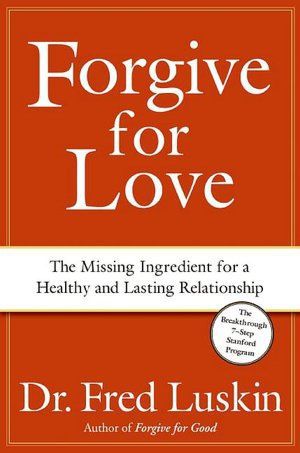
Finding the love of your life and holding onto that relationship is more difficult than ever. The problem hasn’t gone unnoticed. From relationship therapists to speed-dating, self-help books to online matchmaking, an entire industry has developed to help us navigate the bumpy road of relationships. Yet in spite of the availability of all these resources, many of us still struggle to discover and keep the love of our lives. That is, until now. This groundbreaking book from the frontiers of psychology offers startling new research about the one missing factor that is vital to relationships—forgiveness. A national bestselling author and leading expert on forgiveness, Dr. Fred Luskin shows that no matter how much two people may love each other, their relationship will not succeed unless they practice forgiveness—an approach that most relationship experts continue to ignore. Why is forgiveness an essential tool for relationships? Studies reveal that 70 percent for what we argue about at the beginning of our relationships will never be fully resolved. In other words, our basic needs and behaviors don’t change over time. The issues are endless: the socks that always end up on the floor, how often to have sex, the ESPN obsession, working hours, and, of course, friends and family. Without forgiveness, these issues, however big or small, too easily turn into relationship-eroding grudges. Forgive for Love is the solution for your relationship woes, providing the tools you need to find and hold onto the love of your life. Dr. Luskin delivers a proven seven-step program for creating and maintaining loving and lasting relationships, teaching easy-to-learn forgiveness skills that will not only resolve immediate conflicts but improve the overall happiness and longevity of your relationships. Simply put: people in healthy relationships figure out how to forgive their partners for being themselves. They do so because it is nearly impossible to change other people and because none of us are perfect. Forgiveness is the key, and Forgive for Love has the answers.
ما از اخلاق چه انتظاری داریم؟ این سوال شاید تاحدودی برای عموم مردم و یا متخصصان این رشته قابل پاسخ باشد؛ اینکه خوب بودن را به ما بیاموزد و در تنظیم روابط فردی م...

جشن کتاب تهران به ایستگاه سی و یکم رسیده است. حال و احوال نشر کتاب خوب نیست و باید فرهنگدوستان را به خرید و هدیه دادن کتاب ترغیب نمود. خانه اخلاقپژوهان جوان ب...

بنیاد کتابهای اخلاق اسلامی عمدتا پالایش جان از آلودگیها و آراستن آن به زیباییها است. اندیشه محوری این قبیل کتابها آن است که انسان فعلی آنی نیست که باید باشد...

-
0 Comments