Notice: تابع WP_Block_Type_Registry::register به طورنادرست فراخوانی شد. نامهای نوع بلوک نباید حروف بزرگ داشته باشند. لطفاً برای اطلاعات بیشتر، اشکال زدایی در وردپرس را مشاهده کنید. (این پیام در نگارش 5.0.0 افزوده شده است.) in /home/ethicsho/public_html/wp-includes/functions.php on line 5313
Warning: Use of undefined constant TDC_PATH_LEGACY - assumed 'TDC_PATH_LEGACY' (this will throw an Error in a future version of PHP) in /home/ethicsho/public_html/wp-content/plugins/td-composer/td-composer.php on line 109
Warning: Use of undefined constant TDSP_THEME_PATH - assumed 'TDSP_THEME_PATH' (this will throw an Error in a future version of PHP) in /home/ethicsho/public_html/wp-content/plugins/td-composer/td-composer.php on line 113 بایگانیهای Commitment (Psychology) - خانه اخلاق پژوهان جوان Notice: Trying to access array offset on value of type bool in /home/ethicsho/public_html/wp-content/plugins/wp-ulike/inc/general-functions.php on line 807
Mark Platts’ influential first book “Ways of Meaning” argued within the context of the philosophy of language that a realist’ account of moral thought was possible. “Moral Realities” defends the same possibility from the perspective of the philosophy of psychology. “Moral Realities” engages the classical moral philosophies of Hume, Mandeville and Nietzsche, and tackles the powerful arguments of the contemporary moral relativists. Platts uses an existing critique of philosophical notions of desire and value to present a descriptive metaphysics of morals–clarifying both what morality is and what it is not. He also employs a classification of desire that articulates a general theory of value and valuing which is distinguished by a cognitive approach given to certain kinds of moral valuing. The possibility of applying this approach to moral valuings is defended against the persuasive criticisms of both the Humean subjectivist and the contemporary moral relativist. This is a challenging book which illuminates many of the major issues of contemporary moral philosophy including: the practical nature of moral thought, free will and choice, morality and religious belief, and the pragmatics of moral discourse.
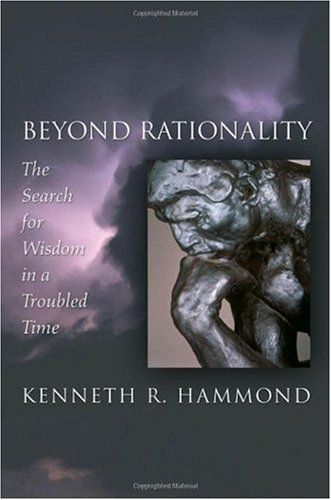
With Beyond Rationality, Kenneth R. Hammond, one of the most respected and experienced experts in judgment and decision-making, sums up his life’s work and persuasively argues that decisions should be based on balance and pragmatism rather than rigid ideologies. Hammond has long focused on the dichotomy between theories of correspondence, whereby arguments correspond with reality, and coherence, whereby arguments strive to be internally consistent. He has persistently proposed a middle approach that draws from both of these modes of thought and so avoids the blunders of either extreme. In this volume, Hammond shows how particular ways of thinking that are common in the political process have led to the mistaken judgments that created our current political crisis. He illustrates this argument by analyzing penetrating case studies emphasizing the political consequences that arise when decision makers consciously or unconsciously ignore their adversaries’ particular mode of thought. These analyses range from why Kennedy and Khruschev misunderstood each other to why Colin Powell erred in his judgments over the presence of weapons of mass destruction in Iraq. For anyone concerned about the current state of politics in the U.S. and where it will lead us, Beyond Rationality is required reading.
Alain de Botton’s bestselling The Consolations of Philosophy–later made into a six-part TV series–has helped popularize ancient philosophy and especially the work of Seneca. This superb volume offers the finest translation of Seneca’s dialogues and essays in print, capturing the full range of his philosophical interests. Here the Stoic philosopher outlines his thoughts on how to live in a troubled world. Tutor to the young emperor Nero, Seneca wrote exercises in practical philosophy that draw upon contemporary Roman life and illuminate the intellectual concerns of the day. They also have much to say to the modern reader, as Seneca ranges widely across subjects such as the shortness of life, tranquility of mind, anger, mercy, happiness, and grief at the loss of a loved one. Seneca’s accessible, aphoristic style makes his writing especially attractive as an introduction to Stoic philosophy, and belies its reputation for austerity and dogmatism. This edition combines a clear and modern translation by John Davies with Tobias Reinhardt’s fascinating introduction to Seneca’s career, literary style, and influence, including a superb summary of Stoic philosophy and Seneca’s interpretation of it. The book’s notes are the fullest of any comparable edition.
ما از اخلاق چه انتظاری داریم؟ این سوال شاید تاحدودی برای عموم مردم و یا متخصصان این رشته قابل پاسخ باشد؛ اینکه خوب بودن را به ما بیاموزد و در تنظیم روابط فردی م...

جشن کتاب تهران به ایستگاه سی و یکم رسیده است. حال و احوال نشر کتاب خوب نیست و باید فرهنگدوستان را به خرید و هدیه دادن کتاب ترغیب نمود. خانه اخلاقپژوهان جوان ب...

بنیاد کتابهای اخلاق اسلامی عمدتا پالایش جان از آلودگیها و آراستن آن به زیباییها است. اندیشه محوری این قبیل کتابها آن است که انسان فعلی آنی نیست که باید باشد...

-
0 Comments