Notice: تابع WP_Block_Type_Registry::register به طورنادرست فراخوانی شد. نامهای نوع بلوک نباید حروف بزرگ داشته باشند. لطفاً برای اطلاعات بیشتر، اشکال زدایی در وردپرس را مشاهده کنید. (این پیام در نگارش 5.0.0 افزوده شده است.) in /home/ethicsho/public_html/wp-includes/functions.php on line 5313
Warning: Use of undefined constant TDC_PATH_LEGACY - assumed 'TDC_PATH_LEGACY' (this will throw an Error in a future version of PHP) in /home/ethicsho/public_html/wp-content/plugins/td-composer/td-composer.php on line 109
Warning: Use of undefined constant TDSP_THEME_PATH - assumed 'TDSP_THEME_PATH' (this will throw an Error in a future version of PHP) in /home/ethicsho/public_html/wp-content/plugins/td-composer/td-composer.php on line 113 بایگانیهای Cloning - Moral And Ethical Aspects - خانه اخلاق پژوهان جوان Notice: Trying to access array offset on value of type bool in /home/ethicsho/public_html/wp-content/plugins/wp-ulike/inc/general-functions.php on line 807
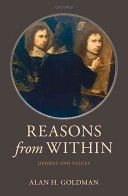
Do the reasons we have for acting as we do derive from our concerns and desires, or are there objective values in the world that we are rationally required to pursue and protect? Alan Goldman argues for the internalist or subjectivist view of practical reasons on the grounds that it is simpler, more unified, and more comprehensible than the rival objectivist position. He provides a naturalistic account of practical rationality in terms of coherence within sets of desires or motivational states, and between motivations, intentions, and actions. Coherence is defined as the avoidance of self-defeat, the defeat of one’s own deepest concerns. The demand for coherence underlies both practical and theoretical reason and derives from the natural aims of belief and action. In clarifying which desires create reasons, drawing on the literature of cognitive psychology, Goldman offers conceptual analyses of desires, emotions, and attitudes. Reasons are seen to derive ultimately from our deepest occurrent concerns. These concerns require no reasons themselves but provide reasons for many more superficial desires. In defense of this theory, Goldman argues that rational agents need not be morally motivated or concerned for their narrow self-interest. Objective values would demand such concern. They would be independent of our desires but would provide reasons for us to pursue and protect them. They would require rational agents to be motivated by them. But, Goldman argues, we are not motivated in that way, and it makes no sense to demand that our informed and coherent desires be generally other than they are. We need not appeal to such objective values in order to explain how our lives can be good and meaningful. Reasons from Within will appeal to anyone interested in the nature of values and reasons, particularly students of philosophy, psychology, and decision theory.
Philosophy and religion are often seen as opposed, but this book aims to show how they can be reconciled. It argues that religious belief cannot be evaluated as an isolated set of doctrines, but needs to be understood in relation to the spiritual praxis that gives it life. Accessibly written and wide-ranging in scope, it connects the spiritual search for self-awareness and moral growth with the philosophical quest to understand the cosmos and our relationship to it.
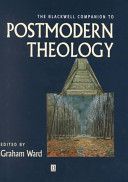
This Companion provides a definitive collection of essays on postmodern theology, drawing on the work of those individuals who have made a distinctive contribution to the field, and whose work will be significant for the theologies written in the new millennium. The definitive collection of essays on postmodern theology, drawing on the work of those individuals who have made a distinctive contribution to the field. Each essay is introduced with a short account of the writer’s previous work, enabling the reader to view it in context. Discusses the following desciplines: Aesthetics, Ethics, Gender, Hermeneutics, Phenomenology, Heideggerians, and Derrideans. Edited by Graham Ward, one of the most outstanding and original theologians working in the field today.
Virtue ethics has attracted a lot of attention over the past few decades, and more recently there has been considerable interest in virtue epistemology as an alternative to traditional approaches in that field. Ironically, although virtue epistemology got its inspiration from virtue ethics, this is the first book that brings virtue epistemologists and virtue ethicists together to contribute their particular expertise, and the first that is devoted to the topic of intellectual virtue. All new and right up to date, the papers collected here by Zagzebski and DePaul demonstrate the benefit of each branch of philosophy to the other. Intellectual Virtue will be required reading for anyone working in either field.
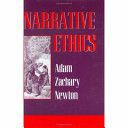
The ethics of literature, formalists have insisted, resides in the moral quality of a character, a story, perhaps the relation between author and reader. But in the wake of deconstruction and various forms of criticism focusing on difference, the ethical question has been freshly negotiated by literary studies, and to this approach Adam Newton brings a startling new thrust. His book makes a compelling case for understanding narrative as ethics. Assuming an intrinsic and necessary connection between the two, Newton explores the ethical consequences of telling stories and fictionalizing character, and the reciprocal claims binding teller, listener, witness, and reader in the process. He treats these relations as defining properties of prose fiction, of particular import in nineteenth- and twentieth-century texts.Newton’s fresh and nuanced readings cover a wide range of authors and periods, from Charles Dickens to Kazuo Ishiguro and Julian Barnes, from Herman Melville to Richard Wright, from Joseph Conrad and Henry James to Sherwood Anderson and Stephen Crane. An original work of theory as well as a deft critical performance, Narrative Ethics also stakes a claim for itself as moral inquiry. To that end, Newton braids together the ethical-philosophical projects of Emmanuel Levinas, Stanley Cavell, and Mikhail Bakhtin as a kind of chorus for his textual analyses–an elegant bridge between philosophy’s ear and literary criticism’s voice. His work will generate enormous interest among scholars and students of English and American literature, as well as specialists in narrative and literary theory, hermeneutics, and contemporary philosophy.
ما از اخلاق چه انتظاری داریم؟ این سوال شاید تاحدودی برای عموم مردم و یا متخصصان این رشته قابل پاسخ باشد؛ اینکه خوب بودن را به ما بیاموزد و در تنظیم روابط فردی م...

جشن کتاب تهران به ایستگاه سی و یکم رسیده است. حال و احوال نشر کتاب خوب نیست و باید فرهنگدوستان را به خرید و هدیه دادن کتاب ترغیب نمود. خانه اخلاقپژوهان جوان ب...

بنیاد کتابهای اخلاق اسلامی عمدتا پالایش جان از آلودگیها و آراستن آن به زیباییها است. اندیشه محوری این قبیل کتابها آن است که انسان فعلی آنی نیست که باید باشد...

-
0 Comments