Notice: تابع WP_Block_Type_Registry::register به طورنادرست فراخوانی شد. نامهای نوع بلوک نباید حروف بزرگ داشته باشند. لطفاً برای اطلاعات بیشتر، اشکال زدایی در وردپرس را مشاهده کنید. (این پیام در نگارش 5.0.0 افزوده شده است.) in /home/ethicsho/public_html/wp-includes/functions.php on line 5313
Warning: Use of undefined constant TDC_PATH_LEGACY - assumed 'TDC_PATH_LEGACY' (this will throw an Error in a future version of PHP) in /home/ethicsho/public_html/wp-content/plugins/td-composer/td-composer.php on line 109
Warning: Use of undefined constant TDSP_THEME_PATH - assumed 'TDSP_THEME_PATH' (this will throw an Error in a future version of PHP) in /home/ethicsho/public_html/wp-content/plugins/td-composer/td-composer.php on line 113 بایگانیهای Civilization, Islamic - خانه اخلاق پژوهان جوان Notice: Trying to access array offset on value of type bool in /home/ethicsho/public_html/wp-content/plugins/wp-ulike/inc/general-functions.php on line 807
Susan K. Sell s book shows how power in international politics is increasingly exercised by private interests rather than governments. In 1994 the WTO adopted the Agreement on Trade-Related Aspects of Intellectual Property Rights (TRIPS), which dictated to states how they should regulate the protection of intellectual property. This book argues that TRIPS resulted from lobbying by twelve powerful CEOs of multinational corporations who wished to mould international law to protect their markets. This book examines the politics leading up to TRIPS, the first seven years of its implementation, and the political backlash against TRIPS in the face of the HIV/AIDS crisis. Focusing on global capitalism, ideas, and economic coercion, this work explains the politics behind TRIPS and the controversies created in its wake. It is a fascinating study of the influence of private interests in government decision-making, and in the shaping of the global economy.
This volume is a collection of thirteen seminal essays on ethics, free will, and the philosophy of mind. The essays deal with such central topics as freedom of the will, moral responsibility, the concept of a person, the structure of the will, the nature of action, the constitution of the self, and the theory of personal ideals. By focusing on the distinctive nature of human freedom, Professor Frankfurt is ale to explore fundamental problems of what it is to be a person and of what one should care about in life.
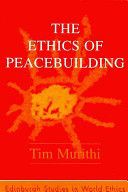
In the aftermath of the Cold War the hope for a more stable and just international order rapidly dissolved underneath the pressure of internecine conflicts raging on all continents.The Rwanda and Srebrenica genocides especially proved that promoting peace is a particularly fraught challenge in the face of intra-state conflict and sub-national groups that boldy confront nation-states.Tim Murithi investigates the role that ethics plays in promoting and consolidating peacebuilding, synthesizing the fields of moral philosophy and international relations through an analysis of the ethics of negotiation, mediation, forgiveness, and reconciliation. In its exploration of the extent to which ethical concerns influence and inform peacebuilding, this book contributes to a growing body of literature on ethics and international relations that enable students, scholars, and practitioners to contextualize their understanding of a principled peacebuilding.
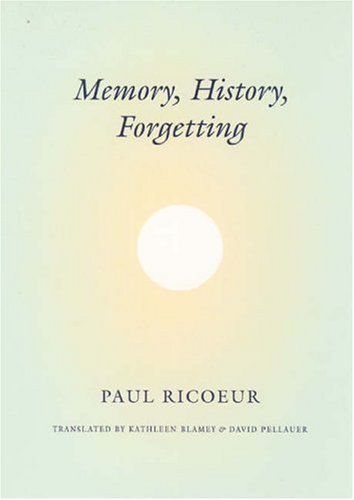
Why do major historical events such as the Holocaust occupy the forefront of the collective consciousness, while profound moments such as the Armenian genocide, the McCarthy era, and France’s role in North Africa stand distantly behind? Is it possible that history “overly remembers” some events at the expense of others? A landmark work in philosophy, Paul Ricoeur’s Memory, History, Forgetting examines this reciprocal relationship between remembering and forgetting, showing how it affects both the perception of historical experience and the production of historical narrative.Memory, History, Forgetting, like its title, is divided into three major sections. Ricoeur first takes a phenomenological approach to memory and mnemonical devices. The underlying question here is how a memory of present can be of something absent, the past. The second section addresses recent work by historians by reopening the question of the nature and truth of historical knowledge. Ricoeur explores whether historians, who can write a history of memory, can truly break with all dependence on memory, including memories that resist representation. The third and final section is a profound meditation on the necessity of forgetting as a condition for the possibility of remembering, and whether there can be something like happy forgetting in parallel to happy memory. Throughout the book there are careful and close readings of the texts of Aristotle and Plato, of Descartes and Kant, and of Halbwachs and Pierre Nora.A momentous achievement in the career of one of the most significant philosophers of our age, Memory, History, Forgetting provides the crucial link between Ricoeur’s Time and Narrative and Oneself as Another and his recent reflections on ethics and the problems of responsibility and representation. “His success in revealing the internal relations between recalling and forgetting, and how this dynamic becomes problematic in light of events once present but now past, will inspire academic dialogue and response but also holds great appeal to educated general readers in search of both method for and insight from considering the ethical ramifications of modern events. . . . It is indeed a master work, not only in Ricoeur’s own vita but also in contemporary European philosophy.”—Library Journal “Ricoeur writes the best kind of philosophy—critical, economical, and clear.”— New York Times Book Review
ما از اخلاق چه انتظاری داریم؟ این سوال شاید تاحدودی برای عموم مردم و یا متخصصان این رشته قابل پاسخ باشد؛ اینکه خوب بودن را به ما بیاموزد و در تنظیم روابط فردی م...

جشن کتاب تهران به ایستگاه سی و یکم رسیده است. حال و احوال نشر کتاب خوب نیست و باید فرهنگدوستان را به خرید و هدیه دادن کتاب ترغیب نمود. خانه اخلاقپژوهان جوان ب...

بنیاد کتابهای اخلاق اسلامی عمدتا پالایش جان از آلودگیها و آراستن آن به زیباییها است. اندیشه محوری این قبیل کتابها آن است که انسان فعلی آنی نیست که باید باشد...

-
0 Comments