Notice: تابع WP_Block_Type_Registry::register به طورنادرست فراخوانی شد. نامهای نوع بلوک نباید حروف بزرگ داشته باشند. لطفاً برای اطلاعات بیشتر، اشکال زدایی در وردپرس را مشاهده کنید. (این پیام در نگارش 5.0.0 افزوده شده است.) in /home/ethicsho/public_html/wp-includes/functions.php on line 5313
Warning: Use of undefined constant TDC_PATH_LEGACY - assumed 'TDC_PATH_LEGACY' (this will throw an Error in a future version of PHP) in /home/ethicsho/public_html/wp-content/plugins/td-composer/td-composer.php on line 109
Warning: Use of undefined constant TDSP_THEME_PATH - assumed 'TDSP_THEME_PATH' (this will throw an Error in a future version of PHP) in /home/ethicsho/public_html/wp-content/plugins/td-composer/td-composer.php on line 113 بایگانیهای Case Method - خانه اخلاق پژوهان جوان Notice: Trying to access array offset on value of type bool in /home/ethicsho/public_html/wp-content/plugins/wp-ulike/inc/general-functions.php on line 807
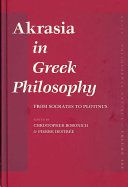
Discussions on akrasia (lack of control, or weakness of will) in Greek philosophy have been particularily vivid and intense for the past two decades. Standard stories that presented Socrates as the philosopher who simply denied the phenomenon, and Plato and Aristotle as rehabilitating it straightforwardly against Socrates, have been challenged in many different ways. Building on those challenges, this collective provides new, and in some cases opposed ways of reading well-known as well as more neglected texts. Its 13 contributions, written by experts in the field, cover the whole history of Greek ethics, from Socrates to Plotinus, through Plato, Aristotle, and the Stoics (Cleanthes, Chrysippus, Epictetus).
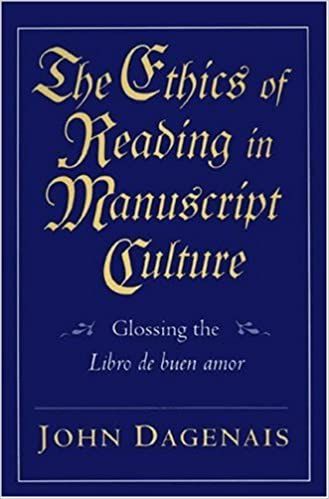
Taking the controversial fourteenth-century Libro de buen amor as his point of departure, John Dagenais maintains that many interpretive difficulties with this text have arisen simply because concepts such as “work” and “text,” which medievalists have tended to consider unproblematic, simply do not function in the medieval manuscript context.
Every choice we make is set against a background of massive ignorance about our past, our future, our circumstances, and ourselves. Philosophers are divided on the moral significance of such ignorance. Some say that it has a direct impact on how we ought to behave – the question of what our moral obligations are; others deny this, claiming that it only affects how we ought to be judged in light of the behaviour in which we choose to engage – the question of what responsibility we bear for our choices. Michael Zimmerman claims that our ignorance has an important bearing on both questions, and offers an account of moral obligation and moral responsibility that is sharply at odds with the prevailing wisdom. His book will be of interest to a wide range of readers in ethics.
ما از اخلاق چه انتظاری داریم؟ این سوال شاید تاحدودی برای عموم مردم و یا متخصصان این رشته قابل پاسخ باشد؛ اینکه خوب بودن را به ما بیاموزد و در تنظیم روابط فردی م...

جشن کتاب تهران به ایستگاه سی و یکم رسیده است. حال و احوال نشر کتاب خوب نیست و باید فرهنگدوستان را به خرید و هدیه دادن کتاب ترغیب نمود. خانه اخلاقپژوهان جوان ب...

بنیاد کتابهای اخلاق اسلامی عمدتا پالایش جان از آلودگیها و آراستن آن به زیباییها است. اندیشه محوری این قبیل کتابها آن است که انسان فعلی آنی نیست که باید باشد...

-
0 Comments