Notice: تابع WP_Block_Type_Registry::register به طورنادرست فراخوانی شد. نامهای نوع بلوک نباید حروف بزرگ داشته باشند. لطفاً برای اطلاعات بیشتر، اشکال زدایی در وردپرس را مشاهده کنید. (این پیام در نگارش 5.0.0 افزوده شده است.) in /home/ethicsho/public_html/wp-includes/functions.php on line 5313
Warning: Use of undefined constant TDC_PATH_LEGACY - assumed 'TDC_PATH_LEGACY' (this will throw an Error in a future version of PHP) in /home/ethicsho/public_html/wp-content/plugins/td-composer/td-composer.php on line 109
Warning: Use of undefined constant TDSP_THEME_PATH - assumed 'TDSP_THEME_PATH' (this will throw an Error in a future version of PHP) in /home/ethicsho/public_html/wp-content/plugins/td-composer/td-composer.php on line 113 بایگانیهای Business & Economics / Accounting / Managerial - خانه اخلاق پژوهان جوان Notice: Trying to access array offset on value of type bool in /home/ethicsho/public_html/wp-content/plugins/wp-ulike/inc/general-functions.php on line 807
The predominant view of moral virtue can be traced back to Aristotle. He believed that moral virtue must involve intellectual excellence. To have moral virtue one must have practical wisdom – the ability to deliberate well and to see what is morally relevant in a given context. Julia Driver challenges this classical theory of virtue, arguing that it fails to take into account virtues which do seem to involve ignorance or epistemic defect. Some ‘virtues of ignorance’ are counterexamples to accounts of virtue which hold that moral virtue must involve practical wisdom. Modesty, for example, is generally considered to be a virtue even though the modest person may be making an inaccurate assessment of his or her accomplishments. Driver argues that we should abandon the highly intellectualist view of virtue and instead adopt a consequentialist perspective which holds that virtue is simply a character trait which systematically produces good consequences.
Is it possible to study ethics objectively, or are moral judgements inevitably subjective? Are ancient theories of ethics of any contemporary relevance? Which ethical theory offers the most convincing explanation of how best to live one’s life? Eight Theories of Ethics is a comprehensive introduction to the theories of ethics encountered by first-time students. Gordon Graham introduces the fundamental concepts that underpin ethics, such as relativism and objectivity, and then devotes his attention to each of the eight major theories of ethics: * egoism* hedonism* naturalism and virtue theory* existentialism* Kantianism* utilitarianism* contractualism* religion. Throughout the book, Gordon Graham draws on examples from great moral philosophers such as Aristotle, Kant and Mill, and also from contemporary debates over human nature, the environment and citizenship. Eight Theories of Ethics is written in an engaging and student-friendly style, with detailed suggestions for further reading at the end of each chapter – including original sources and contemporary discussions. It is ideal for anyone coming to this area of philosophy for the first time, and for those studying ethics in related disciplines such as politics, law, nursing and medicine.
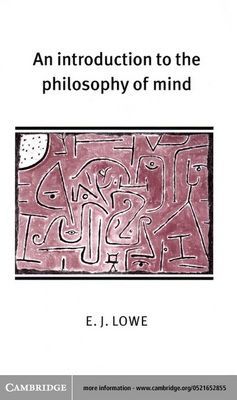
E. J. Lowe offers a lucid and wide-ranging introduction to the philosophy of mind. Using a problem-centered approach designed to stimulate as well as instruct, he begins with a general examination of the mind-body problem and moves on to more specific issues including perception, rationality, action and self-knowledge. His discussion is distinctive in giving equal attention to deep metaphysical questions concerning the mind and to the discoveries and theories of modern scientific psychology. It will be of interest to any reader with a basic grounding in modern philosophy.
ما از اخلاق چه انتظاری داریم؟ این سوال شاید تاحدودی برای عموم مردم و یا متخصصان این رشته قابل پاسخ باشد؛ اینکه خوب بودن را به ما بیاموزد و در تنظیم روابط فردی م...

جشن کتاب تهران به ایستگاه سی و یکم رسیده است. حال و احوال نشر کتاب خوب نیست و باید فرهنگدوستان را به خرید و هدیه دادن کتاب ترغیب نمود. خانه اخلاقپژوهان جوان ب...

بنیاد کتابهای اخلاق اسلامی عمدتا پالایش جان از آلودگیها و آراستن آن به زیباییها است. اندیشه محوری این قبیل کتابها آن است که انسان فعلی آنی نیست که باید باشد...

-
0 Comments