Notice: تابع WP_Block_Type_Registry::register به طورنادرست فراخوانی شد. نامهای نوع بلوک نباید حروف بزرگ داشته باشند. لطفاً برای اطلاعات بیشتر، اشکال زدایی در وردپرس را مشاهده کنید. (این پیام در نگارش 5.0.0 افزوده شده است.) in /home/ethicsho/public_html/wp-includes/functions.php on line 5313
Warning: Use of undefined constant TDC_PATH_LEGACY - assumed 'TDC_PATH_LEGACY' (this will throw an Error in a future version of PHP) in /home/ethicsho/public_html/wp-content/plugins/td-composer/td-composer.php on line 109
Warning: Use of undefined constant TDSP_THEME_PATH - assumed 'TDSP_THEME_PATH' (this will throw an Error in a future version of PHP) in /home/ethicsho/public_html/wp-content/plugins/td-composer/td-composer.php on line 113 بایگانیهای Body, Human/ Religious Aspects/ Buddhism - خانه اخلاق پژوهان جوان Notice: Trying to access array offset on value of type bool in /home/ethicsho/public_html/wp-content/plugins/wp-ulike/inc/general-functions.php on line 807
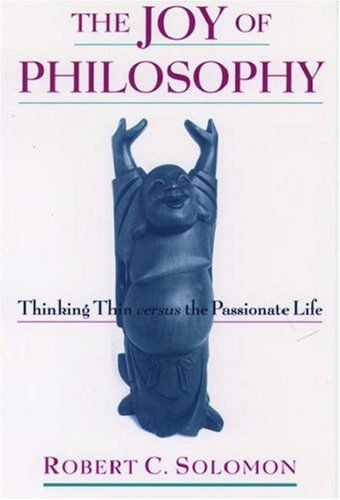
The Joy of Philosophy is a return to some of the perennial questions of philosophy–questions about the meaning of life; about death and tragedy; about the respective roles of rationality and passion in the good life; about love, compassion, and revenge; about honesty, deception, and betrayal; and about who we are and how we think about who we are. Recapturing the heart-felt confusion and excitement that originally brings us all to philosophy, internationally renowned teacher and lecturer Robert C. Solomon offers both a critique of contemporary philosophy and an invitation to engage in philosophy in a different way. He attempts to save philosophy from itself and its self-imposed diet of thin arguments and logical analysis to recover the richness and complexity of life in thought. Solomon defends the passionate life in contrast to the life of thoughtful contemplation idealized by so many philosophers, attempting to recapture the kind of philosophy that Nietzsche celebrated as a “joyful wisdom.”
Given the many new advances in technology, the changing economy, and a renewed national discussion around universal health care, todays healthcare administrators require a strong foundation in practice-based ethics to confront the challenges of the current healthcare landscape. Ethics in Health Administration, Second Edition translates the principles and practice of ethics into usable information for application to the real world of healthcare administration and the critical issues faced by todays healthcare administrators. With a new emphasis on the ethical challenges of providing quality care in todays economy, the Second Edition is a thorough revision that includes new case studies as well as new information on patient-centered care, the future workforce, the culture of compassion, and more.
This bibliography is the culmination of four years’ work by a team of noted scholars; its annotated entries are organized by religious tradition and cover each tradition’s central concepts, offering a judicious selection of primary and secondary works as well as recommendations of cross-cultural topics to be explored. Specialists in the history and literature of religions and comparative religion will find this bibliography a valuable research tool.
What is a human right? How can we tell whether a proposed human right really is one? How do we establish the content of particular human rights, and how do we resolve conflicts between them? These are pressing questions for philosophers, political theorists, jurisprudents, international lawyers, and activists. James Griffin offers answers in his compelling new investigation of the foundations of human rights. First, On Human Rights traces the idea of a natural right from its origin in the late Middle Ages, when the rights were seen as deriving from natural laws, through the seventeenth and eighteenth centuries, when the original theological background was progressively dropped and ‘natural law’ emptied of most of its original meaning. By the end of the Enlightenment, the term “human rights” (droits de l’homme) appeared, marking the purge of the theological background. But the Enlightenment, in putting nothing in its place, left us with an unsatisfactory, incomplete idea of a human right. Griffin shows how the language of human rights has become debased. There are scarcely any accepted criteria, either in the academic or the public sphere, for correct use of the term. He takes on the task of showing the way towards a determinate concept of human rights, based on their relation to the human status that we all share. He works from certain paradigm cases, such as freedom of expression and freedom of worship, to more disputed cases such as welfare rights–for instance the idea of a human right to health. His goal is a substantive account of human rights–an account with enough content to tell us whether proposed rights really are rights. Griffin emphasizes the practical as well as theoretical urgency of this goal: as the United Nations recognized in 1948 with its Universal Declaration, the idea of human rights has considerable power to improve the lot of humanity around the world. We can’t do without the idea of human rights, and we need to get clear about it. It is our job now–the job of this book–to influence and develop the unsettled discourse of human rights so as to complete the incomplete idea.
ما از اخلاق چه انتظاری داریم؟ این سوال شاید تاحدودی برای عموم مردم و یا متخصصان این رشته قابل پاسخ باشد؛ اینکه خوب بودن را به ما بیاموزد و در تنظیم روابط فردی م...

جشن کتاب تهران به ایستگاه سی و یکم رسیده است. حال و احوال نشر کتاب خوب نیست و باید فرهنگدوستان را به خرید و هدیه دادن کتاب ترغیب نمود. خانه اخلاقپژوهان جوان ب...

بنیاد کتابهای اخلاق اسلامی عمدتا پالایش جان از آلودگیها و آراستن آن به زیباییها است. اندیشه محوری این قبیل کتابها آن است که انسان فعلی آنی نیست که باید باشد...

-
0 Comments