Notice: تابع WP_Block_Type_Registry::register به طورنادرست فراخوانی شد. نامهای نوع بلوک نباید حروف بزرگ داشته باشند. لطفاً برای اطلاعات بیشتر، اشکال زدایی در وردپرس را مشاهده کنید. (این پیام در نگارش 5.0.0 افزوده شده است.) in /home/ethicsho/public_html/wp-includes/functions.php on line 5313
Warning: Use of undefined constant TDC_PATH_LEGACY - assumed 'TDC_PATH_LEGACY' (this will throw an Error in a future version of PHP) in /home/ethicsho/public_html/wp-content/plugins/td-composer/td-composer.php on line 109
Warning: Use of undefined constant TDSP_THEME_PATH - assumed 'TDSP_THEME_PATH' (this will throw an Error in a future version of PHP) in /home/ethicsho/public_html/wp-content/plugins/td-composer/td-composer.php on line 113 بایگانیهای Biography & Autobiography / Literary - خانه اخلاق پژوهان جوان Notice: Trying to access array offset on value of type bool in /home/ethicsho/public_html/wp-content/plugins/wp-ulike/inc/general-functions.php on line 807
‘It’s all relative’. In a world of increasing cultural diversity, it can seem that everything is indeed relative. But should we concede that there is no such thing as right and wrong, and no objective truth? Can we reconcile relativism and pluralism? Relativism surveys the different varieties of relativism and the arguments for and against them, and examines why relativism has survived for two thousand years despite all the criticisms levelled against it. Beginning with a historical overview of relativism, from Pythagoras in ancient Greece to Derrida and postmodernism, Maria Baghramian explores the resurgence of relativism throughout the history of philosophy. She then turns to the arguments for and against the many subdivisions of relativism, including Kuhn and Feyerabend’s ideas of relativism in science, Rorty’s relativism about truth, and the conceptual relativism of Quine and Putnam. Baghramian questions whether moral relativism leads to moral indifference or even nihilism, and whether feminist epistemology’s concerns about the very notion of objectivity can be considered a form of relativism. She concludes the relativism debate by assessing the recent criticisms such as Quine’s argument from translation and Davidson’s claim that even the motivations behind relativism are unintelligible. Finding these criticisms lacking, Baghramian proposes a moderate form of pluralism which addresses the legitimate worries that give rise to relativism without incurring charges of nihilism or anarchy. Relativism is essential reading for anyone interested in contemporary philosophy, sociology and politics.
At last, a comprehensive collection of essays that examines and advances ethical evaluations of the controversial and increasingly popular practice of embryo adoption. In the United States alone, 400,000 frozen embryos created for in vitro fertilization exist but are no longer desired for that purpose. What are we morally obliged or permitted to do about these “spare” embryos? More of their genetic parents are considering donating these embryos to others to gestate and raise. This practice is politically volatile (figuring in debates about embryonic stem cells) and medically and morally complex. At the present time within the Roman Catholic Church there is no official teaching on embryo adoption. Catholic ethical analyses grapple with the way embryo adoption comports with respect for embryonic human life yet challenges Catholic moral critiques of assisted reproductive technologies. This volume is the first to bring together leading philosophers and theologians to engage Catholic debates about embryo adoption in an interactive format. The editors, a philosopher bioethicist and a moral theologian, provide a helpful overview of the practice and the arguments surrounding embryo adoption. They engage neglected Catholic ethical resources and issues to advance the current debate and chart new directions in Catholic moral thinking about this intriguing practice. The volume also includes a description of embryo adoption from a physician practitioner along with reflections from a couple who successfully adopted an embryo.
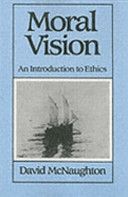
This book introduces the reader to ethics by examining a current and important debate. During the last fifty years the orthodox position in ethics has been a broadly non-cognitivist one: since there are no moral facts, moral remarks are best understood, not as attempting to describe the world, but as having some other function – such as expressing the attitudes or preferences of the speaker. In recent years this position has been increasingly challenged by moral realists who maintain that there are moral facts; there is a truth of the matter in ethics, which is independent of our views, and which we seek to discover. Unfortunately much of this interesting debate found in the work of McDowell, Wiggins, Putnam, Blackburn and others is not easily accessible to undergraduates. McNaughton presents many of the major issues in ethics by way of a clear exposition of both sides of this argument and assumes no prior knowledge of philosophy. Topics discussed include: moral observation, moral motivation, amoralism and wickedness, moral weakness, cultural relativism and utilitarianism. The book concludes that a convincing case can be made out for a radical form of moral realism in which moral virtue is found, not in the following of correct moral principles, but rather in the development of moral sensitivity. Moral Vision is a clear and engaged introduction to an important, and often troubling, debate.
Outside Ethicsbrings together some of the most important and provocative works by one of the most creative philosophers writing today. Seeking to expand the scope of contemporary moral and political philosophy, Raymond Geuss here presents essays bound by a shared skepticism about a particular way of thinking about what is important in human life–a way of thinking that, in his view, is characteristic of contemporary Western societies and isolates three broad categories of things as important: subjective individual preferences, knowledge, and restrictions on actions that affect other people (restrictions often construed as ahistorical laws). He sets these categories in a wider context and explores various human phenomena–including poetry, art, religion, and certain kinds of history and social criticism–that do not fit easily into these categories. As its title suggests, this book seeks a place outside conventional ethics. Following a brief introduction, Geuss sets out his main concerns with a focus on ethics and politics. He then expands these themes by discussing freedom, virtue, the good life, and happiness. Next he examines Theodor Adorno’s views on the relation between suffering and knowledge, the nature of religion, and the role of history in giving us critical distances from existing identities. From here he moves to aesthetic concerns. The volume closes by looking at what it is for a human life to have “gaps”–to be incomplete, radically unsatisfactory, or a failure.
ما از اخلاق چه انتظاری داریم؟ این سوال شاید تاحدودی برای عموم مردم و یا متخصصان این رشته قابل پاسخ باشد؛ اینکه خوب بودن را به ما بیاموزد و در تنظیم روابط فردی م...

جشن کتاب تهران به ایستگاه سی و یکم رسیده است. حال و احوال نشر کتاب خوب نیست و باید فرهنگدوستان را به خرید و هدیه دادن کتاب ترغیب نمود. خانه اخلاقپژوهان جوان ب...

بنیاد کتابهای اخلاق اسلامی عمدتا پالایش جان از آلودگیها و آراستن آن به زیباییها است. اندیشه محوری این قبیل کتابها آن است که انسان فعلی آنی نیست که باید باشد...

-
0 Comments