
Notice: تابع WP_Block_Type_Registry::register به طورنادرست فراخوانی شد. نامهای نوع بلوک نباید حروف بزرگ داشته باشند. لطفاً برای اطلاعات بیشتر، اشکال زدایی در وردپرس را مشاهده کنید. (این پیام در نگارش 5.0.0 افزوده شده است.) in /home/ethicsho/public_html/wp-includes/functions.php on line 5313
Warning: Use of undefined constant TDC_PATH_LEGACY - assumed 'TDC_PATH_LEGACY' (this will throw an Error in a future version of PHP) in /home/ethicsho/public_html/wp-content/plugins/td-composer/td-composer.php on line 109
Warning: Use of undefined constant TDSP_THEME_PATH - assumed 'TDSP_THEME_PATH' (this will throw an Error in a future version of PHP) in /home/ethicsho/public_html/wp-content/plugins/td-composer/td-composer.php on line 113 بایگانیهای Biography & Autobiography / General - خانه اخلاق پژوهان جوان Notice: Trying to access array offset on value of type bool in /home/ethicsho/public_html/wp-content/plugins/wp-ulike/inc/general-functions.php on line 807
“Profound wisdom from noted writers on following forgiveness with making amends As indispensable as forgiveness has been to the healing process throughout history, there is another equally profound action that is needed for reconciliation, which Arun Gandhi, grandson of Mohandas Gandhi, calls “the other side of the coin.” Turning over the coin of forgiveness, we discover atonement, the half-hidden, much-overlooked other half of the reconciliation process Includes 15 essays and interviews by high-profile thinkers and activist including: Huston Smith, Jacob Needleman, Arun Gandhi, and Azim Khamisa Discussed atonement as a process that can enable us to become unstuck from the past and live in the present This rich and powerful book shows how acts of atonement can relieve us of the pain of the past and give us a hopeful future”–
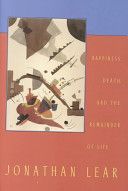
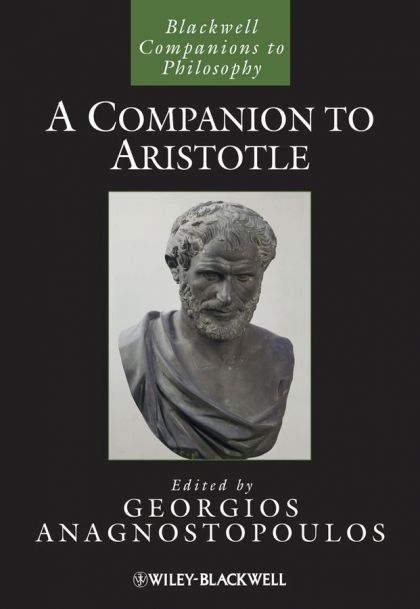
Separated by millennia, Aristotle and Sigmund Freud gave us disparate but compelling pictures of the human condition. But if, with Jonathan Lear, we scrutinize these thinkers’ attempts to explain human behavior in terms of a higher principle–whether happiness or death–the pictures fall apart. Aristotle attempted to ground ethical life in human striving for happiness, yet he didn’t understand what happiness is any better than we do. Happiness became an enigmatic, always unattainable, means of seducing humankind into living an ethical life. Freud fared no better when he tried to ground human striving, aggression, and destructiveness in the death drive, like Aristotle attributing purpose where none exists. Neither overarching principle can guide or govern “the remainder of life,” in which our inherently disruptive unconscious moves in breaks and swerves to affect who and how we are. Lear exposes this tendency to self-disruption for what it is: an opening, an opportunity for new possibilities. His insights have profound consequences not only for analysis but for our understanding of civilization and its discontent.
Legal Ethics employs a variety of techniques to breathe life into a topic that can be sometimes tedious to study. Readers will be attracted to current and classic case law, hypothetical situations, many real-life examples of lawyer and nonlawyer instances of misconduct and discussions of famous and infamous people as their situations relate to the topic. Examples of this material include a discussion of the disbarment proceedings against President Bill Clinton and F. Lee Bailey and news events involving Hillary Clinton, Bill Gates, Newt Gingrich, Patty Hearst and Timothy McVeigh. Supporting material features more than 70 legal ethics Web sites, a complete glossary and significant ethics codes designed for paralegal and legal assistants. The book also boasts an exceptional instructor’s manual featuring chapter outlines, teaching suggestions, full case briefs for all case law in the text, chapter review questions and complete test banks for each chapter. Benefits: • dozens of real-life examples and cases bring the topic of legal ethics to life • thorough explanations teach the reader the how’s and why’s of the material • fully supported citations enable readers to conduct their own research from the text • the many devices used to impart the material enhance the reader’s interest and retention
ما از اخلاق چه انتظاری داریم؟ این سوال شاید تاحدودی برای عموم مردم و یا متخصصان این رشته قابل پاسخ باشد؛ اینکه خوب بودن را به ما بیاموزد و در تنظیم روابط فردی م...

جشن کتاب تهران به ایستگاه سی و یکم رسیده است. حال و احوال نشر کتاب خوب نیست و باید فرهنگدوستان را به خرید و هدیه دادن کتاب ترغیب نمود. خانه اخلاقپژوهان جوان ب...

بنیاد کتابهای اخلاق اسلامی عمدتا پالایش جان از آلودگیها و آراستن آن به زیباییها است. اندیشه محوری این قبیل کتابها آن است که انسان فعلی آنی نیست که باید باشد...

-
0 Comments