Notice: تابع WP_Block_Type_Registry::register به طورنادرست فراخوانی شد. نامهای نوع بلوک نباید حروف بزرگ داشته باشند. لطفاً برای اطلاعات بیشتر، اشکال زدایی در وردپرس را مشاهده کنید. (این پیام در نگارش 5.0.0 افزوده شده است.) in /home/ethicsho/public_html/wp-includes/functions.php on line 5313
Warning: Use of undefined constant TDC_PATH_LEGACY - assumed 'TDC_PATH_LEGACY' (this will throw an Error in a future version of PHP) in /home/ethicsho/public_html/wp-content/plugins/td-composer/td-composer.php on line 109
Warning: Use of undefined constant TDSP_THEME_PATH - assumed 'TDSP_THEME_PATH' (this will throw an Error in a future version of PHP) in /home/ethicsho/public_html/wp-content/plugins/td-composer/td-composer.php on line 113 بایگانیهای Artificial Cells - خانه اخلاق پژوهان جوان Notice: Trying to access array offset on value of type bool in /home/ethicsho/public_html/wp-content/plugins/wp-ulike/inc/general-functions.php on line 807
This unique introduction to comparative philosophy brings together Chinese, Indian, and Western philosophers of roughly the same sort, of comparable stature, on the same philosophical topics and issues. Discussions are arranged in traditional clusters — logic, epistemology, metaphysics, ethics, and social and political philosophy. Compares equals to equals — logicians with logicians, metaphysicians with metaphysicians, ethicists with ethicists — e.g., compares Indian, Chinese and Western empiricists, utilitarians, hedonists, egoists, atheists, theists, monists, pluralists, idealists, materialists, dualists, skeptics, relativists, political realists, etc. Treats the strictly philosophical arguments as roughly similar across cultures, but presents the larger cultural contexts in which they occur as considerably different. For anyone interested in comparative philosophy.
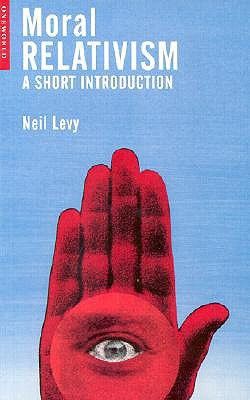
On September 11 2001, thousands of people died in the attacks on the Unitedtates. How could this act of terror be justified? A young man kills hisister to protect his family’s honour. How could this be “right”?;These areust two of the questions tackled by Neil Levy in this guide to thehilosophy of moral relativism – the idea that concepts of “rightness” and “rongness” vary from culture to culture and that there is no such thing as anbsolute moral code. Opening with a comprehensive definition to thisontroversial theory, the book examines all the arguments for and againstoral relativism, from its implications for ethics to the role of humaniology and the difficulty of separating cultural values from innateehaviour. The author draws on case studies from sources as diverse as theztecs and the Australian aboriginals to illustrate debates such as: can wever have a shared morality?; can concepts of “rightness” and “wrongness”ver be absolute?; does moral relativism pose a threat to human rights?;oncluding with a proposal for a more modest form of relativism, and
Promoting Islam as a defender of human rights is laden with difficulties. Advocates of human rights will readily point out numerous humanitarian failures carried out in the name of Islam. In The Rights of God, Irene Oh looks at human rights and Islam as a religious issue rather than a political or legal one and draws on three revered Islamic scholars to offer a broad range of perspectives that challenge our assumptions about the role of religion in human rights. The theoretical shift from the conception of morality based in natural duty and law to one of rights has created tensions that hinder a fruitful exchange between human rights theorists and religious thinkers. Does the static identification of human rights with lists of specific rights, such as those found in the Universal Declaration of Human Rights, make sense given the cultural, historical, and religious diversity of the societies in which these rights are to be respected and implemented? In examining human rights issues of the contemporary Islamic world, Oh illustrates how the value of religious scholarship cannot be overestimated. Oh analyzes the commentaries of Abul A’la Maududi, Sayyid Qutb, and Abdolkarim Soroush — all prominent and often controversial Islamic thinkers — on the topics of political participation, religious toleration, and freedom of conscience. While Maududi and Qutb represent traditional Islam, and Soroush a more reform and Western-friendly approach, all three contend that Islam is indeed capable of accommodating and advocating human rights. Whereas disentangling politics and culture from religion is never easy, Oh shows that the attempt must be made in order to understand and overcome the historical obstacles that prevent genuine dialogue from taking place across religious and cultural boundaries.
Here is a thorough, vividly written introduction to contemporary philosophy and some of the most crucial questions of human existence: the nature of mind and knowledge, the status of moral claims, the existence of God, the role of science, and the mysteries of language, among them. In Thinking It Through, esteemed philosopher Kwame Anthony Appiah shows us what it means to “do” philosophy in our time and why it should matter to anyone who wishes to live a more thoughtful life. Opposing the common misconceptions that being a philosopher means espousing a set of philosophical beliefs, or being a follower of a particular thinker, Appiah argues that “the result of philosophical exploration is not the end of inquiry in a settled opinion, but a mind resting more comfortably among many possibilities, or else the reframing of the question, and a new inquiry.” Thinking It Through is organized around eight central topics — mind, knowledge, language, science, morality, politics, law, and metaphysics. It traces how philosophers in the past have considered each subject (how Hobbes, Wittgenstein, and Frege, for example, approached the problem of language) and then explores some of the major questions that still engage philosophers today. More important, Appiah shows us not only what philosophers have thought but how they think, giving us examples we might use in our own attempts to navigate the complex issues that confront any reflective person in the 21st century. Filled with concrete examples of how philosophers work and written in the liveliest prose, Thinking It Through guides readers through the process of philosophical reflection and enlarges our understanding of the central questions of human life.
ما از اخلاق چه انتظاری داریم؟ این سوال شاید تاحدودی برای عموم مردم و یا متخصصان این رشته قابل پاسخ باشد؛ اینکه خوب بودن را به ما بیاموزد و در تنظیم روابط فردی م...

جشن کتاب تهران به ایستگاه سی و یکم رسیده است. حال و احوال نشر کتاب خوب نیست و باید فرهنگدوستان را به خرید و هدیه دادن کتاب ترغیب نمود. خانه اخلاقپژوهان جوان ب...

بنیاد کتابهای اخلاق اسلامی عمدتا پالایش جان از آلودگیها و آراستن آن به زیباییها است. اندیشه محوری این قبیل کتابها آن است که انسان فعلی آنی نیست که باید باشد...

-
0 Comments