Notice: تابع WP_Block_Type_Registry::register به طورنادرست فراخوانی شد. نامهای نوع بلوک نباید حروف بزرگ داشته باشند. لطفاً برای اطلاعات بیشتر، اشکال زدایی در وردپرس را مشاهده کنید. (این پیام در نگارش 5.0.0 افزوده شده است.) in /home/ethicsho/public_html/wp-includes/functions.php on line 5313
Warning: Use of undefined constant TDC_PATH_LEGACY - assumed 'TDC_PATH_LEGACY' (this will throw an Error in a future version of PHP) in /home/ethicsho/public_html/wp-content/plugins/td-composer/td-composer.php on line 109
Warning: Use of undefined constant TDSP_THEME_PATH - assumed 'TDSP_THEME_PATH' (this will throw an Error in a future version of PHP) in /home/ethicsho/public_html/wp-content/plugins/td-composer/td-composer.php on line 113 بایگانیهای Advance Directives (Medical Care) - Great Britain - خانه اخلاق پژوهان جوان Notice: Trying to access array offset on value of type bool in /home/ethicsho/public_html/wp-content/plugins/wp-ulike/inc/general-functions.php on line 807
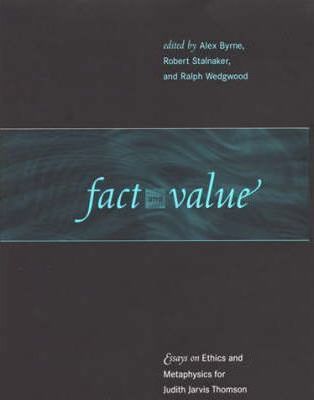
The diversity of topics discussed in this book reflects the breadth of Judith Jarvis Thomson’s philosophical work. Throughout her long career at MIT, Thomson’s straightforward approach and emphasis on problem-solving have shaped philosophy in significant ways. Some of the book’s contributions discuss specific moral and political issues such as abortion, self-defense, the rights and obligations of prospective fathers, and political campaign finance. Other contributions concern the foundations of moral theory, focusing on hedonism, virtue ethics, the nature of nonconsequentialism, and the objectivity of moral claims. Finally, contributions in metaphysics and epistemology discuss the existence of sets, the structures reflected in conditional statements, and the commitments of testimony.Contributors:Jonathan Bennett, Richard L. Cartwright, Joshua Cohen, N. Ann Davis, Catherine Z. Elgin, Gilbert Harman, Barbara Herman, Frances Myrna Kamm, Claudia Mills, T. M. Scanlon, Ernest Sosa.
Two essays on utilitarianism, written from opposite points of view, by J. J. C. Smart and Bernard Williams. In the first part of the book Professor Smart advocates a modern and sophisticated version of classical utilitarianism; he tries to formulate a consistent and persuasive elaboration of the doctrine that the rightness and wrongness of actions is determined solely by their consequences, and in particular their consequences for the sum total of human happiness. This is a revised version of Professor Smart’s famous essay ‘an outline of a system of utilitarian ethics’, first published in 1961 but long unobtainable. In Part II Bernard Williams offers a sustained and vigorous critique of utilitarian assumptions, arguments and ideals. He finds inadequate the theory of action implied by utilitarianism, and he argues that utilitarianism fails to engage at a serious level with the real problems of moral and political philosophy, and fails to make sense of notions such as integrity, or even human happiness itself. Both authors are agreed on utilitarianism’s importance: it cuts across a number of different philosophical disputes and combines a systematic account of mata-ethical problems with a distinctive and substantive moral stand. It thus is, or involves, philosophy in both the traditional and the narrower, professional sense of the word, and is a key topic (often the first topic) in introductory philosophy courses. This book should also be of interest to welfare economists, political scientists and decision-theorists.
Biotechnology and the Challenge of Property addresses the question of how the advancement of property law is capable of controlling the interests generated by the engineering of human tissues. Through a comparative consideration of non-Western societies and industrialized cultures, this book addresses the impact of modern biotechnology, and its legal accommodation on the customary conduct and traditional beliefs which shape the lives of different communities. As such, it provides an introduction to the legal regulation of the evolving uses of human tissues, and its implications for traditional knowledge, beliefs and cultures.
ما از اخلاق چه انتظاری داریم؟ این سوال شاید تاحدودی برای عموم مردم و یا متخصصان این رشته قابل پاسخ باشد؛ اینکه خوب بودن را به ما بیاموزد و در تنظیم روابط فردی م...

جشن کتاب تهران به ایستگاه سی و یکم رسیده است. حال و احوال نشر کتاب خوب نیست و باید فرهنگدوستان را به خرید و هدیه دادن کتاب ترغیب نمود. خانه اخلاقپژوهان جوان ب...

بنیاد کتابهای اخلاق اسلامی عمدتا پالایش جان از آلودگیها و آراستن آن به زیباییها است. اندیشه محوری این قبیل کتابها آن است که انسان فعلی آنی نیست که باید باشد...

-
0 Comments