Notice: تابع WP_Block_Type_Registry::register به طورنادرست فراخوانی شد. نامهای نوع بلوک نباید حروف بزرگ داشته باشند. لطفاً برای اطلاعات بیشتر، اشکال زدایی در وردپرس را مشاهده کنید. (این پیام در نگارش 5.0.0 افزوده شده است.) in /home/ethicsho/public_html/wp-includes/functions.php on line 5313
Warning: Use of undefined constant TDC_PATH_LEGACY - assumed 'TDC_PATH_LEGACY' (this will throw an Error in a future version of PHP) in /home/ethicsho/public_html/wp-content/plugins/td-composer/td-composer.php on line 109
Warning: Use of undefined constant TDSP_THEME_PATH - assumed 'TDSP_THEME_PATH' (this will throw an Error in a future version of PHP) in /home/ethicsho/public_html/wp-content/plugins/td-composer/td-composer.php on line 113 بایگانیهای Administrative Agencies - خانه اخلاق پژوهان جوان Notice: Trying to access array offset on value of type bool in /home/ethicsho/public_html/wp-content/plugins/wp-ulike/inc/general-functions.php on line 807
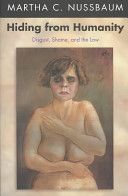
Should laws about sex and pornography be based on social conventions about what is disgusting? Should felons be required to display bumper stickers or wear T-shirts that announce their crimes? This powerful and elegantly written book, by one of America’s most influential philosophers, presents a critique of the role that shame and disgust play in our individual and social lives and, in particular, in the law. Martha Nussbaum argues that we should be wary of these emotions because they are associated in troubling ways with a desire to hide from our humanity, embodying an unrealistic and sometimes pathological wish to be invulnerable. Nussbaum argues that the thought-content of disgust embodies “magical ideas of contamination, and impossible aspirations to purity that are just not in line with human life as we know it.” She argues that disgust should never be the basis for criminalizing an act, or play either the aggravating or the mitigating role in criminal law it currently does. She writes that we should be similarly suspicious of what she calls “primitive shame,” a shame “at the very fact of human imperfection,” and she is harshly critical of the role that such shame plays in certain punishments. Drawing on an extraordinarily rich variety of philosophical, psychological, and historical references–from Aristotle and Freud to Nazi ideas about purity–and on legal examples as diverse as the trials of Oscar Wilde and the Martha Stewart insider trading case, this is a major work of legal and moral philosophy.
This book is written by leading international experts in Christian ethics and is aimed at students in upper-level undergraduate courses, at teachers and at graduate students. It will be useful as well to ministers and other professionals within the church. Its eighteen chapters provide a thorough introduction to Christian ethics that is both authoritative and up-to-date. All contributors have been chosen because they are significant scholars with a proven track record of balanced, comprehensive and comprehensible writing.
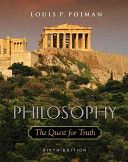
Praised for its accessibility and comprehensiveness, Philosophy: The Quest for Truth provides an excellent selection of classical and contemporary readings on nineteen key problems in philosophy. Louis P. Pojman has carefully organized the essays in each section so that they present pro/con dialogues that allow students to compare and contrast the philosophers’ positions. Topics covered include the nature of philosophy, the existence of God, immortality, knowledge, the mind-body question, personal identity, free will and determinism, ethics, political philosophy, and the meaning of life. The sixth edition offers selections from Plato, Rene Descartes, John Locke, David Hume, William James, Bertrand Russell, John Hick, John Hospers, and James Rachels–as well as essays by Aristotle, Thomas Aquinas, Blaise Pascal, Thomas Hobbes, George Berkeley, Immanuel Kant, Gilbert Ryle, Albert Camus, Jean-Paul Sartre, Alvin Plantinga, and many others. In Philosophy: The Quest for Truth, Sixth Edition, Pojman offers substantial introductions to each of the nineteen philosophical problems. In addition, each of the seventy-six readings is accompanied by an individual introduction with a biographical sketch of the philosopher, study questions, and reflective questions that challenge students to analyze and critique the material. Short bibliographies following each major section and a detailed glossary further enhance the text’s pedagogical value. Invaluable for introductory courses in philosophy, this highly acclaimed text inspires and guides students’ quest for wisdom. New to the Sixth Edition:: * Six selections: William Lane Craig: The Kalam Cosmological Argument and the Anthropic Principle William Rowe: An Analysis of the Ontological Argument Daniel Dennett: Postmodernism and Truth William James: The Dilemma of Determinism Harry Frankfurt: Freedom of the Will and the Concept of a Person John Rawls: The Contemporary Liberal Answer * More exercises in the excursus on logic
ما از اخلاق چه انتظاری داریم؟ این سوال شاید تاحدودی برای عموم مردم و یا متخصصان این رشته قابل پاسخ باشد؛ اینکه خوب بودن را به ما بیاموزد و در تنظیم روابط فردی م...

جشن کتاب تهران به ایستگاه سی و یکم رسیده است. حال و احوال نشر کتاب خوب نیست و باید فرهنگدوستان را به خرید و هدیه دادن کتاب ترغیب نمود. خانه اخلاقپژوهان جوان ب...

بنیاد کتابهای اخلاق اسلامی عمدتا پالایش جان از آلودگیها و آراستن آن به زیباییها است. اندیشه محوری این قبیل کتابها آن است که انسان فعلی آنی نیست که باید باشد...

-
0 Comments