








Notice: تابع WP_Block_Type_Registry::register به طورنادرست فراخوانی شد. نامهای نوع بلوک نباید حروف بزرگ داشته باشند. لطفاً برای اطلاعات بیشتر، اشکال زدایی در وردپرس را مشاهده کنید. (این پیام در نگارش 5.0.0 افزوده شده است.) in /home/ethicsho/public_html/wp-includes/functions.php on line 5313
Warning: Use of undefined constant TDC_PATH_LEGACY - assumed 'TDC_PATH_LEGACY' (this will throw an Error in a future version of PHP) in /home/ethicsho/public_html/wp-content/plugins/td-composer/td-composer.php on line 109
Warning: Use of undefined constant TDSP_THEME_PATH - assumed 'TDSP_THEME_PATH' (this will throw an Error in a future version of PHP) in /home/ethicsho/public_html/wp-content/plugins/td-composer/td-composer.php on line 113 بایگانیهای Wiley-Blackwell - صفحه 6 از 6 - خانه اخلاق پژوهان جوان Notice: Trying to access array offset on value of type bool in /home/ethicsho/public_html/wp-content/plugins/wp-ulike/inc/general-functions.php on line 807
How can we improve our ethical beliefs? How great are our capacities for moral improvement? What constitutes a good life? What role can philosophy play in answering these questions? In this important new book, one of our leading moral philosophers looks at central issues of ethics and emerges with the fullest and most elegant account of his fundamental ethical theory. James Griffin examines influential schools of ethical thought and finds deontology, virtue ethics, and most forms of utilitarianism to be overly ambitious. He argues that ethics cannot be what philosophers in these traditions expect because agents cannot be what the philosophies need them to be. Clear, compelling, and original, this new account of ethics will be of interest to anyone concerned with thinking about values: not only philosophers but legal, political, and economic theorists as well.
This Encyclopedia considers both the professional ethics of science and technology, and the ethical and political issues raised by science and technology in an increasingly complex and global society. This broad coverage supports the numerous courses in applied and professional ethics and policy related to the practice of science and technology in education.
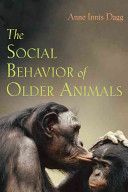
How do young and old social animals view each other? Are aged animals perceived by others as weaker? Or wiser? What is the relationship between age and power among social animals?Taking a cue from Frans de Waal’s seminal work examining the lives of chimpanzees, Anne Innis Dagg in this pioneering study probes the lives of older mammals and birds. Synthesizing the available scientific research and anecdotal evidence, she explores how aging affects the lives and behavior of animals ranging from elk to elephants and gulls to gorillas, examining such topics as longevity; how others in a group view senior members in regard to leadership, wisdom, and teaching; mating success; interactions with mates and offspring; how aging affects dominance; changes in aggressive behavior and adaptability; and death and dying.At once instructive and compelling, this theme-spanning book reveals the complex nature of maturity in scores of social species and shows that animal behavior often displays the same diversity we find in ourselves.
Contemporary debate about religion seems to be going nowhere. Atheists persist with their arguments, many plausible and some unanswerable, but these make no impact on religious believers. Defenders of religion find atheists equally unwilling to cede ground. The Meaning of Belief offers a way out of this stalemate. An atheist himself, Tim Crane writes that there is a fundamental flaw with most atheists’ basic approach: religion is not what they think it is. Atheists tend to treat religion as a kind of primitive cosmology, as the sort of explanation of the universe that science offers. They conclude that religious believers are irrational, superstitious, and bigoted. But this view of religion is almost entirely inaccurate. Crane offers an alternative account based on two ideas. The first is the idea of a religious impulse: the sense people have of something transcending the world of ordinary experience, even if it cannot be explicitly articulated. The second is the idea of identification: the fact that religion involves belonging to a specific social group and participating in practices that reinforce the bonds of belonging. Once these ideas are properly understood, the inadequacy of atheists’ conventional conception of religion emerges. The Meaning of Belief does not assess the truth or falsehood of religion. Rather, it looks at the meaning of religious belief and offers a way of understanding it that both makes sense of current debate and also suggests what more intellectually responsible and practically effective attitudes atheists might take to the phenomenon of religion.–
ما از اخلاق چه انتظاری داریم؟ این سوال شاید تاحدودی برای عموم مردم و یا متخصصان این رشته قابل پاسخ باشد؛ اینکه خوب بودن را به ما بیاموزد و در تنظیم روابط فردی م...

جشن کتاب تهران به ایستگاه سی و یکم رسیده است. حال و احوال نشر کتاب خوب نیست و باید فرهنگدوستان را به خرید و هدیه دادن کتاب ترغیب نمود. خانه اخلاقپژوهان جوان ب...

بنیاد کتابهای اخلاق اسلامی عمدتا پالایش جان از آلودگیها و آراستن آن به زیباییها است. اندیشه محوری این قبیل کتابها آن است که انسان فعلی آنی نیست که باید باشد...

-
0 Comments