Notice: تابع WP_Block_Type_Registry::register به طورنادرست فراخوانی شد. نامهای نوع بلوک نباید حروف بزرگ داشته باشند. لطفاً برای اطلاعات بیشتر، اشکال زدایی در وردپرس را مشاهده کنید. (این پیام در نگارش 5.0.0 افزوده شده است.) in /home/ethicsho/public_html/wp-includes/functions.php on line 5313
Warning: Use of undefined constant TDC_PATH_LEGACY - assumed 'TDC_PATH_LEGACY' (this will throw an Error in a future version of PHP) in /home/ethicsho/public_html/wp-content/plugins/td-composer/td-composer.php on line 109
Warning: Use of undefined constant TDSP_THEME_PATH - assumed 'TDSP_THEME_PATH' (this will throw an Error in a future version of PHP) in /home/ethicsho/public_html/wp-content/plugins/td-composer/td-composer.php on line 113 بایگانیهای West Group - خانه اخلاق پژوهان جوان Notice: Trying to access array offset on value of type bool in /home/ethicsho/public_html/wp-content/plugins/wp-ulike/inc/general-functions.php on line 807
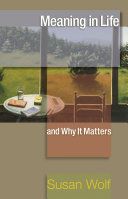
Most people, including philosophers, tend to classify human motives as falling into one of two categories: the egoistic or the altruistic, the self-interested or the moral. According to Susan Wolf, however, much of what motivates us does not comfortably fit into this scheme. Often we act neither for our own sake nor out of duty or an impersonal concern for the world. Rather, we act out of love for objects that we rightly perceive as worthy of love–and it is these actions that give meaning to our lives. Wolf makes a compelling case that, along with happiness and morality, this kind of meaningfulness constitutes a distinctive dimension of a good life. Written in a lively and engaging style, and full of provocative examples, Meaning in Life and Why It Matters is a profound and original reflection on a subject of permanent human concern.
How should we respond when some of our basic beliefs are put into question? What makes a human body distinctively human? Why is truth an important good? These are among the questions explored in this collection of essays by Alasdair MacIntyre, one of the most creative and influential philosophers working today. Ten of MacIntyre’s most influential essays written over almost thirty years are collected together here for the first time. They range over such topics as the issues raised by different types of relativism, what it is about human beings that cannot be understood by the natural sciences, the relationship between the ends of life and the ends of philosophical writing, and the relationship of moral philosophy to contemporary social practice. They will appeal to a wide range of readers across philosophy and especially in moral philosophy, political philosophy, and theology.
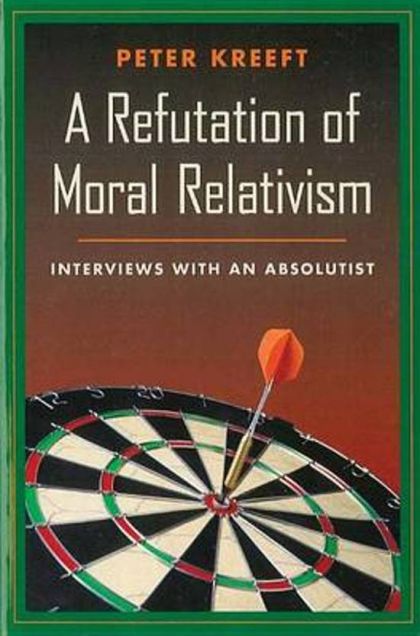
No issue is more fateful for civilization than moral relativism. History knows not one example of a successful society which repudiated moral absolutes. Yet most attacks on relativism have been either pragmatic (looking at its social consequences) or exhorting (preaching rather than proving), and philosophers’ arguments against it have been specialized, technical, and scholarly.In his typical unique writing style, Peter Kreeft lets an attractive, honest, and funny relativist interview a “Muslim fundamentalist” absolutist so as not to stack the dice personally for absolutism. In an engaging series of personal interviews, every conceivable argument the “sassy Black feminist” reporter Libby gives against absolutism is simply and clearly refuted, and none of the many arguments for moral absolutism is refuted.
Khaled Abou El Fadl’s book represents the first systematic examination of the idea and treatment of political resistance and rebellion in Islamic law. Pre-modern jurists produced an extensive and sophisticated discourse on the legality of rebellion and the treatment due to rebels under Islamic law. The book examines the emergence and development of these discourses from the eighth to the fifteenth centuries, and considers juristic responses to the various terror-inducing strategies employed by rebels–including assassination, stealth attacks and rape. The study demonstrates how Muslim jurists went about restructuring several competing doctrinal sources in order to construct a highly technical discourse on rebellion. Indeed many of these rulings may have a profound influence on contempoary practices. This is an important and challenging book which sheds light on the complexities of Islamic law, and pre-modern attitudes to dissidence and rebellion.
ما از اخلاق چه انتظاری داریم؟ این سوال شاید تاحدودی برای عموم مردم و یا متخصصان این رشته قابل پاسخ باشد؛ اینکه خوب بودن را به ما بیاموزد و در تنظیم روابط فردی م...

جشن کتاب تهران به ایستگاه سی و یکم رسیده است. حال و احوال نشر کتاب خوب نیست و باید فرهنگدوستان را به خرید و هدیه دادن کتاب ترغیب نمود. خانه اخلاقپژوهان جوان ب...

بنیاد کتابهای اخلاق اسلامی عمدتا پالایش جان از آلودگیها و آراستن آن به زیباییها است. اندیشه محوری این قبیل کتابها آن است که انسان فعلی آنی نیست که باید باشد...

-
0 Comments