Notice: تابع WP_Block_Type_Registry::register به طورنادرست فراخوانی شد. نامهای نوع بلوک نباید حروف بزرگ داشته باشند. لطفاً برای اطلاعات بیشتر، اشکال زدایی در وردپرس را مشاهده کنید. (این پیام در نگارش 5.0.0 افزوده شده است.) in /home/ethicsho/public_html/wp-includes/functions.php on line 5313
Warning: Use of undefined constant TDC_PATH_LEGACY - assumed 'TDC_PATH_LEGACY' (this will throw an Error in a future version of PHP) in /home/ethicsho/public_html/wp-content/plugins/td-composer/td-composer.php on line 109
Warning: Use of undefined constant TDSP_THEME_PATH - assumed 'TDSP_THEME_PATH' (this will throw an Error in a future version of PHP) in /home/ethicsho/public_html/wp-content/plugins/td-composer/td-composer.php on line 113 بایگانیهای Univ Pr of the Pacific - خانه اخلاق پژوهان جوان Notice: Trying to access array offset on value of type bool in /home/ethicsho/public_html/wp-content/plugins/wp-ulike/inc/general-functions.php on line 807
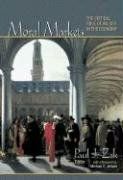
Like nature itself, modern economic life is driven by relentless competition and unbridled selfishness. Or is it? Drawing on converging evidence from neuroscience, social science, biology, law, and philosophy,Moral Marketsmakes the case that modern market exchange works only because most people, most of the time, act virtuously. Competition and greed are certainly part of economics, butMoral Marketsshows how the rules of market exchange have evolved to promote moral behavior and how exchange itself may make us more virtuous. Examining the biological basis of economic morality, tracing the connections between morality and markets, and exploring the profound implications of both,Moral Marketsprovides a surprising and fundamentally new view of economics–one that also reconnects the field to Adam Smith’s position that morality has a biological basis.Moral Markets, the result of an extensive collaboration between leading social and natural scientists, includes contributions by neuroeconomist Paul Zak; economists Robert H. Frank, Herbert Gintis, Vernon Smith (winner of the 2002 Nobel Prize in economics), and Bart Wilson; law professors Oliver Goodenough, Erin O’Hara, and Lynn Stout; philosophers William Casebeer and Robert Solomon; primatologists Sarah Brosnan and Frans de Waal; biologists Carl Bergstrom, Ben Kerr, and Peter Richerson; anthropologists Robert Boyd and Michael Lachmann; political scientists Elinor Ostrom and David Schwab; management professor Rakesh Khurana; computational science and informatics doctoral candidate Erik Kimbrough; and business writer Charles Handy.
Richard Rorty is famous, maybe even infamous, for his philosophical nonchalance. His groundbreaking work not only rejects all theories of truth but also dismisses modern epistemology and its preoccupation with knowledge and representation. At the same time, the celebrated pragmatist believed there could be no universally valid answers to moral questions, which led him to a complex view of religion rarely expressed in his writings.In this posthumous publication, Rorty, a strict secularist, finds in the pragmatic thought of John Dewey, John Stuart Mill, Henry James, and George Santayana, among others, a political imagination shared by religious traditions. His intent is not to promote belief over nonbelief or to blur the distinction between religious and public domains. Rorty seeks only to locate patterns of similarity and difference so an ethics of decency and a politics of solidarity can rise. He particularly responds to Pope Benedict XVI and his campaign against the relativist vision. Whether holding theologians, metaphysicians, or political ideologues to account, Rorty remains steadfast in his opposition to absolute uniformity and its exploitation of political strength.
“Two Books of the Elements of Universal Jurisprudence” was Pufendorf’s first work, published in 1660. Its appearance effectively inaugurated the modern natural-law movement in the German-speaking world. The work also established Pufendorf as a key figure and laid the foundations for his major works, which were to sweep across Europe and North America. ‘Elements of Universal Jurisprudence’ established Pufendorf’s political theory, which, when fully developed, became the most significant alternative to rights-based theories. Pufendorf rejected the concept of natural rights as liberties and the suggestion that political government is justified by its protection of such rights, arguing instead for a principled limit to the state’s role in human life. The Liberty Fund edition is based on the translation by William Abbott Oldfather prepared for the Classics of International Law series published by the Carnegie Endowment for International Peace.
Architectural Design and Ethics offers both professional architects and architecture students a theoretical base and numerous suggestions as to how we might rethink our responsibilities to the natural world and design a more sustainable future for ourselves. As we find ourselves on the steep slope of several exponential growth curves in global population, in heat-trapping atmospheric gases, in the gap between the rich and poor, and in the demand for finite resources, Fisher lays down a theory of architecture based on ethics and explores how buildings can and do provide both social and moral dimensions. The book also has practical goals, demonstrating how architects can make better and more beautiful buildings whilst nurturing more responsible, sustainable development. Architectural Design and Ethics will prove an invaluable text not only to those in the architecture field, but to anyone simply interested in the ethical issues surrounding our built environment. * Joins the dots between architectural form, ethics and professional practice * Uses the history of ethics to present relevant lessons for todays practitioners * A wake up call to architects, advocating a greater focus on ethics over aesthetics
ما از اخلاق چه انتظاری داریم؟ این سوال شاید تاحدودی برای عموم مردم و یا متخصصان این رشته قابل پاسخ باشد؛ اینکه خوب بودن را به ما بیاموزد و در تنظیم روابط فردی م...

جشن کتاب تهران به ایستگاه سی و یکم رسیده است. حال و احوال نشر کتاب خوب نیست و باید فرهنگدوستان را به خرید و هدیه دادن کتاب ترغیب نمود. خانه اخلاقپژوهان جوان ب...

بنیاد کتابهای اخلاق اسلامی عمدتا پالایش جان از آلودگیها و آراستن آن به زیباییها است. اندیشه محوری این قبیل کتابها آن است که انسان فعلی آنی نیست که باید باشد...

-
0 Comments