Notice: تابع WP_Block_Type_Registry::register به طورنادرست فراخوانی شد. نامهای نوع بلوک نباید حروف بزرگ داشته باشند. لطفاً برای اطلاعات بیشتر، اشکال زدایی در وردپرس را مشاهده کنید. (این پیام در نگارش 5.0.0 افزوده شده است.) in /home/ethicsho/public_html/wp-includes/functions.php on line 5313
Warning: Use of undefined constant TDC_PATH_LEGACY - assumed 'TDC_PATH_LEGACY' (this will throw an Error in a future version of PHP) in /home/ethicsho/public_html/wp-content/plugins/td-composer/td-composer.php on line 109
Warning: Use of undefined constant TDSP_THEME_PATH - assumed 'TDSP_THEME_PATH' (this will throw an Error in a future version of PHP) in /home/ethicsho/public_html/wp-content/plugins/td-composer/td-composer.php on line 113 بایگانیهای The Catholic University Of America Press - خانه اخلاق پژوهان جوان Notice: Trying to access array offset on value of type bool in /home/ethicsho/public_html/wp-content/plugins/wp-ulike/inc/general-functions.php on line 807
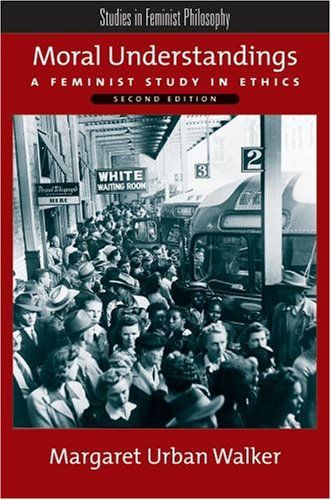
This is a revised edition of Walker’s well-known book in feminist ethics first published in 1997. Walker’s book proposes a view of morality and an approach to ethical theory which uses the critical insights of feminism and race theory to rethink the epistemological and moral position of the ethical theorist, and how moral theory is inescapably shaped by culture and history. The main gist of her book is that morality is embodied in “practices of responsibility” that express our identities, values, and connections to others in socially patterned ways. Thus ethical theory needs to be empirically informed and politically critical to avoid reiterating forms of socially entrenched bias. Responsible ethical theory should reveal and question the moral significance of social differences. The book engages with, and challenges, the work of contemporary analytic philosophers in ethics.
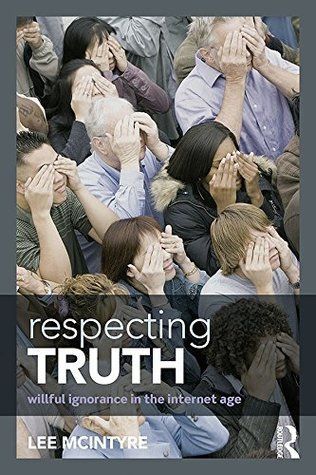
Throughout history, humans have always indulged in certain irrationalities and held some fairly wrong-headed beliefs. But in his newest book, philosopher Lee McIntyre shows how we’ve now reached a watershed moment for ignorance in the modern era, due to the volume of misinformation, the speed with which it can be digitally disseminated, and the savvy exploitation of our cognitive weaknesses by those who wish to advance their ideological agendas. In Respecting Truth: Willful Ignorance in the Internet Age, McIntyre issues a call to fight back against this slide into the witless abyss. In the tradition of Galileo, the author champions the importance of using tested scientific methods for arriving at true beliefs, and shows how our future survival is dependent on a more widespread, reasonable world.
Why democracy? Most often this question is met with an appeal to some decidedly moral value, such as equality, liberty, dignity, or even peace. But in contemporary democratic societies, there is deep disagreement and conflict about the precise nature and relative worth of these values. And when democracy votes, some of those who lose will see the prevailing outcome as not merely disappointing, but morally intolerable. How should citizens react when confronted with a democratic result that they regard as intolerable? Should they revolt, or instead pursue democratic means of social change? In this book, Robert Talisse argues that each of us has reasons to uphold democracy – even when it makes serious moral errors – and that these reasons are rooted in our most fundamental epistemic commitments. His original and compelling study will be of interest to a wide range of readers in political philosophy and political theory.
The Groundwork of the Metaphysics of Morals is Kant’s central contribution to moral philosophy, and has inspired controversy ever since it was first published in 1785. Kant champions the insights of ‘common human understanding’ against what he sees as the dangerous perversions of ethical theory. Morality is revealed to be a matter of human autonomy: Kant locates the source of the ‘categorical imperative’ within each and every human will. However, he also portrays everyday morality in a way that many readers find difficult to accept. The Groundwork is a short book, but its argument is dense, intricate and at times treacherous. This commentary explains Kant’s arguments paragraph by paragraph, and also contains an introduction, a synopsis of the argument, six short interpretative essays on key topics of the Groundwork, and a glossary of key terms. It will be an indispensable tool for anyone wishing to study the Groundwork in detail.
The ancient problem of fatalism, more particularly theological fatalism, has resurfaced with surprising vigour in the second half of the twentieth century. Two questions predominate in the debate: (1) Is divine foreknowledge compatible with human freedom and (2) How can God foreknow future free acts?Having surveyed the historical background of this debate in “The Problem of Divine Foreknowledge and “Future Contingents from Aristotle to Suarez (Brill: 1988), William Lane Craig now attempts to address these issues critically. His wide-ranging discussion brings together a thought- provoking array of related topics such as logical fatalism, multivalent logic, backward causation, precognition, time travel, counterfactual logic, temporal necessity, Newcomb’s Problem, middle knowledge, and relativity theory.The present work serves both as a useful survey of the extensive literature on theological fatalism and related fields and as a stimulating assessment of the possibility of divine foreknowledge of future free acts.
ما از اخلاق چه انتظاری داریم؟ این سوال شاید تاحدودی برای عموم مردم و یا متخصصان این رشته قابل پاسخ باشد؛ اینکه خوب بودن را به ما بیاموزد و در تنظیم روابط فردی م...

جشن کتاب تهران به ایستگاه سی و یکم رسیده است. حال و احوال نشر کتاب خوب نیست و باید فرهنگدوستان را به خرید و هدیه دادن کتاب ترغیب نمود. خانه اخلاقپژوهان جوان ب...

بنیاد کتابهای اخلاق اسلامی عمدتا پالایش جان از آلودگیها و آراستن آن به زیباییها است. اندیشه محوری این قبیل کتابها آن است که انسان فعلی آنی نیست که باید باشد...

-
0 Comments