Notice: تابع WP_Block_Type_Registry::register به طورنادرست فراخوانی شد. نامهای نوع بلوک نباید حروف بزرگ داشته باشند. لطفاً برای اطلاعات بیشتر، اشکال زدایی در وردپرس را مشاهده کنید. (این پیام در نگارش 5.0.0 افزوده شده است.) in /home/ethicsho/public_html/wp-includes/functions.php on line 5313
Warning: Use of undefined constant TDC_PATH_LEGACY - assumed 'TDC_PATH_LEGACY' (this will throw an Error in a future version of PHP) in /home/ethicsho/public_html/wp-content/plugins/td-composer/td-composer.php on line 109
Warning: Use of undefined constant TDSP_THEME_PATH - assumed 'TDSP_THEME_PATH' (this will throw an Error in a future version of PHP) in /home/ethicsho/public_html/wp-content/plugins/td-composer/td-composer.php on line 113 بایگانیهای Syngress - خانه اخلاق پژوهان جوان Notice: Trying to access array offset on value of type bool in /home/ethicsho/public_html/wp-content/plugins/wp-ulike/inc/general-functions.php on line 807
When does a person qualify for protected and continuing life? At a time when technology can sustain marginal life, it is ever more important to understand what constitutes a person. What are the medical, ethical, mental, legal, and philosophical criteria that determine protectable human life? By providing a much-needed religious/philosophical context for the discussion – examining contemporary thinking on just what constitutes valuable life – Walters broadens his inquiry beyond the human to include other animals and also deals with the phenomenon of anencephalic infants, those who are born without higher brains. Searching for a measurable and humane standard of personhood, Walters looks at its current definition and declares it inadequate. He offers instead the idea of proximate personhood, with criteria for helping to determine which individuals possess a unique claim to life.
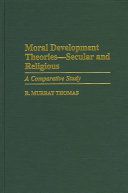
Moral Development Theories–Secular and Religious introduces readers to 13 secular models and 13 religious theories in a wide-ranging comparative study of the roots of moral development. The secular models include attribution theory, cognitive-structural views, social-learning and social-cognition approaches, Freud’s psychoanalysis (plus Erikson and Fromm), Marxist beliefs, a composite theory, Hoffman’s conception of empathy, Anderson’s information-integration view, Gilligan’s gender distinction, Sutherland and Cressey’s explanation of delinquency, and Lovinger on ego development. Religious theories represent the Judaic-Christian-Islamic line, Hinduism and derivatives (Buddhism, Jainism, Sikhism), Confucianism, Shinto, and four minor theories drawn from the belief systems of the Navajo, Zulus, Vodou adherents, and Okinawans.
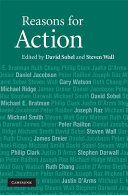
What are our reasons for acting? Morality purports to give us these reasons, and so do norms of prudence and the laws of society. The theory of practical reason assesses the authority of these potentially competing claims, and for this reason philosophers with a wide range of interests have converged on the topic of reasons for action. This volume contains eleven new essays on practical reason by leading and emerging philosophers. Topics include the differences between practical and theoretical rationality, practical conditionals and the wide-scope ought, the explanation of action, the sources of reasons, and the relationship between morality and reasons for action. The volume will be essential reading for all philosophers interested in ethics and practical reason.
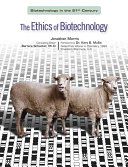
Biotechnology-the use of biological organisms and processes to provide useful products in industry and medicine-is revolutionizing our lives. From the making of cheese and wine to the production of new medicines and crops, the application of biotechnological processes to industry is wide and varied and will continue to expand in the coming decades. But no discussion of biotechnology would be complete without discussion of the ethical issues that surround this growing field. Biotechnology in the 21st Century examines the different global aspects of the biotech industry-healthcare, agriculture, data processing, and ethics-and provides the reader with the knowledge necessary to form his or her own conclusions about this exciting new field of science. Book jacket.
ما از اخلاق چه انتظاری داریم؟ این سوال شاید تاحدودی برای عموم مردم و یا متخصصان این رشته قابل پاسخ باشد؛ اینکه خوب بودن را به ما بیاموزد و در تنظیم روابط فردی م...

جشن کتاب تهران به ایستگاه سی و یکم رسیده است. حال و احوال نشر کتاب خوب نیست و باید فرهنگدوستان را به خرید و هدیه دادن کتاب ترغیب نمود. خانه اخلاقپژوهان جوان ب...

بنیاد کتابهای اخلاق اسلامی عمدتا پالایش جان از آلودگیها و آراستن آن به زیباییها است. اندیشه محوری این قبیل کتابها آن است که انسان فعلی آنی نیست که باید باشد...

-
0 Comments