



Notice: تابع WP_Block_Type_Registry::register به طورنادرست فراخوانی شد. نامهای نوع بلوک نباید حروف بزرگ داشته باشند. لطفاً برای اطلاعات بیشتر، اشکال زدایی در وردپرس را مشاهده کنید. (این پیام در نگارش 5.0.0 افزوده شده است.) in /home/ethicsho/public_html/wp-includes/functions.php on line 5313
Warning: Use of undefined constant TDC_PATH_LEGACY - assumed 'TDC_PATH_LEGACY' (this will throw an Error in a future version of PHP) in /home/ethicsho/public_html/wp-content/plugins/td-composer/td-composer.php on line 109
Warning: Use of undefined constant TDSP_THEME_PATH - assumed 'TDSP_THEME_PATH' (this will throw an Error in a future version of PHP) in /home/ethicsho/public_html/wp-content/plugins/td-composer/td-composer.php on line 113 بایگانیهای State University of New York Press - خانه اخلاق پژوهان جوان Notice: Trying to access array offset on value of type bool in /home/ethicsho/public_html/wp-content/plugins/wp-ulike/inc/general-functions.php on line 807
This is a selection of essays on moral responsibility that represent the major components of John Martin Fischer’s overall approach to freedom of the will and moral responsibility. The collection exhibits the overall structure of Fischer’s view and shows how the various elements fit together to form a comprehensive framework for analyzing free will and moral responsibility. The topics include deliberation and practical reasoning, freedom of the will, freedom of action, various notions of control, and moral accountability. The essays seek to provide a foundation for our practices of holding each other (and ourselves) morally and legally accountable for our behavior. A crucial move is the distinction between two kinds of control. According to Fischer, “regulative control” involves freedom to choose and do otherwise (“alternative possibilities”), whereas “guidance control” does not. Fischer contends that guidance control is all the freedom we need to be morally responsible agents. Further, he contends that such control is fully compatible with causal determinism. Additionally, Fischer argues that we do not need genuine access to alternative possibilities in order for there to be a legitimate point to practical reasoning. Fischer’s overall framework contains an argument for the contention that guidance control, and not regulative control, is associated with moral responsibility, a sketch of a comprehensive theory of moral responsibility (that ties together responsibility for actions, omissions, consequences, and character), and an account of the value of moral responsibility. On this account, the value of exhibiting freedom (of the relevant sort) and thus being morally responsible for one’s behavior is a species of the value of artistic self-expression.
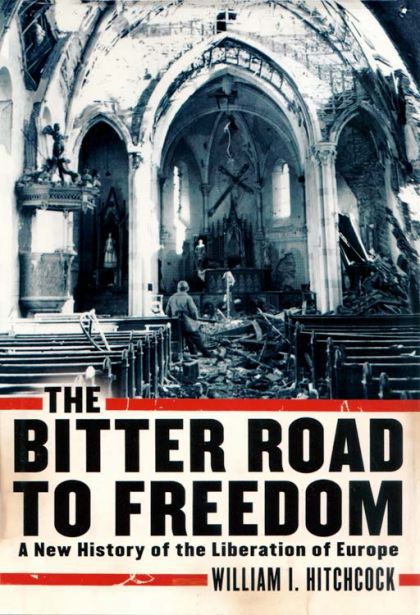
American s are justly proud of th e role their country played in liberating Europe from Nazi tyranny. For many years, we have celebrated the courage of Allied soldiers, sailors, and aircrews who defeated Hitler’s regime and restored freedom to the continent. But in recounting the heroism of the “greatest generation,” Americans often overlook the wartime experiences of European people themselves — the very people for whom the war was fought.In this brilliant new book, historian William I. Hitchcock surveys the European continent from D-Day to the final battles of the war and the first few months of the peace. Based on exhaustive research in five nations and dozens of archives, Hitchcock’s groundbreaking account shows that the liberation of Europe was both a military triumph and a human tragedy of epic proportions.Hitchcock gives voice to those who were on the receiving end of liberation, moving them from the edge of the story to the center. From France to Poland to Germany, from concentration-camp internees to refugees, farmers to shopkeepers, husbands and wives to children, the experience of liberation was often difficult and dangerous. Their gratitude was mixed with guilt or resentment. Their lives were difficult to reassemble.This strikingly original, multinational history of liberation brings to light the interactions of soldiers and civilians, the experiences of noncombatants, and the trauma of displacement and loss amid unprecedented destruction. This book recounts a surprising story, often jarring and uncomfortable, and one that has never been told with such richness and depth.Ranging from the ferocious battle for Normandy (where as many French civilians died on D-Day as U.S. servicemen) to the plains of Poland, from the icy ravines of the Ardennes to the shattered cities and refugee camps of occupied Germany, The Bitter Road to Freedom depicts in searing detail the shocking price that Europeans paid for their freedom.Today, with American soldiers once again waging wars of liberation in faraway lands, this book serves as a timely and sharp reminder of the terrible human toll exacted by even the most righteous of wars.
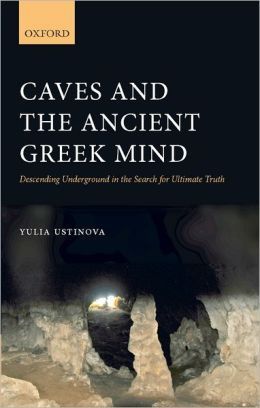
Caves and the Ancient Greek Mind analyses techniques of searching for ultimate wisdom in ancient Greece. The Greeks perceived mental experiences of exceptional intensity as resulting from divine intervention. They believed that to share in the immortals’ knowledge, one had to liberate the soul from the burden of the mortal body by attaining an altered state of consciousness, that is, by merging with a superhuman being or through possession by a deity. These states were often attained by inspired mediums, `impresarios of the gods’ – prophets, poets, and sages – who descended into caves or underground chambers. Yulia Ustinova juxtaposes ancient testimonies with the results of modern neuropsychological research. This novel approach enables an examination of religious phenomena not only from the outside, but also from the inside: it penetrates the consciousness of people who were engaged in the vision quest, and demonstrates that the darkness of the caves provided conditions vital for their activities.
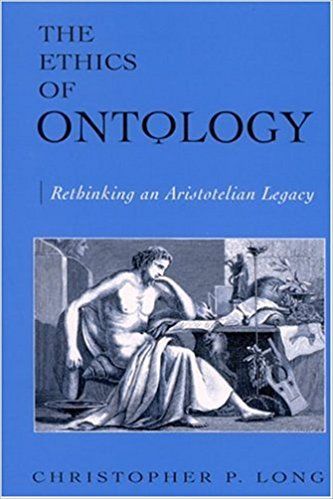
After 25 centuries, Aristotle’s influence on our society’s moral thinking remains profound and he continues to be a very important contributor to contemporary debates in philosophical ethics. This collection showcases some of the best new writing on the Aristotelian notion of virtue of character, which remains central to much of the most interesting work in ethical theory.
ما از اخلاق چه انتظاری داریم؟ این سوال شاید تاحدودی برای عموم مردم و یا متخصصان این رشته قابل پاسخ باشد؛ اینکه خوب بودن را به ما بیاموزد و در تنظیم روابط فردی م...

جشن کتاب تهران به ایستگاه سی و یکم رسیده است. حال و احوال نشر کتاب خوب نیست و باید فرهنگدوستان را به خرید و هدیه دادن کتاب ترغیب نمود. خانه اخلاقپژوهان جوان ب...

بنیاد کتابهای اخلاق اسلامی عمدتا پالایش جان از آلودگیها و آراستن آن به زیباییها است. اندیشه محوری این قبیل کتابها آن است که انسان فعلی آنی نیست که باید باشد...

-
0 Comments