Notice: تابع WP_Block_Type_Registry::register به طورنادرست فراخوانی شد. نامهای نوع بلوک نباید حروف بزرگ داشته باشند. لطفاً برای اطلاعات بیشتر، اشکال زدایی در وردپرس را مشاهده کنید. (این پیام در نگارش 5.0.0 افزوده شده است.) in /home/ethicsho/public_html/wp-includes/functions.php on line 5313
Warning: Use of undefined constant TDC_PATH_LEGACY - assumed 'TDC_PATH_LEGACY' (this will throw an Error in a future version of PHP) in /home/ethicsho/public_html/wp-content/plugins/td-composer/td-composer.php on line 109
Warning: Use of undefined constant TDSP_THEME_PATH - assumed 'TDSP_THEME_PATH' (this will throw an Error in a future version of PHP) in /home/ethicsho/public_html/wp-content/plugins/td-composer/td-composer.php on line 113 بایگانیهای Snow Lion Publications - خانه اخلاق پژوهان جوان Notice: Trying to access array offset on value of type bool in /home/ethicsho/public_html/wp-content/plugins/wp-ulike/inc/general-functions.php on line 807
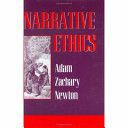
The ethics of literature, formalists have insisted, resides in the moral quality of a character, a story, perhaps the relation between author and reader. But in the wake of deconstruction and various forms of criticism focusing on difference, the ethical question has been freshly negotiated by literary studies, and to this approach Adam Newton brings a startling new thrust. His book makes a compelling case for understanding narrative as ethics. Assuming an intrinsic and necessary connection between the two, Newton explores the ethical consequences of telling stories and fictionalizing character, and the reciprocal claims binding teller, listener, witness, and reader in the process. He treats these relations as defining properties of prose fiction, of particular import in nineteenth- and twentieth-century texts.Newton’s fresh and nuanced readings cover a wide range of authors and periods, from Charles Dickens to Kazuo Ishiguro and Julian Barnes, from Herman Melville to Richard Wright, from Joseph Conrad and Henry James to Sherwood Anderson and Stephen Crane. An original work of theory as well as a deft critical performance, Narrative Ethics also stakes a claim for itself as moral inquiry. To that end, Newton braids together the ethical-philosophical projects of Emmanuel Levinas, Stanley Cavell, and Mikhail Bakhtin as a kind of chorus for his textual analyses–an elegant bridge between philosophy’s ear and literary criticism’s voice. His work will generate enormous interest among scholars and students of English and American literature, as well as specialists in narrative and literary theory, hermeneutics, and contemporary philosophy.
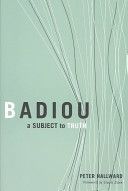
Alain Badiou is one of the most inventive and compelling philosophers working in France today–a thinker who, in these days of cynical resignation and academic specialization, is exceptional in every sense. Guided by disciplines ranging from mathematics to psychoanalysis, inspired as much by Plato and Cantor as by Mao and Mallarme, Badiou’s work renews, in the most varied and spectacular terms, a decidedly ancient understanding of philosophy–philosophy as a practice conditioned by truths, understood as militant processes of emancipation or transformation. This book is the first comprehensive introduction to Badiou’s thought to appear in any language. Assuming no prior knowledge of his work, it provides a thorough and searching overview of all the main components of his philosophy, from its decisive political orientation through its startling equation of ontology with mathematics to its resolute engagement with its principal competition (from Wittgenstein, Heidegger, and Deleuze, among others). The book draws on all of Badiou’s published work and a wide sampling of his unpublished work in progress, along with six years of correspondence with the author. Peter Hallward pays careful attention to the aspect of Badiou’s work most liable to intimidate readers in continental philosophy and critical theory: its crucial reliance on certain key developments in modern mathematics. Eschewing unnecessary technicalities, Hallward provides a highly readable discussion of each of the basic features of Badiou’s ontology, as well as his more recent account of appearance and “being-there.” Without evading the difficulties, Peter Hallward demonstrates in detail and in depth why Badiou’s ongoingphilosophical project should be recognized as the most resourceful and inspiring of his generation.
In this 2nd edition, the author has substantially revised his book throughout, updating the moral arguments and adding a chapter on animal minds. Importantly, rather than being a polemic on animal rights, this book is also a considered and imaginative evaluation of moral theory as explored through the issue of animal rights.
ما از اخلاق چه انتظاری داریم؟ این سوال شاید تاحدودی برای عموم مردم و یا متخصصان این رشته قابل پاسخ باشد؛ اینکه خوب بودن را به ما بیاموزد و در تنظیم روابط فردی م...

جشن کتاب تهران به ایستگاه سی و یکم رسیده است. حال و احوال نشر کتاب خوب نیست و باید فرهنگدوستان را به خرید و هدیه دادن کتاب ترغیب نمود. خانه اخلاقپژوهان جوان ب...

بنیاد کتابهای اخلاق اسلامی عمدتا پالایش جان از آلودگیها و آراستن آن به زیباییها است. اندیشه محوری این قبیل کتابها آن است که انسان فعلی آنی نیست که باید باشد...

-
0 Comments