Notice: تابع WP_Block_Type_Registry::register به طورنادرست فراخوانی شد. نامهای نوع بلوک نباید حروف بزرگ داشته باشند. لطفاً برای اطلاعات بیشتر، اشکال زدایی در وردپرس را مشاهده کنید. (این پیام در نگارش 5.0.0 افزوده شده است.) in /home/ethicsho/public_html/wp-includes/functions.php on line 5313
Warning: Use of undefined constant TDC_PATH_LEGACY - assumed 'TDC_PATH_LEGACY' (this will throw an Error in a future version of PHP) in /home/ethicsho/public_html/wp-content/plugins/td-composer/td-composer.php on line 109
Warning: Use of undefined constant TDSP_THEME_PATH - assumed 'TDSP_THEME_PATH' (this will throw an Error in a future version of PHP) in /home/ethicsho/public_html/wp-content/plugins/td-composer/td-composer.php on line 113 بایگانیهای Penguin books, limited - خانه اخلاق پژوهان جوان Notice: Trying to access array offset on value of type bool in /home/ethicsho/public_html/wp-content/plugins/wp-ulike/inc/general-functions.php on line 807
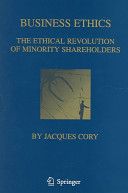
This monograph is based on qualitative and inductive research. All the cases treated in it are based on current events and try to find the common aspects and basic rules that govern the wrongdoing to the minority shareholders. In the four cases of US, French and Israeli companies, most of them in high tech, the minority shareholders lose almost all their investment. Those are not pervert cases but the norm in many companies, which is illustrated by qualitative cases, without being able of course to quantify them. Case studies are the preferred strategy when “how” and “why” questions are being posed. The purpose of this monograph is therefore to analyze why and how companies do not act ethically towards their minority shareholders, not how many, not which, not to what degree and not where.
Moral Sentiments and Material Interests presents an innovative synthesis of research in different disciplines to argue that cooperation stems not from the stereotypical selfish agent acting out of disguised self-interest but from the presence of “strong reciprocators” in a social group.Presenting an overview of research in economics, anthropology, evolutionary and human biology, social psychology, and sociology, the book deals with both the theoretical foundations and the policy implications of this explanation for cooperation. Chapter authors in the remaining parts of the book discuss the behavioral ecology of cooperation in humans and nonhuman primates, modeling and testing strong reciprocity in economic scenarios, and reciprocity and social policy. The evidence for strong reciprocity in the book includes experiments using the famous Ultimatum Game (in which two players must agree on how to split a certain amount of money or they both get nothing.)
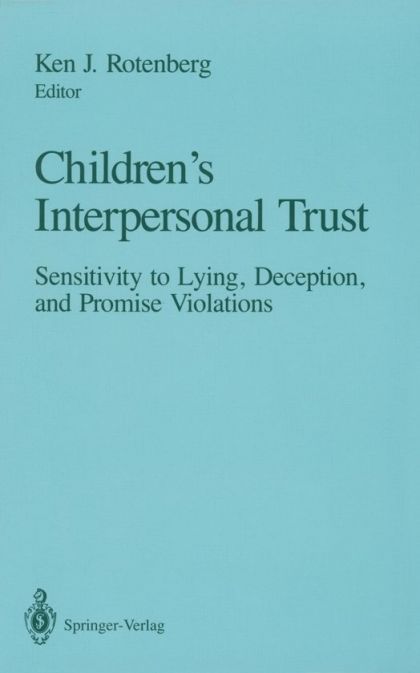
Social philosophers during the course of history and modern day researchers have expressed the belief that interpersonal trust is essential for harmonious and cooperative social relationships among people. Interpersonal trust has been described as the social cement that binds interpersonal relationships in society and is necessary for its survival. This book provides researchers and professionals who deal with children an insight into a critical facet of children’s social functioning. Interpersonal trust is conceptualized as children’ s confidence that a person’s verbal or nonverbal communication accurately conveys facts or internal states. This includes children’s sensitivity to lying, deception and promise violations.
ما از اخلاق چه انتظاری داریم؟ این سوال شاید تاحدودی برای عموم مردم و یا متخصصان این رشته قابل پاسخ باشد؛ اینکه خوب بودن را به ما بیاموزد و در تنظیم روابط فردی م...

جشن کتاب تهران به ایستگاه سی و یکم رسیده است. حال و احوال نشر کتاب خوب نیست و باید فرهنگدوستان را به خرید و هدیه دادن کتاب ترغیب نمود. خانه اخلاقپژوهان جوان ب...

بنیاد کتابهای اخلاق اسلامی عمدتا پالایش جان از آلودگیها و آراستن آن به زیباییها است. اندیشه محوری این قبیل کتابها آن است که انسان فعلی آنی نیست که باید باشد...

-
0 Comments