Notice: تابع WP_Block_Type_Registry::register به طورنادرست فراخوانی شد. نامهای نوع بلوک نباید حروف بزرگ داشته باشند. لطفاً برای اطلاعات بیشتر، اشکال زدایی در وردپرس را مشاهده کنید. (این پیام در نگارش 5.0.0 افزوده شده است.) in /home/ethicsho/public_html/wp-includes/functions.php on line 5313
Warning: Use of undefined constant TDC_PATH_LEGACY - assumed 'TDC_PATH_LEGACY' (this will throw an Error in a future version of PHP) in /home/ethicsho/public_html/wp-content/plugins/td-composer/td-composer.php on line 109
Warning: Use of undefined constant TDSP_THEME_PATH - assumed 'TDSP_THEME_PATH' (this will throw an Error in a future version of PHP) in /home/ethicsho/public_html/wp-content/plugins/td-composer/td-composer.php on line 113 بایگانیهای Orbis Books (USA) - خانه اخلاق پژوهان جوان Notice: Trying to access array offset on value of type bool in /home/ethicsho/public_html/wp-content/plugins/wp-ulike/inc/general-functions.php on line 807
Written by renowned Aristotle scholar Sir David Ross, this study has long been established as one of the foremost surveys of Aristotle’s life, work and philosophy. With John L. Ackrill’s introduction and updated bibliography, created for the sixth edition, the book continues to serve as a standard guide, both for the student of ancient history and the general reader.
This book presents and argues for a moral theory which draws on most of the major theoretical positions to some degree, but it also spells out the limits and boundaries of a moral theory. In doing so, it exposes a number of common confusions and misunderstandings about morality, and presents a strong argument for some indisputable truths in relation to the moral sphere. Divided into four parts, the book covers the key issues within moral philosophy: Part 1 provides a lucid and powerful account of the nature and limits of moral theory, sharply distinguishing it from religion Part 2 outlines a positive moral theory by exploring the defining principles of morality and the reasons for being moral Part 3 distinguishes moral values from others such as ecological, health and safety and sexual values Part 4 is concerned with the implications of our moral understanding for moral education While this book concentrateson argument and ideas, a commentary to each chapter provides historical context and contemporary reference points. It will prove an invaluable resource for students of both Education and Philosophy.
This innovative study of ethics in Meiji Japan (1868-1912) explores the intense struggle to define a common morality for the emerging nation-state. In the Social Darwinist atmosphere of the time, the Japanese state sought to quell uprisings and overcome social disruptions so as to produce national unity and defend its sovereignty against Western encroachment. Morality became a crucial means to attain these aims. Moral prescriptions for re-ordering the population came from all segments of society, including Buddhist, Christian, and Confucian apologists; literary figures and artists; advocates of natural rights; anarchists; and women defending nontraditional gender roles. Each envisioned a unity grounded in its own moral perspective. It was in this tumultuous atmosphere that the academic discipline of ethics (rinrigaku) emerged–not as a value-neutral, objective form of inquiry as its practitioners claimed, but a state-sponsored program with its own agenda. After examining the broad moral space of “civilization,” Richard Reitan turns to the dominant moral theories of early Meiji and the underlying epistemology that shaped and authorized them. He considers the fluidity of moral subjectivity (the constantly shifting nature of norms to which we are subject and how we apprehend, resist, or practice them) by juxtaposing rinrigaku texts with moral writings by religious apologists. By the beginning of the 1890s, moral philosophers in Japan were moving away from the empiricism and utilitarianism of the prior decade and beginning to place “spirit” at the center of ethical inquiry. This shift is explored through the works of two thinkers, Inoue Tetsujiro (1856-1944) and Nakashima Rikizo (1858-1918), the first chair of ethics at Tokyo Imperial University. Finally, Reitan takes a detailed look at the national morality movement (kokumin dotoku) and its close association with the state before concluding with an outline of some conceptual linkages between the Meiji and later periods.
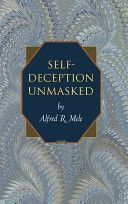
Self-deception raises complex questions about the nature of belief and the structure of the human mind. In this book, Alfred Mele addresses four of the most critical of these questions: What is it to deceive oneself? How do we deceive ourselves? Why do we deceive ourselves? Is self-deception really possible?Drawing on cutting-edge empirical research on everyday reasoning and biases, Mele takes issue with commonplace attempts to equate the processes of self-deception with those of stereotypical interpersonal deception. Such attempts, he demonstrates, are fundamentally misguided, particularly in the assumption that self-deception is intentional. In their place, Mele proposes a compelling, empirically informed account of the motivational causes of biased beliefs. At the heart of this theory is an appreciation of how emotion and motivation may, without our knowing it, bias our assessment of evidence for beliefs. Highlighting motivation and emotion, Mele develops a pair of approaches for explaining the two forms of self-deception: the “straight” form, in which we believe what we want to be true, and the “twisted” form, in which we believe what we wish to be false.Underlying Mele’s work is an abiding interest in understanding and explaining the behavior of real human beings. The result is a comprehensive, elegant, empirically grounded theory of everyday self-deception that should engage philosophers and social scientists alike.
ما از اخلاق چه انتظاری داریم؟ این سوال شاید تاحدودی برای عموم مردم و یا متخصصان این رشته قابل پاسخ باشد؛ اینکه خوب بودن را به ما بیاموزد و در تنظیم روابط فردی م...

جشن کتاب تهران به ایستگاه سی و یکم رسیده است. حال و احوال نشر کتاب خوب نیست و باید فرهنگدوستان را به خرید و هدیه دادن کتاب ترغیب نمود. خانه اخلاقپژوهان جوان ب...

بنیاد کتابهای اخلاق اسلامی عمدتا پالایش جان از آلودگیها و آراستن آن به زیباییها است. اندیشه محوری این قبیل کتابها آن است که انسان فعلی آنی نیست که باید باشد...

-
0 Comments