Notice: تابع WP_Block_Type_Registry::register به طورنادرست فراخوانی شد. نامهای نوع بلوک نباید حروف بزرگ داشته باشند. لطفاً برای اطلاعات بیشتر، اشکال زدایی در وردپرس را مشاهده کنید. (این پیام در نگارش 5.0.0 افزوده شده است.) in /home/ethicsho/public_html/wp-includes/functions.php on line 5313
Warning: Use of undefined constant TDC_PATH_LEGACY - assumed 'TDC_PATH_LEGACY' (this will throw an Error in a future version of PHP) in /home/ethicsho/public_html/wp-content/plugins/td-composer/td-composer.php on line 109
Warning: Use of undefined constant TDSP_THEME_PATH - assumed 'TDSP_THEME_PATH' (this will throw an Error in a future version of PHP) in /home/ethicsho/public_html/wp-content/plugins/td-composer/td-composer.php on line 113 بایگانیهای Nuffield Council on Bioethics - خانه اخلاق پژوهان جوان Notice: Trying to access array offset on value of type bool in /home/ethicsho/public_html/wp-content/plugins/wp-ulike/inc/general-functions.php on line 807
This volume comprises essays presented to Alvin Plantinga on the occasion of his 70th birthday. Plantinga is one of the leading figures in Anglo-American metaphysics, epistemology and philosophy of religion; his work in these areas has been the focus of wide scholarly attention. This collection of essays, all of which were written specifically for this volume in honor of Plantinga’s 70th birthday, ranges broadly over topics in metaphysics and epistemology and includes contributions by some of the best philosophers writing today. The volume will be of particular interest to metaphysicians, epistemologists, philosophers of religion and theologians as it includes important recent work by some of the leading thinkers in these fields.With contributions from William P. Alston, Michael Bergmann, Richard Fumerton, Jenann Ismael, Jonathan Kvanvig, Trenton Merricks, Richard Otte, John Pollock, Michael C. Rea, Eleonore Stump, James Tomberlin, Peter van Inwagen, Nicholas Wolterstorff, and Keith Yandell.
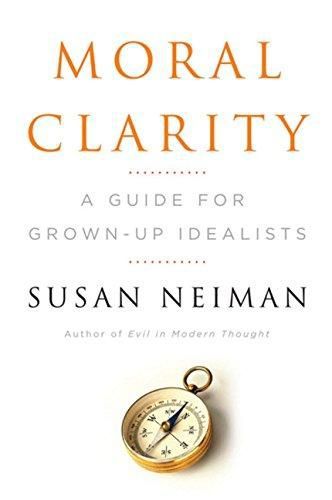
Susan Neiman is a moral philosopher committed to making the tools of her trade relevant to real life. In Moral Clarity, she shows how resurrecting a moral vocabulary good and evil, heroism and nobility can steer us clear of the dogmas of the right and the helpless pragmatism of the left. In search of a framework for forming clear opinions and taking responsible action on today’s urgent political and social questions, Neiman reaches back to the eighteenth century, retrieving a set of virtues happiness, reason, reverence, and hope that were held high by every Enlightenment thinker. She shows that the pursuit of moral clarity is not a matter of religious faith but is open to all who are committed to these ideals, believers and nonbelievers alike. And she draws on literature, evolutionary theory, and other contemporary research to show why, by keeping before us the distinction between the real and the possible, these ideals continue to guide and inspire.
Normative reasons are reasons to do and believe things. Intellectual inquiry seems to presuppose their existence, for we cannot justifiably conclude that we exist; that there is an external world; and that there are better and worse ways of investigating it and behaving in it, unless there are reasons to do and believe such things. But just what in the world are normative reasons? In this book a case will be made for believing normative reasons are favouring relations that have a single, external source, filling this significant gap in the literature in an area within contemporary philosophy that has quickly grown in prominence. Providing a divine command metanormative analysis of normative reasons on entirely non-religious grounds, its arguments will be relevant to both secular and non-secular audiences alike and will address key issues in meta-ethics, evolutionary theory – especially evolutionary debunking threats to moral reasons and the normative more generally – and epistemology. .
In this eloquent collection of essays, Rebecca Martusewicz positions a philosophy of education that relies on what transpires between teachers and learners in various contexts. She thoughtfully analyzes how, in the relationship between teachers and learners, all kinds of ideas, beliefs, interpretations, and meanings are generated as a result of potent generative forces that depend, as she demonstrates using post-structuralist theories, on difference as their fuel. Ultimately she argues that to become educated requires an attention to the welfare of self and others and a willingness to confront and shift one’s own habits, practices, and beliefs for that purpose. This work contains: clear translations of post-structuralist theories such as those of Deleuze, Serres, and Derrida; well-written essays that blend good storytelling, theory, and ethical analysis to reconceptualize education as the means toward social justice; and a clear argument for the drawing together of analyses of difference introduced by post-structuralism with attention to ethics and social justice as they apply to education.
Psychology and Law shows how psychological research and theory can be used in a legal context. Written with advanced undergraduate students in mind, it focuses upon the pre-trial or investigative phase of the legal process. Obtaining and assessing witness evidence is a key part of any criminal investigation. Topics include witness accuracy and credibility, covering issues such as assessment of witness credibility, interviewing suspects and witnesses, eyewitness testimony, false beliefs and memory, the role of experts and juries. This second edition has been revised and updated to reflect the large amount of new research in the area, making it the essential guide for all courses with a legal component. Comment on the first edition: “This is an excellent appraisal of the psychology of evidence…it provides thorough, substantial and up-to-date accounts of modern developments.” Denniss Howitt, Loughborough University, UK * Written by well known and respected authors * Suitable as an introductory, undergraduate text
ما از اخلاق چه انتظاری داریم؟ این سوال شاید تاحدودی برای عموم مردم و یا متخصصان این رشته قابل پاسخ باشد؛ اینکه خوب بودن را به ما بیاموزد و در تنظیم روابط فردی م...

جشن کتاب تهران به ایستگاه سی و یکم رسیده است. حال و احوال نشر کتاب خوب نیست و باید فرهنگدوستان را به خرید و هدیه دادن کتاب ترغیب نمود. خانه اخلاقپژوهان جوان ب...

بنیاد کتابهای اخلاق اسلامی عمدتا پالایش جان از آلودگیها و آراستن آن به زیباییها است. اندیشه محوری این قبیل کتابها آن است که انسان فعلی آنی نیست که باید باشد...

-
0 Comments