Notice: تابع WP_Block_Type_Registry::register به طورنادرست فراخوانی شد. نامهای نوع بلوک نباید حروف بزرگ داشته باشند. لطفاً برای اطلاعات بیشتر، اشکال زدایی در وردپرس را مشاهده کنید. (این پیام در نگارش 5.0.0 افزوده شده است.) in /home/ethicsho/public_html/wp-includes/functions.php on line 5313
Warning: Use of undefined constant TDC_PATH_LEGACY - assumed 'TDC_PATH_LEGACY' (this will throw an Error in a future version of PHP) in /home/ethicsho/public_html/wp-content/plugins/td-composer/td-composer.php on line 109
Warning: Use of undefined constant TDSP_THEME_PATH - assumed 'TDSP_THEME_PATH' (this will throw an Error in a future version of PHP) in /home/ethicsho/public_html/wp-content/plugins/td-composer/td-composer.php on line 113 بایگانیهای New York University Press - خانه اخلاق پژوهان جوان Notice: Trying to access array offset on value of type bool in /home/ethicsho/public_html/wp-content/plugins/wp-ulike/inc/general-functions.php on line 807
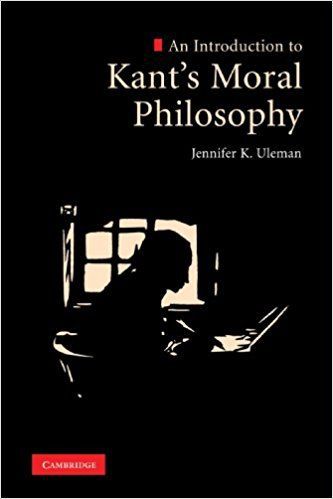
Immanuel Kant’s moral philosophy is one of the most distinctive achievements of the European Enlightenment. At its heart lies what Kant called the ‘strange thing’: the free, rational, human will. This introduction explores the basis of Kant’s anti-naturalist, secular, humanist vision of the human good. Moving from a sketch of the Kantian will, with all its component parts and attributes, to Kant’s canonical arguments for his categorical imperative, this introduction shows why Kant thought his moral law the best summary expression of both his own philosophical work on morality and his readers’ deepest shared convictions about the good. Kant’s central tenets, key arguments, and core values are presented in an accessible and engaging way, making this book ideal for anyone eager to explore the fundamentals of Kant’s moral philosophy.
In a series of original and perceptive philosophical essays — including those on “Birth and Death,” “Virtue and Human Flourishing,” ‘The Need to Sleep,” “Sex,” “Truth and Reality,” “Vanity and Destiny,” and “The Fear of Death” — the author reflects on the nature of morality and its relation to experience, on the individual mind and its place in philosophy, and on the strangeness of life itself. Drawing widely on literature and philosophy — from Nietzsche and Schopenhauer, Shakespeare, Dostoyevsky, George Eliot, Kafka, Jean-Paul Sartre, D. H. Lawrence, and others — Living Philosophy has some affinities with the philosophy practised by such figures as Martha Nussbaum, Stanley Cavell, and Peter Winch. Hamilton develops a way of approaching philosophy that opens up room not so much to answer the pressing questions of life as to deepen our sense of what those questions are.
Medicine and health care generate many bioethical problems and dilemmas that are of great academic, professional and public interest. This comprehensive resource is designed as a succinct yet authoritative text and reference for clinicians, bioethicists, and advanced students seeking a better understanding of ethics problems in the clinical setting. Each chapter illustrates an ethical problem that might be encountered in everyday practice; defines the concepts at issue; examines their implications from the perspectives of ethics, law and policy; and then provides a practical resolution. There are 10 key sections presenting the most vital topics and clinically relevant areas of modern bioethics. International, interdisciplinary authorship and cross-cultural orientation ensure suitability for a worldwide audience. This book will assist all clinicians in making well-reasoned and defensible decisions by developing their awareness of ethical considerations and teaching the analytical skills to deal with them effectively.
ما از اخلاق چه انتظاری داریم؟ این سوال شاید تاحدودی برای عموم مردم و یا متخصصان این رشته قابل پاسخ باشد؛ اینکه خوب بودن را به ما بیاموزد و در تنظیم روابط فردی م...

جشن کتاب تهران به ایستگاه سی و یکم رسیده است. حال و احوال نشر کتاب خوب نیست و باید فرهنگدوستان را به خرید و هدیه دادن کتاب ترغیب نمود. خانه اخلاقپژوهان جوان ب...

بنیاد کتابهای اخلاق اسلامی عمدتا پالایش جان از آلودگیها و آراستن آن به زیباییها است. اندیشه محوری این قبیل کتابها آن است که انسان فعلی آنی نیست که باید باشد...

-
0 Comments