Notice: تابع WP_Block_Type_Registry::register به طورنادرست فراخوانی شد. نامهای نوع بلوک نباید حروف بزرگ داشته باشند. لطفاً برای اطلاعات بیشتر، اشکال زدایی در وردپرس را مشاهده کنید. (این پیام در نگارش 5.0.0 افزوده شده است.) in /home/ethicsho/public_html/wp-includes/functions.php on line 5313
Warning: Use of undefined constant TDC_PATH_LEGACY - assumed 'TDC_PATH_LEGACY' (this will throw an Error in a future version of PHP) in /home/ethicsho/public_html/wp-content/plugins/td-composer/td-composer.php on line 109
Warning: Use of undefined constant TDSP_THEME_PATH - assumed 'TDSP_THEME_PATH' (this will throw an Error in a future version of PHP) in /home/ethicsho/public_html/wp-content/plugins/td-composer/td-composer.php on line 113 بایگانیهای Narcissus - خانه اخلاق پژوهان جوان Notice: Trying to access array offset on value of type bool in /home/ethicsho/public_html/wp-content/plugins/wp-ulike/inc/general-functions.php on line 807
Why was the great philosopher Spinoza expelled from his Portuguese-Jewish community in Amsterdam? Nadler’s investigation of this simple question gives fascinating new perspectives on Spinoza’s thought and the Jewish religious and philosophical tradition from which it arose.
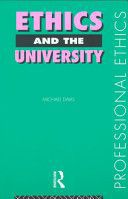
Ethics and the University brings together two closely related topics, the practice of ethics in the university (“academic ethics”) and the teaching of practical or applied ethics in the university. This volume is divided into four parts: * A survey of practical ethics, offering an explanation of its recent emergence as a university subject, situating that subject into a wider social and historical context and identifying some problems that the subject generates for universities * An examination of research ethics, including the problem of plagiarism * A discussion of the teaching of practical ethics. Michael Davis explores how ethics can be integrated into the university curriculum and what part particular cases should play in the teaching of ethics * An exploration of sexual ethics Ethics and the University provides a stimulating and provocative analysis of academic ethics which will be useful to students, academics and practitioners.
Business takes place in an increasingly global environment, crossing political and cultural boundaries, and consequently ethical dilemmas arise. The central focus of this successful and innovative text lies in how to make and explain ‘best choice’ judgments in international business situations. The newly-updated version of this groundbreaking textbook continues to provide a topical and relevant analysis of the ethical dimensions of conducting business in a global political economy. From a starting point of applied ethics, the book introduces a common set of normative terms and analytical tools for examining and discussing real case scenarios. Extensive real-world examples, presented in the form of exhibits, cover issues including:foreign production, including sweatshopsexport of hazardous productstesting and pricing of HIV-AIDS drugsadvertising tobacco, alcoholic beverages and infant formuladeceptive marketing techniques and briberyreligious and social discriminationcultural impacts from ‘music, movies and malls’environmental issues, including oil spills, rain forest preservation, global warming and genetically modified foods.To keep pace with the changing landscape of global business, this new edition features:Updated exhibits that introduce new issues and are sourced from more international publicationsIncreased coverage of issues arising in emerging marketsUpdated descriptions and assessments of relevant international agreementsNew glossary of terms and abbreviationsCompanion website featuring links to relevant global policy documents from the UN, WHO, and UNCTAD, as well as updated discussion-oriented information on issues and cases.The continued globalization of business increases the relevance of this textbook and its unique focus on specifically international ethical challenges faced by business, where governments and civil society groups play an active role. While most business ethics texts continue to focus heavily on ethical theory, this textbook condenses ethical theory into applied decision-making concepts, emphasizing practical applications to real world dilemmas.Anyone with an interest in the ethical implications of international business, or the business implications of corporate responsibility in the global market, will find this book a thought-provoking yet balanced analysis. Clearly written, this has become the textbook of choice in this increasingly important field.
Weakness of will, the phenomenon of acting contrary to one’s own better judgment, has remained a prominent discussion topic of philosophy. The history of this discussion in ancient, medieval, and modern times has been outlined in many studies. Weakness of Will in Renaissance and Reformation Thought is, however, the first book to cover the fascinating source materials on weakness of will between 1350 and 1650. In addition to considering the work of a broad range of Renaissance authors (including Petrarch, Donato Acciaiuoli, John Mair, and Francesco Piccolomini), Risto Saarinen explores the theologically coloured debates of the Reformation period, such as those provided by Martin Luther, Philip Melanchthon, John Calvin, and Lambert Daneau. He goes on to discuss the impact of these authors on prominent figures of early modernity, including Shakespeare, Descartes, Spinoza, and Leibniz.While most of the historical research on weakness of will has focused on the reception history of Aristotle’s Nicomachean Ethics, Saarinen pays attention to the Platonic and Stoic discussions and their revival during the Renaissance and the Reformation. He also shows the ways in which Augustine’s discussion of the divided will is intertwined with the Christian reception of ancient Greek ethics, and argues that the theological underpinnings of early modern authors do not rule out weakness of will, but transform the philosophical discussion and lead it towards new solutions.
ما از اخلاق چه انتظاری داریم؟ این سوال شاید تاحدودی برای عموم مردم و یا متخصصان این رشته قابل پاسخ باشد؛ اینکه خوب بودن را به ما بیاموزد و در تنظیم روابط فردی م...

جشن کتاب تهران به ایستگاه سی و یکم رسیده است. حال و احوال نشر کتاب خوب نیست و باید فرهنگدوستان را به خرید و هدیه دادن کتاب ترغیب نمود. خانه اخلاقپژوهان جوان ب...

بنیاد کتابهای اخلاق اسلامی عمدتا پالایش جان از آلودگیها و آراستن آن به زیباییها است. اندیشه محوری این قبیل کتابها آن است که انسان فعلی آنی نیست که باید باشد...

-
0 Comments