Notice: تابع WP_Block_Type_Registry::register به طورنادرست فراخوانی شد. نامهای نوع بلوک نباید حروف بزرگ داشته باشند. لطفاً برای اطلاعات بیشتر، اشکال زدایی در وردپرس را مشاهده کنید. (این پیام در نگارش 5.0.0 افزوده شده است.) in /home/ethicsho/public_html/wp-includes/functions.php on line 5313
Warning: Use of undefined constant TDC_PATH_LEGACY - assumed 'TDC_PATH_LEGACY' (this will throw an Error in a future version of PHP) in /home/ethicsho/public_html/wp-content/plugins/td-composer/td-composer.php on line 109
Warning: Use of undefined constant TDSP_THEME_PATH - assumed 'TDSP_THEME_PATH' (this will throw an Error in a future version of PHP) in /home/ethicsho/public_html/wp-content/plugins/td-composer/td-composer.php on line 113 بایگانیهای Michael Glazier Books - خانه اخلاق پژوهان جوان Notice: Trying to access array offset on value of type bool in /home/ethicsho/public_html/wp-content/plugins/wp-ulike/inc/general-functions.php on line 807
Art, Emotion, and Ethics is a systematic investigation of the relation of art to morality, a topic that has been of central and recurring interest to the philosophy of art since Plato. Berys Gaut explores the various positions that have been taken in this debate, and argues that an artwork is always aesthetically flawed insofar as it possesses a moral defect that is aesthetically relevant. Three main arguments are developed for this view; these involve showing how moral goodness is itself a kind of beauty, that artworks can teach us about morality and that this is often an aesthetic merit in them, and that our emotional responses to works of art are properly guided in part by moral considerations. Art, Emotion, and Ethics also contains detailed interpretations of a wide range of artworks, including Rembrandt’s Bathsheba and Nabokov’s Lolita, which show that ethical criticism can yield rich and plausible accounts of individual works. Gaut develops a new theory of the nature of aesthetic value, explores how art can teach us about the world and what we morally ought to do by guiding our imaginings, and argues that we can have genuine emotions towards people and events that we know are merely fictional. Characterised by its clarity and sustained argument, this book will be of interest to anyone who wants to understand the relation of art to morality.
This book offers a sophisticated analysis of central political concepts in the light of recent debates in political theory. It introduces readers to some of the main interpretations, pointing out their strengths and weaknesses, including a broad range of the main concepts used in contemporary debates on political theory. It tackles the principle concepts employed to justify any policy or institution and examines the main domestic purposes and functions of the state. It goes on to study the relationship between state and civil society and finally looks beyond the state to issues of global concern and inter-state relations.
How can we enhance police integrity? The authors surveyed over 3000 police officers from 30 U.S. police departments on how they would respond to typical scenarios where integrity is challenged. They studied three police agencies which scored highly on the integrity scale: Charlotte-Mecklenburg, North Carolina; Charleston, South Carolina; and St. Petersburg, Florida. The authors conclude that enhancing police integrity goes well beyond culling out “bad apple” police officers. Police administrators should focus on four aspects: organizational rulemaking; detecting, investigating and disciplining rule violations; circumscribing the informal “code of silence” that prohibits police from reporting the misconduct of their colleagues; and understanding the influence of public expectations and agency history.
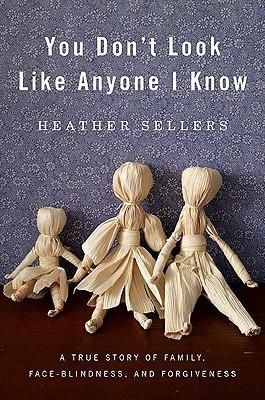
An unusual and uncommonly moving family memoir, with a twist that give new meaning to hindsight, insight, and forgiveness. Heather Sellers is face-blind-that is, she has prosopagnosia, a rare neurological condition that prevents her from reliably recognizing people’s faces. Growing up, unaware of the reason for her perpetual confusion and anxiety, she took what cues she could from speech, hairstyle, and gait. But she sometimes kissed a stranger, thinking he was her boyfriend, or failed to recognize even her own father and mother. She feared she must be crazy. Yet it was her mother who nailed windows shut and covered them with blankets, made her daughter walk on her knees to spare the carpeting, had her practice secret words to use in the likely event of abduction. Her father went on weeklong “fishing trips” (aka benders), took in drifters, wore panty hose and bras under his regular clothes. Heather clung to a barely coherent story of a “normal” childhood in order to survive the one she had. That fairy tale unraveled two decades later when Heather took the man she would marry home to meet her parents and began to discover the truth about her family and about herself. As she came at last to trust her own perceptions, she learned the gift of perspective: that embracing the past as it is allows us to let it go. And she illuminated a deeper truth-that even in the most flawed circumstances, love may be seen and felt.
ما از اخلاق چه انتظاری داریم؟ این سوال شاید تاحدودی برای عموم مردم و یا متخصصان این رشته قابل پاسخ باشد؛ اینکه خوب بودن را به ما بیاموزد و در تنظیم روابط فردی م...

جشن کتاب تهران به ایستگاه سی و یکم رسیده است. حال و احوال نشر کتاب خوب نیست و باید فرهنگدوستان را به خرید و هدیه دادن کتاب ترغیب نمود. خانه اخلاقپژوهان جوان ب...

بنیاد کتابهای اخلاق اسلامی عمدتا پالایش جان از آلودگیها و آراستن آن به زیباییها است. اندیشه محوری این قبیل کتابها آن است که انسان فعلی آنی نیست که باید باشد...

-
0 Comments