Notice: تابع WP_Block_Type_Registry::register به طورنادرست فراخوانی شد. نامهای نوع بلوک نباید حروف بزرگ داشته باشند. لطفاً برای اطلاعات بیشتر، اشکال زدایی در وردپرس را مشاهده کنید. (این پیام در نگارش 5.0.0 افزوده شده است.) in /home/ethicsho/public_html/wp-includes/functions.php on line 5313
Warning: Use of undefined constant TDC_PATH_LEGACY - assumed 'TDC_PATH_LEGACY' (this will throw an Error in a future version of PHP) in /home/ethicsho/public_html/wp-content/plugins/td-composer/td-composer.php on line 109
Warning: Use of undefined constant TDSP_THEME_PATH - assumed 'TDSP_THEME_PATH' (this will throw an Error in a future version of PHP) in /home/ethicsho/public_html/wp-content/plugins/td-composer/td-composer.php on line 113 بایگانیهای Macmillan Reference USA - خانه اخلاق پژوهان جوان Notice: Trying to access array offset on value of type bool in /home/ethicsho/public_html/wp-content/plugins/wp-ulike/inc/general-functions.php on line 807
John Rawls is the preeminent political philosopher of our time. His 1971 masterpiece, A Theory of Justice, permanently changed the landscape of moral political theory, revitalizing the normative study of social issues and taking stands about justice, ethics, rationality and philosophical method that continue to draw followers and critics today.In these five volumes, Henry S. Richardson and Paul Weithman draw together almost 90 of the most incisive and influential articles in that body of literature. The reprinted articles, many of them drawn from difficult-to-find sources, cover the gamut of controversies and conversations sparked by Rawls’s work and represent a wide range of philosophical points of view. The selection also includes articles that reflect Rawls’s reception in economics, law, and the social science more broadly.The publication of these five volumes will be welcomed by students and scholars of contemporary political philosophy, and by anyone interested in the most probing reactions to the premier political philosopher of our time.
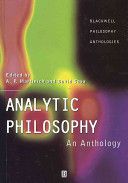
Introduction.Part I: Philosophy of Language.1. On Sense and Reference. (Gottlob Frege).2. Thought. (Gottlob Frege).3. On Denoting. (Bertrand Russell).4. On Referring. (P. F. Strawson).5. Meaning. (H. P. Grice).6. Truth and Meaning. (Donald Davidson).7. Identity and Necessity. (Saul Kripke).8. Meaning and Reference. (Hilary Putnam).Further Reading in Philosophy of Language.Part II: Metaphysics.9. On the Relations of Universals and Particulars. (Bertrand Russell).10. From the Tractatus Logico-Philosophicus. (Ludwig Wittgenstein).11. Particular and General. (P. F. Strawson).12. On What There Is. (W. V. Quine).13. The Identity of Indiscernibles. (Max Black).Further Reading in Metaphysics.Part III: Epistemology.14. Four Forms of Skepticism. (G. E. Moore).15. From On Certainty. (Ludwig Wittgenstein).16. Knowledge by Acquaintance and Knowledge by Description. (Bertrand Russell).17. The Problem of the Criterion. (Roderick Chisholm).18. Is Knowledge Justified True Belief? (Edmund Gettier).19. Aspects of Scientific Explanation. (Carl Hempel).20. The New Riddle of Induction. (Nelson Goodman).21. Epistemology Naturalized. (W. V. Quine).Further Reading in Epistemology.Part IV: Philosophy of Mind.22. The Nature of Mind. (David Armstrong).23. The Nature of Mental States. (Hilary Putnam).24. Mental Events. (Donald Davidson).25. What is it Like to Be a Bat? (Thomas Nagel).26. Mad Pain and Martian Pain. (David Lewis).27. Can Computers Think? (John Searle).Further Reading in Philosophy of Mind.Part V: Freedom and Personal Identity.28. The Conceivability of Mechanism. (Norman Malcolm).29. Freedom and Resentment. (P. F. Strawson).30. Human Freedom and the Self. (Roderick Chisholm).31. The Self and the Future. (Bernard Williams).32. Action, Reasons, and Causes. (Donald Davidson).Further Reading in Freedom and Personal Identity.Part VI: Ethics.33. The Subject Matter of Ethics. (G. E. Moore).34. The Emotive Meaning of Ethical Terms. (C. L. Stevenson).35. Justice as Fairness. (John Rawls).36. Modern Moral Philosophy. (G. E. M. Anscombe).37. Morality as a System of Hypothetical Imperatives. (Philippa Foot).Further Reading in Ethics.Part VII: Methodology.38. The Notion of Analysis in Moore’s Philosophy. (C. H. Langford).39. Reply to Langford. (G. E. Moore).40. The Elimination of Metaphysics. (A. J. Ayer).41. Empiricism, Semantics, and Ontology. (Rudolf Carnap).42. A Plea for Excuses. (J. L. Austin).43. Two Dogmas of Empiricism. (W. V. Quine).44. In Defense of a Dogma. (H. P. Grice and P. F. Strawson.45. Philosophy and the Scientific Image of Man. (Wilfrid Sellars).46. From The Blue and the Brown Books. (Ludwig Wittgenstein).Further Reading in Methodology.Index.
Singer suggests that people who take an ethical approach to life often avoid the trap of meaninglessness, finding a deeper satisfaction in what they are doing than those people whose goals are narrower and more self-centered. He spells out what he means by an ethical approach to life and shows that it can bring about significant and far-reaching changes to one’s life. How Are We to Live? explores the way in which standard contemporary assumptions about human nature and self-interest have led to a world that is fraught with social and environmental problems. Singer asks whether selfishness is in our genes and concludes that we do not have to accept the bleak view of human nature sometimes believed to be inevitable, given our evolutionary origins.
ما از اخلاق چه انتظاری داریم؟ این سوال شاید تاحدودی برای عموم مردم و یا متخصصان این رشته قابل پاسخ باشد؛ اینکه خوب بودن را به ما بیاموزد و در تنظیم روابط فردی م...

جشن کتاب تهران به ایستگاه سی و یکم رسیده است. حال و احوال نشر کتاب خوب نیست و باید فرهنگدوستان را به خرید و هدیه دادن کتاب ترغیب نمود. خانه اخلاقپژوهان جوان ب...

بنیاد کتابهای اخلاق اسلامی عمدتا پالایش جان از آلودگیها و آراستن آن به زیباییها است. اندیشه محوری این قبیل کتابها آن است که انسان فعلی آنی نیست که باید باشد...

-
0 Comments