


Notice: تابع WP_Block_Type_Registry::register به طورنادرست فراخوانی شد. نامهای نوع بلوک نباید حروف بزرگ داشته باشند. لطفاً برای اطلاعات بیشتر، اشکال زدایی در وردپرس را مشاهده کنید. (این پیام در نگارش 5.0.0 افزوده شده است.) in /home/ethicsho/public_html/wp-includes/functions.php on line 5313
Warning: Use of undefined constant TDC_PATH_LEGACY - assumed 'TDC_PATH_LEGACY' (this will throw an Error in a future version of PHP) in /home/ethicsho/public_html/wp-content/plugins/td-composer/td-composer.php on line 109
Warning: Use of undefined constant TDSP_THEME_PATH - assumed 'TDSP_THEME_PATH' (this will throw an Error in a future version of PHP) in /home/ethicsho/public_html/wp-content/plugins/td-composer/td-composer.php on line 113 بایگانیهای John Wiley & Sons - خانه اخلاق پژوهان جوان Notice: Trying to access array offset on value of type bool in /home/ethicsho/public_html/wp-content/plugins/wp-ulike/inc/general-functions.php on line 807
Morals from Motives develops a virtue ethics inspired more by Hume and Hutcheson’s moral sentimentalism than by recently-influential Aristotelianism. It argues that a reconfigured and expanded “morality of caring” can offer a general account of right and wrong action as well as social justice. Expanding the frontiers of ethics, it goes on to show how a motive-based “pure” virtue theory can also help us to understand the nature of human well-being and practical reason.
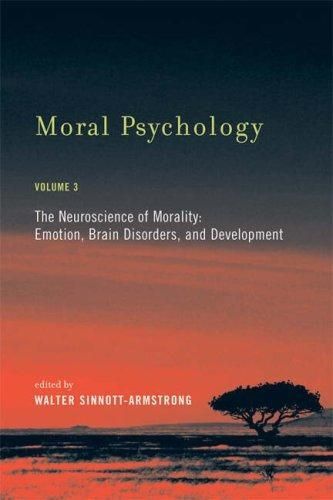
For much of the twentieth century, philosophy and science went their separate ways. In moral philosophy, fear of the so-called naturalistic fallacy kept moral philosophers from incorporating developments in biology and psychology. Since the 1990s, however, many philosophers have drawn on recent advances in cognitive psychology, brain science, and evolutionary psychology to inform their work. This collaborative trend is especially strong in moral philosophy, and these three volumes bring together some of the most innovative work by both philosophers and psychologists in this emerging interdisciplinary field.Contributors to Volume 3:Abigail Baird (Vassar College), William Casebeer (Air Force Academy), Cordelia Fine (Monash University), Nathan Fox (University of Maryland), Uta Frith (University College London, Institute of Cognitive Neuroscience), Jordan Grafman (National Institute of Health), Joshua Greene (Harvard University), Catherine Hynes (School of Psychology, University of Queensland), Fatima Azavedo Ignacio (Cognitive Psychology, Instituto Philippe Pinel), Richard Joyce (Australian National University Research School of Social Science), Jerome Kagan (Harvard University) Leonard Katz (Massachusetts Institute of Technology), Kent Kiehl (Yale University), Jeanette Kennett (Center for Applied Philosophy and Public Ethics, Australian National University), Melanie Killen (University of Maryland), Daniel Lapsley (Ball State University), Heidi Maibom (Carleton University), Victoria McGeer (Princeton University), John Mikhail (Georgetown Law School), Jorge Moll (National Institute of Health), Shaun Nichols (University of Arizona), Ricardo de Oliveira-Souza (Universidade do Rio de Janeiro), Adina Roskies (Dartmouth College), Mirella L. M. F. Paiva (National Institutes of Health), Jana Schaich Borg (Olin Neuropsychiatry Research Center, Institute of Living), Katrina Sifferd (Dartmouth College), Walter Sinnott-Armstrong (Dartmouth College), Michael Smith (Princeton University), Mark Timmons (University of Arizona), Frederick de Vignemont (Institut des sciences cognitives, CNRS), Paul Whalen (Dartmouth College), Roland Zahn (National Institute of Health).
A volume of studies of utilitarianism considered both as a theory of personal morality and a theory of public choice. All but two of the papers have been commissioned especially for the volume, and between them they represent not only a wide range of arguments for and against utilitarianism but also a first-class selection of the most interesting and influential work in this very active area. There is also a substantial introduction by the two editors. The volume will constitute an important stimulus and point of reference for a wide range of philosophers, economists and social theorists.
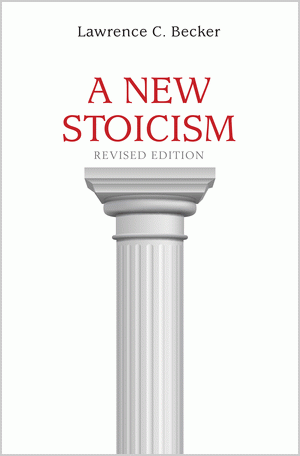
What would stoic ethics be like today if stoicism had survived as a systematic approach to ethical theory, if it had coped successfully with the challenges of modern philosophy and experimental science? A New Stoicism proposes an answer to that question, offered from within the stoic tradition but without the metaphysical and psychological assumptions that modem philosophy and science have abandoned. Lawrence Becker argues that a secular version of the stoic ethical project, based on contemporary cosmology and developmental psychology; provides the basis for a sophisticated form of ethics naturalism, in which virtually all the hard doctrines of the ancient Stoics can be clearly restated and defended.”From the beginning to the end of this compact but lucid book, Becker skillfully brings to life both the arguments and the intuitive appeal of stoicism…. In its essentials (the new stoicism is recognizable, with its particularly astringent rational charm enhanced by Becker’s focused and self-disciplined argumentation.
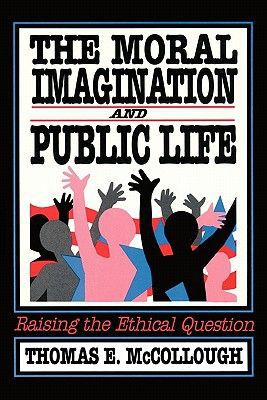
McCollough explores the relationship of personal values to public policy, and he poses the concept of moral community as the vital link between the concerned citizen and the body politic, He delineates a collective vision of the public good that might be brought to bear on policy issues such as health care, education, civil liberties, and the environment.
ما از اخلاق چه انتظاری داریم؟ این سوال شاید تاحدودی برای عموم مردم و یا متخصصان این رشته قابل پاسخ باشد؛ اینکه خوب بودن را به ما بیاموزد و در تنظیم روابط فردی م...

جشن کتاب تهران به ایستگاه سی و یکم رسیده است. حال و احوال نشر کتاب خوب نیست و باید فرهنگدوستان را به خرید و هدیه دادن کتاب ترغیب نمود. خانه اخلاقپژوهان جوان ب...

بنیاد کتابهای اخلاق اسلامی عمدتا پالایش جان از آلودگیها و آراستن آن به زیباییها است. اندیشه محوری این قبیل کتابها آن است که انسان فعلی آنی نیست که باید باشد...

-
0 Comments