Notice: تابع WP_Block_Type_Registry::register به طورنادرست فراخوانی شد. نامهای نوع بلوک نباید حروف بزرگ داشته باشند. لطفاً برای اطلاعات بیشتر، اشکال زدایی در وردپرس را مشاهده کنید. (این پیام در نگارش 5.0.0 افزوده شده است.) in /home/ethicsho/public_html/wp-includes/functions.php on line 5313
Warning: Use of undefined constant TDC_PATH_LEGACY - assumed 'TDC_PATH_LEGACY' (this will throw an Error in a future version of PHP) in /home/ethicsho/public_html/wp-content/plugins/td-composer/td-composer.php on line 109
Warning: Use of undefined constant TDSP_THEME_PATH - assumed 'TDSP_THEME_PATH' (this will throw an Error in a future version of PHP) in /home/ethicsho/public_html/wp-content/plugins/td-composer/td-composer.php on line 113 بایگانیهای Hamilton Books - خانه اخلاق پژوهان جوان Notice: Trying to access array offset on value of type bool in /home/ethicsho/public_html/wp-content/plugins/wp-ulike/inc/general-functions.php on line 807
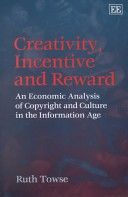
‘…well written, clear and informative. It contains many references that demonstrate the deep knowledge of the field that the author has acquired through her own research and her remarkable work at the head of the Journal of Cultural Economics. She especially provides a very clear review of the literature on the economics of copyright…. this review will become a reference that can’t be ignored by researchers interested in copyright…Towse opens avenues for further research and also stresses those questions that can help professionals better understand cultural regulations.’ – Françoise Benhamou, Journal of Cultural Economics ‘Ruth Towse’s book provides an easily accessible introduction to this field and contains much useful argument. It also stands as testament to the productive and continuing scholarly career of one of the best known figures in contemporary cultural economics.’ – David Throsby, Journal of Economic Literature ‘This is a most interesting treatise on a very topical subject of economic and legal policy …this book offers a wealth of intriguing research ideas and some interesting, if not highly rigorous, analyses of an important area of public policy.’ – Mary Kokoski, Monthly Labor Review ‘Ruth Towse’s excellent book, Creativity, Incentive and Reward is a beacon in this confused theoretical and policy mish-mash. The book, which brings together Towse’s work in copyright and cultural economics over the last decade, is thoroughly researched, analytically satisfying and beautifully written…copyright scholars owe a debt of gratitude to Towse.’ – Fiona Macmillan, Copyright World ‘This is an important work on compensation of the artist and the incentives for artistic activity. The explosive evolution of the technology of communications raises particularly pressing issues in this arena and poses new threats to remuneration of the artist. The discussion of copyright in this book provides vital information for analysis of this issue. The book is informative, intelligent and well written – precisely what is needed for understanding of its subject.’ – William J. Baumol, New York University and Princeton University, US Creativity is crucial to the Information Age economy. It is the basis of production in the cultural industries. In this excellent book, Ruth Towse provides an analysis of the interaction between creativity, the law, and markets for cultural goods and services. Copyright law establishes property rights that create economic incentives to cultural production and Ruth Towse uses her analysis to draw conclusions about policy on copyright. This unique study is of interest to a range of disciplines in economics, law, cultural studies and management.
R.M. Hare is one of the foremost moral philosophers of this century and this volume contains 13 essays by well-known philosophers which discuss Hare’s thinking. The essays cover a wide range of issues including universalizability, moral psychology, and the role of common-sense moral principles. A special feature of the book is Professor Hare’s responses to his critics with both an essay and detailed, point-by-point criticism. In 1981, Oxford University Press published Hare’s “Moral thinking”, which built on his earlier metaethical work to develop a utilitarian normative position which differed from other formulations of utilitarianism .
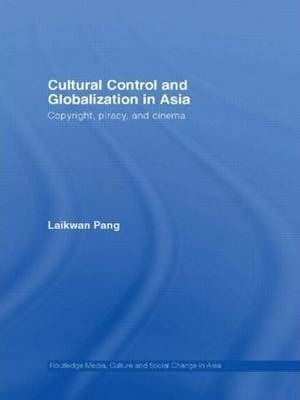
This book challenges the prevailing view of cinema and cinema culture that Hollywood/the US creates, produces and exports, with other countries importing, sometimes modifying and sometimes pirating ‘original’ American work. Instead the book argues that the ‘original ideas’ which underpin the moneymaking activities of the ‘creative industries’, and for which ‘ownership’ is secured through copyright, are often imported, ‘borrowed’ and modified by Hollywood itself from other cultures and national cinemas. The book considers especially Chinese and Korean cinema, and film ‘piracy’ in these countries, to show that ideas of cultural ownership and copyright are not as straightforward as they may at first seem, and that copyright is perhaps primarily a lever through which cultural control is exercised by the cultural big business of the dominant power.
The position of rational egoism centres upon the thought that the rational thing to do must be to pursue one’s own self-interest. Focusing on the work of Hobbes and Sidgwick, this book is an extensive history and evaluation of rational egoism. They are, after the ancients, the foremost exponents of rational egoism. He also considers other figures – Grotius, Samuel Clarke, John Clarke, Butler, Hume, Reid, Kant, Paley and Bentham – and a related position: the instrumental theory of rationality. Robert Shaver’s conclusion is that none of the arguments for rational egoism or the instrumental theory are cogent. This is an important book not just for historians of philosophy but for all readers in philosophy or the social sciences interested in theories of morality and rationality.
ما از اخلاق چه انتظاری داریم؟ این سوال شاید تاحدودی برای عموم مردم و یا متخصصان این رشته قابل پاسخ باشد؛ اینکه خوب بودن را به ما بیاموزد و در تنظیم روابط فردی م...

جشن کتاب تهران به ایستگاه سی و یکم رسیده است. حال و احوال نشر کتاب خوب نیست و باید فرهنگدوستان را به خرید و هدیه دادن کتاب ترغیب نمود. خانه اخلاقپژوهان جوان ب...

بنیاد کتابهای اخلاق اسلامی عمدتا پالایش جان از آلودگیها و آراستن آن به زیباییها است. اندیشه محوری این قبیل کتابها آن است که انسان فعلی آنی نیست که باید باشد...

-
0 Comments