Notice: تابع WP_Block_Type_Registry::register به طورنادرست فراخوانی شد. نامهای نوع بلوک نباید حروف بزرگ داشته باشند. لطفاً برای اطلاعات بیشتر، اشکال زدایی در وردپرس را مشاهده کنید. (این پیام در نگارش 5.0.0 افزوده شده است.) in /home/ethicsho/public_html/wp-includes/functions.php on line 5313
Warning: Use of undefined constant TDC_PATH_LEGACY - assumed 'TDC_PATH_LEGACY' (this will throw an Error in a future version of PHP) in /home/ethicsho/public_html/wp-content/plugins/td-composer/td-composer.php on line 109
Warning: Use of undefined constant TDSP_THEME_PATH - assumed 'TDSP_THEME_PATH' (this will throw an Error in a future version of PHP) in /home/ethicsho/public_html/wp-content/plugins/td-composer/td-composer.php on line 113 بایگانیهای Hackett Publishing Company - خانه اخلاق پژوهان جوان Notice: Trying to access array offset on value of type bool in /home/ethicsho/public_html/wp-content/plugins/wp-ulike/inc/general-functions.php on line 807
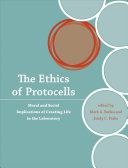
Teams of scientists around the world are racing to create protocells—microscopic, self-organizing entities that spontaneously assemble from simple organic and inorganic materials. The creation of fully autonomous protocells—a technology that can, for all intents and purposes, be considered literally alive—is only a matter of time. This book examines the pressing social and ethical issues raised by the creation of life in the laboratory. Protocells might offer great medical and social benefits and vast new economic opportunities, but they also pose potential risks and threaten cultural and moral norms against tampering with nature and “playing God.” The Ethics of Protocells offers a variety of perspectives on these concerns.After a brief survey of current protocell research (including the much-publicized “top-down” strategy of J. Craig Venter and Hamilton Smith, for which they have received multimillion dollar financing from the U.S. Department of Energy), the chapters treat risk, uncertainty, and precaution; lessons from recent history and related technologies; and ethics in a future society with protocells. The discussions range from new considerations of the precautionary principle and the role of professional ethicists to explorations of what can be learned from society’s experience with other biotechnologies and the open-source software movement.Contributors: Mark A. Bedau, Gaymon Bennett, Giovanni Boniolo, Carl Cranor, Bill Durodie, Mickey Gjerris, Brigitte Hantsche-Tangen, Christine Hauskeller, Andrew Hessel, Brian Johnson, George Khushf, Emily C. Parke, Alain Pottage, Paul Rabinow, Per Sandin, Joachim Schummer, Mark Triant, Laurie ZolothBasic Bioethics series
What was the ethical perspective of Modernist literature? How did Yeats, Eliot, Joyce, Woolf, and Beckett represent ethical issues and develop their moral ideas? Lee Oser argues that thinking about human nature restores a perspective on modernist literature that has been lost. He offers detailed discussions of the relationship between ethics and aesthetics to illuminate close readings of major modernist texts. For Oser, the reception of Aristotle is crucial to the modernist moral project, which he defines as the effort to transform human nature through the use of art. Exploring the origins of that project, its success in modernism, its critical heirs, and its possible future, The Ethics of Modernism brings a fresh perspective on modernist literature and its interaction with ethical strands of philosophy. It offers many new insights to scholars of twentieth-century literature as well as intellectual historians.
One of the most important developments in modern moral philosophy is the resurgence of interest in the virtues. In this new book, Daniel Russell explores two important hopes for such an approach to moral thought: that starting from the virtues should cast light on what makes an action right, and that notions like character, virtue, and vice should yield a plausible picture of human psychology. Russell argues that the key to each of these hopes is an understanding of the cognitive and deliberative skills involved in the virtues. If right action is defined in terms of acting generously or kindly, then these virtues must involve skills for determining what the kind or generous thing to do would be on a given occasion. Likewise, Russell argues that understanding virtuous action as the intelligent pursuit of virtuous goals yields a promising picture of the psychology of virtue. This book develops an Aristotelian account of the virtue of practical intelligence or “phronesis”–an excellence of deliberating and making choices–which Russell argues is a necessary part of every virtue. This emphasis on the roots of the virtues in the practical intellect contrasts with ambivalence about the practical intellect in much recent work on the virtues–a trend Russell argues is ultimately perilous for virtue theory. This book also takes a penetrating look at issues like the unity of the virtues, responsibility for character, and that elusive figure, ‘the virtuous person’. Written in a clear and careful manner, Practical Intelligence and the Virtues will appeal to philosophers and students alike in moral philosophy and moral psychology.
This Companion makes a new departure in Hobbes scholarship, addressing a philosopher whose impact was as great on Continental European theories of state and legal systems as it was at home. This volume is a systematic attempt to incorporate work from both the Anglophone and Continental traditions, bringing together newly commissioned work by scholars from ten different countries in a topic-by-topic sequence of essays that follows the structure of Leviathan, re-examining the relationship among Hobbes’s physics, metaphysics, politics, psychology, and religion. Collectively they showcase important revisionist scholarship that re-examines both the context for Leviathan and its reception, demonstrating the degree to which Hobbes was indebted to the long tradition of European humanist thought. This Cambridge Companion shows that Hobbes’s legacy was never lost and that he belongs to a tradition of reflection on political theory and governance that is still alive, both in Europe and in the diaspora.
ما از اخلاق چه انتظاری داریم؟ این سوال شاید تاحدودی برای عموم مردم و یا متخصصان این رشته قابل پاسخ باشد؛ اینکه خوب بودن را به ما بیاموزد و در تنظیم روابط فردی م...

جشن کتاب تهران به ایستگاه سی و یکم رسیده است. حال و احوال نشر کتاب خوب نیست و باید فرهنگدوستان را به خرید و هدیه دادن کتاب ترغیب نمود. خانه اخلاقپژوهان جوان ب...

بنیاد کتابهای اخلاق اسلامی عمدتا پالایش جان از آلودگیها و آراستن آن به زیباییها است. اندیشه محوری این قبیل کتابها آن است که انسان فعلی آنی نیست که باید باشد...

-
0 Comments