Notice: تابع WP_Block_Type_Registry::register به طورنادرست فراخوانی شد. نامهای نوع بلوک نباید حروف بزرگ داشته باشند. لطفاً برای اطلاعات بیشتر، اشکال زدایی در وردپرس را مشاهده کنید. (این پیام در نگارش 5.0.0 افزوده شده است.) in /home/ethicsho/public_html/wp-includes/functions.php on line 5313
Warning: Use of undefined constant TDC_PATH_LEGACY - assumed 'TDC_PATH_LEGACY' (this will throw an Error in a future version of PHP) in /home/ethicsho/public_html/wp-content/plugins/td-composer/td-composer.php on line 109
Warning: Use of undefined constant TDSP_THEME_PATH - assumed 'TDSP_THEME_PATH' (this will throw an Error in a future version of PHP) in /home/ethicsho/public_html/wp-content/plugins/td-composer/td-composer.php on line 113 بایگانیهای Guilford Publications - خانه اخلاق پژوهان جوان Notice: Trying to access array offset on value of type bool in /home/ethicsho/public_html/wp-content/plugins/wp-ulike/inc/general-functions.php on line 807
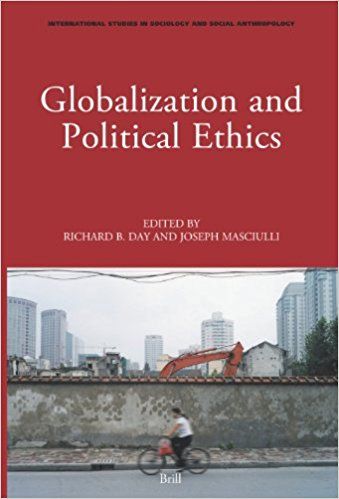
Rational exercise of our responsibility requires us to relate the globalization process to the ends and purposes that properly befit human life and human community. Economic ‘ends’ are merely the ‘means’ to ends of a higher order, which can only be specified in terms of moral duty and ethical purpose. The contributors to this book explore political-ethical issues of globalization, including terrorism, institutional change and distribution in the world economy, the role of the United Nations and international financial institutions, the regimes of international trade and technology transfer, the effects of regionalism in the European Union and the Association of Southeast Asian Nations, the failure of Russia, human rights enforcement in Africa, and the prospects for global governance. This book was originally published as Volume 4 no. 3-4 (2005) of Brill’s journal “Perspectives on Global Development and Technology,”
Does Farmer Field really know his prize cow, Daisy, is in the field? When is an unexpected exam not wholly unexpected? Are all bachelors (really) unmarried? Martin Cohen’s bestselling 101 Philosophy Problems is a witty and engaging introduction to philosophy, covering classical as well as contemporary problems from the fields of medical ethics, modern physics and artificial intelligence. For the third edition, many of the problems have been revised and there are several brand new ones, including Lewis Carroll’s problem of people who don’t eat lentils and Poincare’s problem of the gaseous people whose measurements keep changing. With an updated glossary of helpful terms and possible solutions to the problems at the end of the book, 101 Philosophy Problems is essential reading for anyone coming to philosophy for the first time.
How should a prize be awarded after a horse race? Should it go to the best rider, the best person, or the one who finishes first? To what extent are bystanders blameworthy when they do nothing to prevent harm? Are there any objective standards of moral responsibility with which to address such perennial questions? In this fluidly written and lively book, Daniel Robinson takes on the prodigious task of setting forth the contours of praise and blame. He does so by mounting an important and provocative new defense of a radical theory of moral realism and offering a critical appraisal of prevailing alternatives such as determinism and behaviorism and of their conceptual shortcomings. The version of moral realism that arises from Robinson’s penetrating inquiry–an inquiry steeped in Aristotelian ethics but deeply informed by modern scientific knowledge of human cognition–is independent of cognition and emotion. At the same time, Robinson carefully explores how such human attributes succeed or fail in comprehending real moral properties. Through brilliant analyses of constitutional and moral luck, of biosocial and genetic versions of psychological determinism, and of relativistic-anthropological accounts of variations in moral precepts, he concludes that none of these conceptions accounts either for the nature of moral properties or the basis upon which they could be known. Ultimately, the theory that Robinson develops preserves moral properties even while acknowledging the conditions that undermine the powers of human will.
ما از اخلاق چه انتظاری داریم؟ این سوال شاید تاحدودی برای عموم مردم و یا متخصصان این رشته قابل پاسخ باشد؛ اینکه خوب بودن را به ما بیاموزد و در تنظیم روابط فردی م...

جشن کتاب تهران به ایستگاه سی و یکم رسیده است. حال و احوال نشر کتاب خوب نیست و باید فرهنگدوستان را به خرید و هدیه دادن کتاب ترغیب نمود. خانه اخلاقپژوهان جوان ب...

بنیاد کتابهای اخلاق اسلامی عمدتا پالایش جان از آلودگیها و آراستن آن به زیباییها است. اندیشه محوری این قبیل کتابها آن است که انسان فعلی آنی نیست که باید باشد...

-
0 Comments