

Notice: تابع WP_Block_Type_Registry::register به طورنادرست فراخوانی شد. نامهای نوع بلوک نباید حروف بزرگ داشته باشند. لطفاً برای اطلاعات بیشتر، اشکال زدایی در وردپرس را مشاهده کنید. (این پیام در نگارش 5.0.0 افزوده شده است.) in /home/ethicsho/public_html/wp-includes/functions.php on line 5313
Warning: Use of undefined constant TDC_PATH_LEGACY - assumed 'TDC_PATH_LEGACY' (this will throw an Error in a future version of PHP) in /home/ethicsho/public_html/wp-content/plugins/td-composer/td-composer.php on line 109
Warning: Use of undefined constant TDSP_THEME_PATH - assumed 'TDSP_THEME_PATH' (this will throw an Error in a future version of PHP) in /home/ethicsho/public_html/wp-content/plugins/td-composer/td-composer.php on line 113 بایگانیهای Fordham University Press - خانه اخلاق پژوهان جوان Notice: Trying to access array offset on value of type bool in /home/ethicsho/public_html/wp-content/plugins/wp-ulike/inc/general-functions.php on line 807
“Dimensions of Moral Theory “examines the key presuppositions and philosophical commitments that support and shape moral theories. Many of the topics discussed belong to “metaethics,” the study of moral concepts, language, and thought rather than a study of moral issues themselves. Other topics are under the heading of “moral psychology” and concern fundamental issues about the nature of moral agents, moral motivation, and the roles of reason, desire, and pleasure in moral action and experience. The book introduces metaethical and moral psychological positions and arguments and shows how they are generated and why they are important. It thereby brings to light some of the most important philosophical problems raised by moral theorizing.This volume formulates these issues of moral epistemology, the metaphysics of moral value, and moral motivation in a clear and rigorous but non-technical manner.
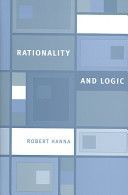
In Rationality and Logic, Robert Hanna argues that logic is intrinsically psychological and that human psychology is intrinsically logical. He claims that logic is cognitively constructed by rational animals (including humans) and that rational animals are essentially logical animals. In order to do so, he defends the broadly Kantian thesis that all (and only) rational animals possess an innate cognitive “logic faculty.” Hanna’s claims challenge the conventional philosophical wisdom that sees logic as a fully formal or “topic-neutral” science irreconcilably separate from the species- or individual-specific focus of empirical psychology. Logic and psychology went their separate ways after attacks by Frege and Husserl on logical psychologism—the explanatory reduction of logic to empirical psychology. Hanna argues, however, that—despite the fact that logical psychologism is false—there is an essential link between logic and psychology. Rational human animals constitute the basic class of cognizers or thinkers studied by cognitive psychology; given the connection between rationality and logic that Hanna claims, it follows that the nature of logic is significantly revealed to us by cognitive psychology. Hanna’s proposed “logical cognitivism” has two important consequences: the recognition by logically oriented philosophers that psychologists are their colleagues in the metadiscipline of cognitive science; and radical changes in cognitive science itself. Cognitive science, Hanna argues, is not at bottom a natural science; it is both an objective or truth-oriented science and a normative human science, as is logic itself.
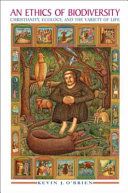
Life on earth is wildly diverse, but the future of that diversity is now in question. Through environmentally destructive farming practices, ever-expanding energy use, and the development and homogenization of land, human beings are responsible for unprecedented reductions in the variety of life forms around us. Estimates suggest that species extinctions caused by humans occur at up to 1,000 times the natural rate, and that one of every twenty species on the planet could be eradicated by 2060. An Ethics of Biodiversity argues that these facts should inspire careful reflection and action in Christian churches, which must learn from earth’s vast diversity in order to help conserve the natural and social diversity of our planet. Bringing scientific data into conversation with theological tradition, the book shows that biodiversity is a point of intersection between faith and ethics, social justice and environmentalism, science and politics, global problems and local solutions. An Ethics of Biodiversity offers a set of tools for students, environmentalists, and people of faith to think critically about how human beings can live with and as part of the variety of life in God’s creation.
The Blackwell Guide to Aristotle’s Nicomachean Ethics illuminates Aristotle’s ethics for both academics and students new to the work, with sixteen newly commissioned essays by distinguished international scholars. The structure of the book mirrors the organization of the Nichomachean Ethics itself.Discusses the human good, the general nature of virtue, the distinctive characteristics of particular virtues, voluntariness, self-control, and pleasure.
ما از اخلاق چه انتظاری داریم؟ این سوال شاید تاحدودی برای عموم مردم و یا متخصصان این رشته قابل پاسخ باشد؛ اینکه خوب بودن را به ما بیاموزد و در تنظیم روابط فردی م...

جشن کتاب تهران به ایستگاه سی و یکم رسیده است. حال و احوال نشر کتاب خوب نیست و باید فرهنگدوستان را به خرید و هدیه دادن کتاب ترغیب نمود. خانه اخلاقپژوهان جوان ب...

بنیاد کتابهای اخلاق اسلامی عمدتا پالایش جان از آلودگیها و آراستن آن به زیباییها است. اندیشه محوری این قبیل کتابها آن است که انسان فعلی آنی نیست که باید باشد...

-
0 Comments