
Notice: تابع WP_Block_Type_Registry::register به طورنادرست فراخوانی شد. نامهای نوع بلوک نباید حروف بزرگ داشته باشند. لطفاً برای اطلاعات بیشتر، اشکال زدایی در وردپرس را مشاهده کنید. (این پیام در نگارش 5.0.0 افزوده شده است.) in /home/ethicsho/public_html/wp-includes/functions.php on line 5313
Warning: Use of undefined constant TDC_PATH_LEGACY - assumed 'TDC_PATH_LEGACY' (this will throw an Error in a future version of PHP) in /home/ethicsho/public_html/wp-content/plugins/td-composer/td-composer.php on line 109
Warning: Use of undefined constant TDSP_THEME_PATH - assumed 'TDSP_THEME_PATH' (this will throw an Error in a future version of PHP) in /home/ethicsho/public_html/wp-content/plugins/td-composer/td-composer.php on line 113 بایگانیهای Edward Elgar Pub - خانه اخلاق پژوهان جوان Notice: Trying to access array offset on value of type bool in /home/ethicsho/public_html/wp-content/plugins/wp-ulike/inc/general-functions.php on line 807
A superb text for teaching the philosophy of Descartes, this volume includes all his major works in their entirety, important selections from his lesser known writings, and key selections from his philosophical correspondence. The result is an anthology that enables the reader to understand the development of Descartes’s thought over his lifetime. Includes a biographical Introduction, chronology, bibliography, and index.
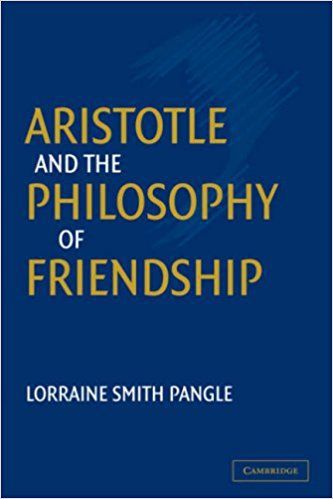
This is the first book to offer a comprehensive account of the major philosophical works on friendship and its relationship to self-love. The book gives central place to Aristotle’s searching examination of friendship in the Nicomachean Ethics. Lorraine Pangle argues that the difficulties surrounding this discussion are soon dispelled once one understands the purpose of the Ethics as both a source of practical guidance for life and a profound, theoretical investigation into human nature. The book also provides fresh interpretations of works on friendship by Plato, Cicero, Epicurus, Seneca, Montaigne and Bacon. The author shows how each of these thinkers sheds light on central questions of moral philosophy: is human sociability rooted in neediness or strength? is the best life chiefly solitary, or dedicated to a community with others? Clearly structured and engagingly written, this book will appeal to a broad swathe of readers across philosophy, classics and political science.
How do we, as interpreters and theorists in the human and social sciences, understand agency? What are the methods, models, and mediating theoretical frameworks that allow us to give a reliable and adequate account of beliefs, actions, and cultural practices? More specifically, how can we as interpretive analysts employ our own cognitive capacities so as to render the beliefs, intentions, and actions of other human beings intelligible? These are the leading questions that a group of well-established social philosophers explore in this volume in light of the most recent (and hotly debated) findings in cognitive science, developmental psychology, and philosophy of mind. In particular, the debate concerning simulation — whether agents interpret others by means of implicit theoretical assumptions, or whether they rather simulate their behavior by putting themselves in their shoes — has produced a wide set of important empirical and philosophical insights. This book takes up those insights and discusses their impact in the context of their most important paradigms in social methodology today.A systematic introduction pertaining to the understanding-explanation debate sets the stage, followed by eleven chapters representing the different approaches tot he field. The paradigms include Wittgensteinian, Davidsonian and Diltheyan approaches, hermeneutics and critical theory, game theory, naturalized epistemology, philosophy of history and twentieth-century social theory, as well as simulation approach proper. As stake are the relation between everyday and social-scientific interpretation, the role of empathy (or role-taking) in understanding human agency, the implications of attributing rationality in the course of interpretation, as well as the relation between rational and causal models in social explanation. The discussions cut across well-established disciplinary boundaries so that the book appeals to both analytic and hermeneutic traditions within philosophy. In addition, the book speaks to all who are engaged in interpreting or explaining human agency in the cultural and social sciences.
To understand one another as individuals and to fulfill the moral duties that require such understanding, we must communicate with each other. We must also maintain protected channels that render reliable communication possible, a demand that, Seana Shiffrin argues, yields a prohibition against lying and requires protection for free speech. This book makes a distinctive philosophical argument for the wrong of the lie and provides an original account of its difference from the wrong of deception. Drawing on legal as well as philosophical arguments, the book defends a series of notable claims–that you may not lie about everything to the “murderer at the door,” that you have reasons to keep promises offered under duress, that lies are not protected by free speech, that police subvert their mission when they lie to suspects, and that scholars undermine their goals when they lie to research subjects. Many philosophers start to craft moral exceptions to demands for sincerity and fidelity when they confront wrongdoers, the pressures of non-ideal circumstances, or the achievement of morally substantial ends. But Shiffrin consistently resists this sort of exceptionalism, arguing that maintaining a strong basis for trust and reliable communication through practices of sincerity, fidelity, and respecting free speech is an essential aspect of ensuring the conditions for moral progress, including our rehabilitation of and moral reconciliation with wrongdoers.
Witten offers an in-depth analysis of preaching on an important New Testament text: the Parable of the Prodigal Son. She finds that the transcendent and awesome God of Luther and Calvin–whose image informed early Protestant visions of the relationship between humans and the divine–has been greatly softened in demeanor in American Protestant churches, with only some resistance from “conservative” traditions.
ما از اخلاق چه انتظاری داریم؟ این سوال شاید تاحدودی برای عموم مردم و یا متخصصان این رشته قابل پاسخ باشد؛ اینکه خوب بودن را به ما بیاموزد و در تنظیم روابط فردی م...

جشن کتاب تهران به ایستگاه سی و یکم رسیده است. حال و احوال نشر کتاب خوب نیست و باید فرهنگدوستان را به خرید و هدیه دادن کتاب ترغیب نمود. خانه اخلاقپژوهان جوان ب...

بنیاد کتابهای اخلاق اسلامی عمدتا پالایش جان از آلودگیها و آراستن آن به زیباییها است. اندیشه محوری این قبیل کتابها آن است که انسان فعلی آنی نیست که باید باشد...

-
0 Comments