Notice: تابع WP_Block_Type_Registry::register به طورنادرست فراخوانی شد. نامهای نوع بلوک نباید حروف بزرگ داشته باشند. لطفاً برای اطلاعات بیشتر، اشکال زدایی در وردپرس را مشاهده کنید. (این پیام در نگارش 5.0.0 افزوده شده است.) in /home/ethicsho/public_html/wp-includes/functions.php on line 5313
Warning: Use of undefined constant TDC_PATH_LEGACY - assumed 'TDC_PATH_LEGACY' (this will throw an Error in a future version of PHP) in /home/ethicsho/public_html/wp-content/plugins/td-composer/td-composer.php on line 109
Warning: Use of undefined constant TDSP_THEME_PATH - assumed 'TDSP_THEME_PATH' (this will throw an Error in a future version of PHP) in /home/ethicsho/public_html/wp-content/plugins/td-composer/td-composer.php on line 113 بایگانیهای Createspace Independent Publishing Platform - خانه اخلاق پژوهان جوان Notice: Trying to access array offset on value of type bool in /home/ethicsho/public_html/wp-content/plugins/wp-ulike/inc/general-functions.php on line 807
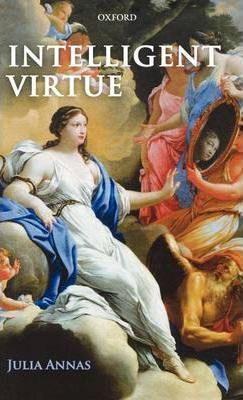
Intelligent Virtue presents a distinctive new account of virtue and happiness as central ethical ideas. Annas argues that exercising a virtue involves practical reasoning of a kind which can illuminatingly be compared to the kind of reasoning we find in someone exercising a practical skill. Rather than asking at the start how virtues relate to rules, principles, maximizing, or a final end, we should look at the way in which the acquisition and exercise of virtue can be seen to be in many ways like the acquisition and exercise of more mundane activities, such as farming, building or playing the piano. This helps us to see virtue as part of an agent’s happiness or flourishing, and as constituting (wholly, or in part) that happiness. We are offered a better understanding of the relation between virtue as an ideal and virtue in everyday life, and the relation between being virtuous and doing the right thing.
This introduction to the world of biblical ethics walks readers through the ethical teachings of key people and texts within the Bible. Instead of focusing on what the Bible says about various ethical issues, it emphasizes how the different parts of the Bible encourage its readers to think ethically about every issue.
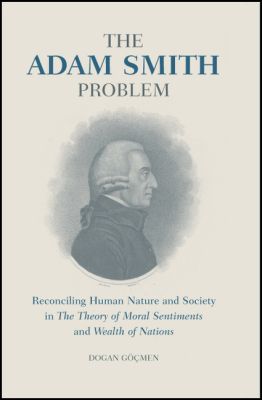
This is the first scholarly work to deal solely with the ‘Adam Smith problem’, namely the apparent contradiction between Adam Smith’s most famous works, The Theory of Moral Sentiments and The Nature and Causes of the Wealth of Nations. Since the 1840s scholars have puzzled over and attempted to explain the fact that these works offer two fundamentally different and contradictory concepts of human nature. In this radical new approach Dogan Göçmen makes a major contribution to the debate. Accepting that Smith does indeed put forward two different and varied ideas, he argues that the ethical position articulated in The Theory of Moral Sentiments can be, and was intended by Smith to be, applied as a basis for criticising the commercial society analysed in the Wealth of Nations. Göçmen argues that this ethical position points to the character of an ideal future society, Adam Smith’s Utopia, a society in which its social components are completely in sympathy – and therefore harmonious – with each other.
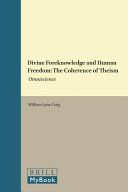
The ancient problem of fatalism, more particularly theological fatalism, has resurfaced with surprising vigour in the second half of the twentieth century. Two questions predominate in the debate: (1) Is divine foreknowledge compatible with human freedom and (2) How can God foreknow future free acts?Having surveyed the historical background of this debate in “The Problem of Divine Foreknowledge and “Future Contingents from Aristotle to Suarez (Brill: 1988), William Lane Craig now attempts to address these issues critically. His wide-ranging discussion brings together a thought- provoking array of related topics such as logical fatalism, multivalent logic, backward causation, precognition, time travel, counterfactual logic, temporal necessity, Newcomb’s Problem, middle knowledge, and relativity theory.The present work serves both as a useful survey of the extensive literature on theological fatalism and related fields and as a stimulating assessment of the possibility of divine foreknowledge of future free acts.
ما از اخلاق چه انتظاری داریم؟ این سوال شاید تاحدودی برای عموم مردم و یا متخصصان این رشته قابل پاسخ باشد؛ اینکه خوب بودن را به ما بیاموزد و در تنظیم روابط فردی م...

جشن کتاب تهران به ایستگاه سی و یکم رسیده است. حال و احوال نشر کتاب خوب نیست و باید فرهنگدوستان را به خرید و هدیه دادن کتاب ترغیب نمود. خانه اخلاقپژوهان جوان ب...

بنیاد کتابهای اخلاق اسلامی عمدتا پالایش جان از آلودگیها و آراستن آن به زیباییها است. اندیشه محوری این قبیل کتابها آن است که انسان فعلی آنی نیست که باید باشد...

-
0 Comments