Notice: تابع WP_Block_Type_Registry::register به طورنادرست فراخوانی شد. نامهای نوع بلوک نباید حروف بزرگ داشته باشند. لطفاً برای اطلاعات بیشتر، اشکال زدایی در وردپرس را مشاهده کنید. (این پیام در نگارش 5.0.0 افزوده شده است.) in /home/ethicsho/public_html/wp-includes/functions.php on line 5313
Warning: Use of undefined constant TDC_PATH_LEGACY - assumed 'TDC_PATH_LEGACY' (this will throw an Error in a future version of PHP) in /home/ethicsho/public_html/wp-content/plugins/td-composer/td-composer.php on line 109
Warning: Use of undefined constant TDSP_THEME_PATH - assumed 'TDSP_THEME_PATH' (this will throw an Error in a future version of PHP) in /home/ethicsho/public_html/wp-content/plugins/td-composer/td-composer.php on line 113 بایگانیهای Booksurge Llc - خانه اخلاق پژوهان جوان Notice: Trying to access array offset on value of type bool in /home/ethicsho/public_html/wp-content/plugins/wp-ulike/inc/general-functions.php on line 807
Evil has long fascinated psychologists, philosophers, novelists and playwrights but remains an incredibly difficult concept to talk about. On Evilis a compelling and at times disturbing tour of the many faces of evil. What is evil, and what makes people do awful things? If we can explain evil, do we explain it away? Can we imagine the mind of a serial killer, or does such evil defy description? Does evil depend on a contrast with good, as religion tells us, or can there be evil for evil’s sake? Adam Morton argues that any account of evil must help us understand three things: why evil occurs; why evil often arises out of banal or everyday situations; and how wecan be seen as evil. Drawing on fascinating examples as diverse as Augustine, Buffy the Vampire Slayer, psychological studies of deviant behaviour and profiles of serial killers, Adam Morton argues that evil occurs when internal, mental barriers against it simply break down. He also introduces us to some nightmare people, such as Adolf Eichmann and Hannibal Lecter, reminding us that understanding their actions as humans brings us closer to understanding evil. Exciting and thought-provoking, On Evilis essential reading for anyone interested in a topic that attracts and repels us in equal measure.
As the use of human body parts has become increasingly commercialized, a need has arisen for new approaches to regulation that move beyond the paradigm of altruism. In the course of this discussion, the notion of property has become a key concept. This volume focuses on practical and conceptual perspectives to set standards for a detailed and innovative discussion in the regulation of research on human tissue. The authors, a multidisciplinary research group combining specialists from philosophy, law, sociology, biology and medicine have come together with practicing lawyers to consider both legal provisions and patterns of regulation in countries across Europe. The authors identify divergences between the different legal traditions, and explore various conceptual models which could be used to improve and to guide policy making. With this twin focus on practical and conceptual perspectives the volume sets standards for a detailed and innovative discussion of problems in the regulation of research on human tissue.
If your anger, or that of a loved one, is out of control and threatening your life and livelihood, you need the calm, clear, and understanding help you’ll find in Anger Management For Dummies. This concise and practical guidebook shares specific anger management methods, skills, and exercises that will help you identify the sources of your anger and release yourself from their grip. You’ll find out how to: Defuse your anger before it strikes Express your feelings calmly Respond rather than react Prevent anger incidents in the future Release healthy anger in a healthy way Confess your anger in a journal Use anger constructively Get beyond old anger through forgiveness Complete with coverage of road rage, air rage, office rage, and dealing with angry children, Anger Management for Dummies gives you the tools you need to overcome your anger and live a happier, more productive life.
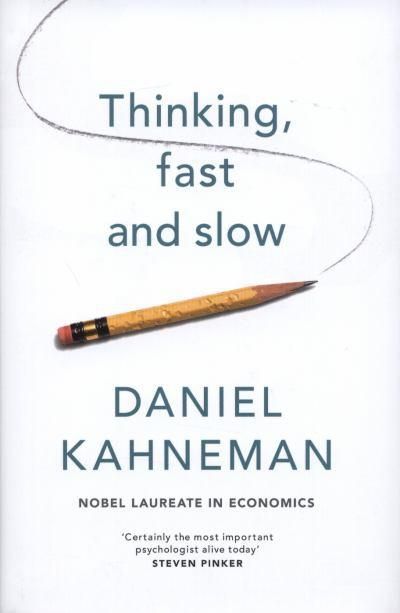
Daniel Kahneman, recipient of the Nobel Prize in Economic Sciences for his seminal work in psychology challenging the rational model of judgment and decision making, is one of the world’s most important thinkers. His ideas have had a profound impact on many fields-including business, medicine, and politics-but until now, he has never brought together his many years of research in one book.In Thinking, Fast and Slow, Kahneman takes us on a groundbreaking tour of the mind and explains the two systems that drive the way we think and make choices. One system is fast, intuitive, and emotional; the other is slower, more deliberative, and more logical. Kahneman exposes the extraordinary capabilities-and also the faults and biases-of fast thinking, and reveals the pervasive influence of intuitive impressions on our thoughts and behaviour. The importance of properly framing risks, the effects of cognitive biases on how we view others, the dangers of prediction, the right ways to develop skills, the pros and cons of fear and optimism, the difference between our experience and memory of events, the real components of happiness-each of these can be understood only by knowing how the two systems work together to shape our judgments and decisions.Drawing on a lifetime’s experimental experience, Kahneman reveals where we can and cannot trust our intuitions and how we can tap into the benefits of slow thinking. He offers practical and enlightening insights into how choices are made in both our professional and our personal lives-and how we can use different techniques to guard against the mental glitches that often get us into trouble. Thinking, Fast and Slow will transform the way you take decisions and experience the world.
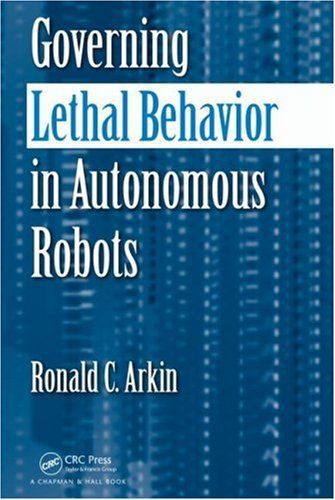
Expounding on the results of the author’s work with the US Army Research Office, DARPA, the Office of Naval Research, and various defense industry contractors, Governing Lethal Behavior in Autonomous Robots explores how to produce an “artificial conscience” in a new class of robots, humane-oids, which are robots that can potentially perform more ethically than humans in the battlefield. The author examines the philosophical basis, motivation, theory, and design recommendations for the implementation of an ethical control and reasoning system in autonomous robot systems, taking into account the Laws of War and Rules of Engagement. The book presents robot architectural design recommendations for Post facto suppression of unethical behavior, Behavioral design that incorporates ethical constraints from the onset, The use of affective functions as an adaptive component in the event of unethical action, and A mechanism that identifies and advises operators regarding their ultimate responsibility for the deployment of autonomous systems. It also examines why soldiers fail in battle regarding ethical decisions; discusses the opinions of the public, researchers, policymakers, and military personnel on the use of lethality by autonomous systems; provides examples that illustrate autonomous systems? ethical use of force; and includes relevant Laws of War. Helping ensure that warfare is conducted justly with the advent of autonomous robots, this book shows that the first steps toward creating robots that not only conform to international law but outperform human soldiers in their ethical capacity are within reach in the future. It supplies the motivation, philosophy, formalisms, representational requirements, architectural design criteria, recommendations, and test scenarios to design and construct an autonomous robotic system capable of ethically using lethal force. Ron Arkin was quoted in a November 2010 New York Times article about robots in the military.
ما از اخلاق چه انتظاری داریم؟ این سوال شاید تاحدودی برای عموم مردم و یا متخصصان این رشته قابل پاسخ باشد؛ اینکه خوب بودن را به ما بیاموزد و در تنظیم روابط فردی م...

جشن کتاب تهران به ایستگاه سی و یکم رسیده است. حال و احوال نشر کتاب خوب نیست و باید فرهنگدوستان را به خرید و هدیه دادن کتاب ترغیب نمود. خانه اخلاقپژوهان جوان ب...

بنیاد کتابهای اخلاق اسلامی عمدتا پالایش جان از آلودگیها و آراستن آن به زیباییها است. اندیشه محوری این قبیل کتابها آن است که انسان فعلی آنی نیست که باید باشد...

-
0 Comments