Notice: تابع WP_Block_Type_Registry::register به طورنادرست فراخوانی شد. نامهای نوع بلوک نباید حروف بزرگ داشته باشند. لطفاً برای اطلاعات بیشتر، اشکال زدایی در وردپرس را مشاهده کنید. (این پیام در نگارش 5.0.0 افزوده شده است.) in /home/ethicsho/public_html/wp-includes/functions.php on line 5313
Warning: Use of undefined constant TDC_PATH_LEGACY - assumed 'TDC_PATH_LEGACY' (this will throw an Error in a future version of PHP) in /home/ethicsho/public_html/wp-content/plugins/td-composer/td-composer.php on line 109
Warning: Use of undefined constant TDSP_THEME_PATH - assumed 'TDSP_THEME_PATH' (this will throw an Error in a future version of PHP) in /home/ethicsho/public_html/wp-content/plugins/td-composer/td-composer.php on line 113 بایگانیهای Berg - خانه اخلاق پژوهان جوان Notice: Trying to access array offset on value of type bool in /home/ethicsho/public_html/wp-content/plugins/wp-ulike/inc/general-functions.php on line 807
This second edition of Ethics in Practice is a comprehensive collection of more than 60 new, newly-revised, and classic essays on fourteen contemporary moral questions. Through the selection of essays, organization of sections, and incisive general and section introductions, this book integrates ethical theory and the discussion of practical moral problems. In addition to the more familiar issues, such as abortion, euthanasia, animal rights, preferential treatment, and the environment, the volume includes coverage of less familiar, but equally important issues such as immigration, political correctness, free speech, the use of drugs, world hunger, and economic justice. The second edition includes 21 essays not in the first edition, with expanded sections discussing three more topics: reproductive technologies, gun control, and capital punishment. This volume features accessible and engaging, yet philosophically rigorous essays that encourage the student to think critically about a wide range of practical moral issues. The supporting website at http://www.stpt.usf.edu/hhl/papers/ethics.in.practice.2nd.htm contains extensive links to sources on the topics, ethical theories, and guides on writing papers. These features make Ethics in Practice the ideal text for introductory and applied ethics courses.
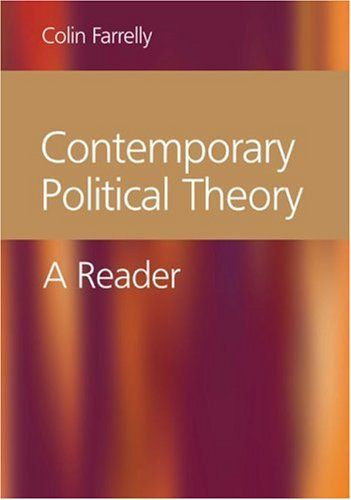
`Colin Farrelly has gathered together in one volume several of the key texts that have shaped recent developments in political theory. The structure of the book reflects that of many courses offering surveys of recent debates between liberals and their critics. It is an excellent teaching resource’ – Shane O’Neill, Queen’s University, Belfast `An excellent selection of key pieces that have shaped the debates that dominate contemporary political philosophy. Each section is prefaced with a clear and insightful introduction which gives a valuable commentary on each piece, sets it in its context, and indicates its influence on the field. This book will be a very useful resource for students of these debates from all backgrounds’ – Catriona McKinnon, University of York Contemporary Political Theory provides an accessible introduction to the key works of major contemporary political theorists. Key theorists and writers include John Rawls, Robert Nozick, Michael Walzer, Michael Sandel, Susan Okin, Will Kymlicka, Iris Marion Young, Charles Taylor, Nancy Fraser and John Dryzek. The readings are organized thematically into seven sections on egalitarian-liberalism, libertarianism, communitarianism, republicanism, feminism, deliberative democracy, and multiculturalism. A substantial introduction is provided to each to identify the main issues and the significance of the carefully selected excerpts that follow. The result is a complete but concise guide through the literature and major topics and areas of debate in contemporary political theory and political philosophy. Colin Farrelly is Assistant Professor in the Department of Political Science at the University of Waterloo, Canada. Contemporary Political Theory: A Reader will complement his textbook Introduction to Contemporary Political Theory also published by SAGE Publications.
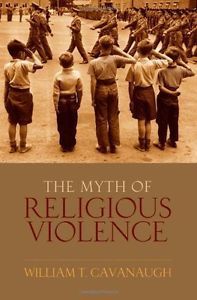
The idea that religion has a dangerous tendency to promote violence is part of the conventional wisdom of Western societies, and it underlies many of our institutions and policies, from limits on the public role of religion to efforts to promote liberal democracy in the Middle East. William T. Cavanaugh challenges this conventional wisdom by examining how the twin categories of religion and the secular are constructed. A growing body of scholarly work explores how the category ‘religion’ has been constructed in the modern West and in colonial contexts according to specific configurations of political power. Cavanaugh draws on this scholarship to examine how timeless and transcultural categories of ‘religion and ‘the secular’ are used in arguments that religion causes violence. He argues three points: 1) There is no transhistorical and transcultural essence of religion. What counts as religious or secular in any given context is a function of political configurations of power; 2) Such a transhistorical and transcultural concept of religion as non-rational and prone to violence is one of the foundational legitimating myths of Western society; 3) This myth can be and is used to legitimate neo-colonial violence against non-Western others, particularly the Muslim world.
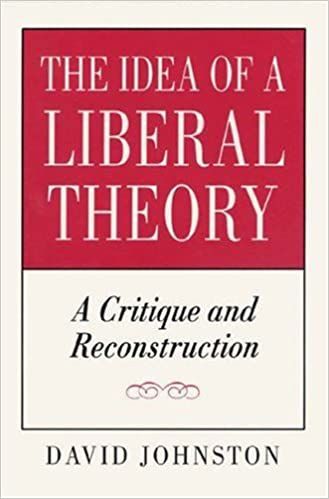
Liberalism, the founding philosophy of many constitutional democracies, has been criticized in recent years from both the left and the right for placing too much faith in individual rights and distributive justice. David Johnston argues for a reinterpretation of liberal principles he contends will restore liberalism to a position of intellectual leadership from which it can guide political and social reforms. He begins by surveying the three major contemporary schools of liberal political thought–rights-based, perfectionist, and political liberalism– and, by weeding out their weaknesses, sketches a new approach he calls humanist liberalism. Valuable not only for its contribution to academic scholarship but also as a means of introducing liberal political thought to serious undergraduate students.–Choice Raises … a tremendous number of criticisms of the standard accounts of liberal politics. The book is novel, built on solid foundations, [and] very powerful, clever, well thought out.–Alan Ryan, Princeton University This clear and useful new work moves through a swift yet thorough critique of three leading liberal philosophies to reach a sketch of a new, improved theory.–Virginia Quarterly Review
ما از اخلاق چه انتظاری داریم؟ این سوال شاید تاحدودی برای عموم مردم و یا متخصصان این رشته قابل پاسخ باشد؛ اینکه خوب بودن را به ما بیاموزد و در تنظیم روابط فردی م...

جشن کتاب تهران به ایستگاه سی و یکم رسیده است. حال و احوال نشر کتاب خوب نیست و باید فرهنگدوستان را به خرید و هدیه دادن کتاب ترغیب نمود. خانه اخلاقپژوهان جوان ب...

بنیاد کتابهای اخلاق اسلامی عمدتا پالایش جان از آلودگیها و آراستن آن به زیباییها است. اندیشه محوری این قبیل کتابها آن است که انسان فعلی آنی نیست که باید باشد...

-
0 Comments